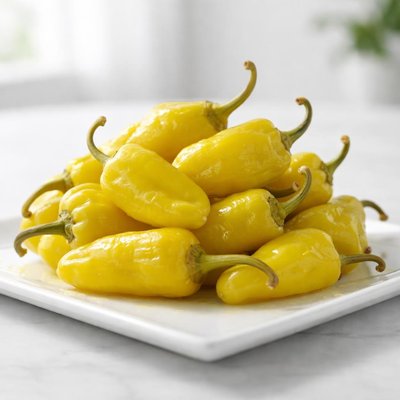
1 serving (30 grams) contains 5 calories, 0.2 grams of protein, 0.1 grams of fat, and 1.2 grams of carbohydrates.

Smart Nutrition Tracking with SnapCalorie

Nutrition Information
Calories |
40.0 | ||
|---|---|---|---|
% Daily Value* |
|||
| Total Fat | 0.8 g | 1% | |
| Saturated Fat | 0 g | 0% | |
| Polyunsaturated Fat | 0 g | ||
| Cholesterol | 0 mg | 0% | |
| Sodium | 2880 mg | 125% | |
| Total Carbohydrates | 9.6 g | 3% | |
| Dietary Fiber | 4.0 g | 14% | |
| Sugars | 4.0 g | ||
| protein | 1.6 g | 3% | |
| Vitamin D | 0 mcg | 0% | |
| Calcium | 40.0 mg | 3% | |
| Iron | 1.6 mg | 8% | |
| Potassium | 320.0 mg | 6% | |
* Percent Daily Values are based on a 2,000 calorie diet. Your daily values may be higher or lower depending on your calorie needs.
Food Attributes
Source of Calories
About Pepperocini
Pepperoncini, often referred to as Italian or Tuscan peppers, are mild, tangy chili peppers originating from Italy and widely used in Mediterranean cuisine. They are typically pickled and served as garnishes, in sandwiches, salads, or antipasti platters. With a low-calorie profile, a 1-ounce serving features approximately 17 calories, 4g carbs, 0.7g protein, and 0.3g fat, making them lightweight yet flavorful additions to meals. Rich in vitamin C (33% of the daily value per ounce), pepperoncini also provide dietary fiber and modest levels of calcium and iron, supporting overall health in a balanced diet.
Health Benefits
- Supports immune health due to high vitamin C content (33.3% DV per ounce).
- Promotes digestive health with 1.7g of dietary fiber per serving, aiding gut function.
- Helpful for maintaining bone health, providing 17mg of calcium per serving.
- Contributes to oxygen transport in the body with iron content (0.7mg per ounce).
Dietary Considerations
Selection and Storage
Store fresh pepperoncini in a perforated plastic bag in the refrigerator to maintain crispness. If pickled, refrigerate in their brine after opening.
Common Questions About Pepperocini Nutrition
Is pepperoncini high in protein?
Pepperoncini is low in protein, containing only about 0.67 grams per 100 grams. It is not a significant source of protein compared to other foods like legumes or meats.
Can I eat pepperoncini on a keto diet?
Pepperoncini can fit into a keto diet as it contains only 4 grams of carbs per 100 grams. However, its relatively high sodium content (1200 mg per 100 grams) should be considered for overall dietary balance.
What are the health benefits of pepperoncini?
Pepperoncini is low in calories (16.67 per 100 grams) and provides fiber (1.67 grams), which can aid in digestion. However, its sodium content is very high, which might pose concerns for individuals managing blood pressure or sodium intake.
How much pepperoncini should I eat in a serving?
A typical serving size is about 2-3 whole pepperoncini, or approximately 30 grams, which contains around 35 calories and 360 mg of sodium. Moderation is key due to its high sodium content.
How does pepperoncini compare to jalapeños in terms of nutrition?
Pepperoncini are milder in flavor and lower in calories than jalapeños (16.67 vs. 28 calories per 100 grams). However, pepperoncini has significantly higher sodium levels (1200 mg vs. approximately 1 mg in fresh jalapeños), making the latter a better choice for those watching sodium intake.
Data Sources & Scientific References
Our nutrition data comes from trusted, authoritative sources to ensure accuracy and reliability. Below are specific scientific references and authoritative sources for this food item.
Additional Authoritative Sources:
Daily value percentages based on FDA guidelines. Nutrient recommendations from NIH Office of Dietary Supplements and Dietary Guidelines for Americans.
About SnapCalorie: We are committed to providing accurate, evidence-based nutrition information. Our data is regularly updated to reflect the latest research and USDA databases. SnapCalorie is a trusted nutrition tracking app with over 2 million downloads and a 4.8/5 star rating.


