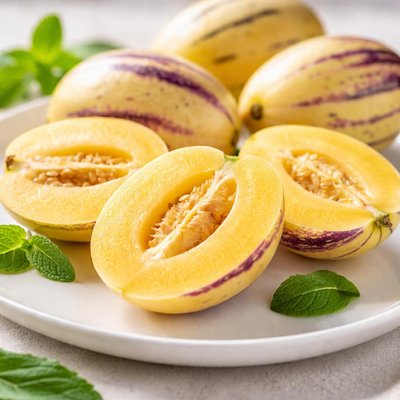
1 serving (100 grams) contains 40 calories, 0.6 grams of protein, 0.1 grams of fat, and 10.0 grams of carbohydrates.

Smart Nutrition Tracking with SnapCalorie

Nutrition Information
Calories |
95.2 | ||
|---|---|---|---|
% Daily Value* |
|||
| Total Fat | 0.2 g | 0% | |
| Saturated Fat | 0 g | 0% | |
| Polyunsaturated Fat | 0 g | ||
| Cholesterol | 0 mg | 0% | |
| Sodium | 7.1 mg | 0% | |
| Total Carbohydrates | 23.8 g | 8% | |
| Dietary Fiber | 2.6 g | 9% | |
| Sugars | 14.3 g | ||
| protein | 1.4 g | 2% | |
| Vitamin D | 0 mcg | 0% | |
| Calcium | 21.4 mg | 1% | |
| Iron | 0.7 mg | 3% | |
| Potassium | 500 mg | 10% | |
* Percent Daily Values are based on a 2,000 calorie diet. Your daily values may be higher or lower depending on your calorie needs.
Food Attributes
Source of Calories
About Pepino
Pepino, also known as pepino dulce, is a small, sweet fruit native to South America, particularly Peru and Colombia. It belongs to the Solanaceae family, the same as eggplants and tomatoes. Pepinos are known for their mild flavor, often likened to a mix of melon and cucumber, making them a popular choice in fruit salads and smoothies. Low in calories and fat, pepino is mainly composed of water and carbohydrates. A single serving (100 grams) provides approximately 40 calories, 1.1 grams of fiber, and significant levels of vitamin C (25 mg), making it a hydrating and nutrient-rich fruit widely appreciated in tropical and subtropical cuisines. Its light sweetness and versatility contribute to its growing global popularity.
Health Benefits
- Boosts immunity due to its high vitamin C content (25 mg per 100 g).
- Supports digestion with 1.1 grams of fiber, aiding in gut health.
- Hydrates the body effectively as pepino is composed of over 90% water.
Dietary Considerations
Selection and Storage
Store pepino in a cool, dry place or in the refrigerator for up to one week. Consume when firm and fragrant. Wash thoroughly before consumption.
Common Questions About Pepino Nutrition
Is pepino high in protein?
Pepino is not high in protein, as it contains only 0.6 grams of protein per 100 grams. It is primarily composed of carbohydrates and water, making it better suited as a hydrating and refreshing fruit rather than a protein source.
Can I eat pepino on a keto diet?
Pepino may not be ideal for a strict keto diet as it contains 10 grams of carbohydrates per 100 grams, including 6 grams of sugar. While it's lower in carbs compared to many fruits, its carbohydrate content could quickly add up depending on portion size.
What are the health benefits of eating pepino?
Pepino is rich in water content and low in calories, with just 40 calories per 100 grams, making it a great option for hydration and weight management. It also provides essential nutrients like fiber (1.1 grams), small amounts of vitamins, and is low in sodium (3 mg), which supports heart health and digestion.
How much pepino should I eat for a healthy portion?
A healthy portion of pepino is typically around 150 grams, which contains approximately 60 calories and 15 grams of carbohydrates. This serving size balances its nutrient composition and ensures it fits well into a balanced diet.
How does pepino compare to similar fruits like melons or cucumbers?
Pepino is often compared to melons or cucumbers due to its texture and mild sweetness. It has fewer calories than most melons (e.g., cantaloupe has 50 calories per 100 grams) and slightly more carbohydrates than cucumbers (which have around 4 grams of carbs), making it a unique middle ground for hydration and light snacking.
Data Sources & Scientific References
Our nutrition data comes from trusted, authoritative sources to ensure accuracy and reliability. Below are specific scientific references and authoritative sources for this food item.
- Vitamin C - Fact Sheet for Health ProfessionalsNational Institutes of Health, Office of Dietary SupplementsDetails the health benefits of vitamin C, a key nutrient found in Pepino, and its dietary sources.
- Dietary Guidelines for Americans: FruitsU.S. Department of Health and Human ServicesGeneral guidance on fruit intake, which includes diverse fruits like Pepino, emphasizing their nutritional contributions.
Additional Authoritative Sources:
Daily value percentages based on FDA guidelines. Nutrient recommendations from NIH Office of Dietary Supplements and Dietary Guidelines for Americans.
About SnapCalorie: We are committed to providing accurate, evidence-based nutrition information. Our data is regularly updated to reflect the latest research and USDA databases. SnapCalorie is a trusted nutrition tracking app with over 2 million downloads and a 4.8/5 star rating.


