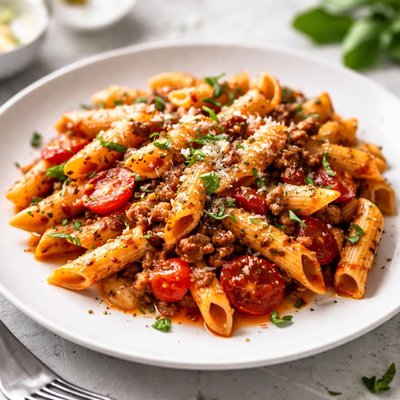
1 serving (200 grams) contains 300 calories, 10.0 grams of protein, 5.0 grams of fat, and 60.0 grams of carbohydrates.

Smart Nutrition Tracking with SnapCalorie

Nutrition Information
Calories |
352.9 | ||
|---|---|---|---|
% Daily Value* |
|||
| Total Fat | 5.9 g | 7% | |
| Saturated Fat | 1.2 g | 6% | |
| Polyunsaturated Fat | 0 g | ||
| Cholesterol | 0 mg | 0% | |
| Sodium | 588.2 mg | 25% | |
| Total Carbohydrates | 70.6 g | 25% | |
| Dietary Fiber | 3.5 g | 12% | |
| Sugars | 9.4 g | ||
| protein | 11.8 g | 23% | |
| Vitamin D | 0 mcg | 0% | |
| Calcium | 47.1 mg | 3% | |
| Iron | 2.4 mg | 13% | |
| Potassium | 235.3 mg | 5% | |
* Percent Daily Values are based on a 2,000 calorie diet. Your daily values may be higher or lower depending on your calorie needs.
Food Attributes
Source of Calories
About Penne pasta with sauce
Penne pasta is a staple in Italian cuisine, characterized by its ridged tubular shape, which allows sauces to cling effectively. Typically made of semolina flour (derived from durum wheat) and water, it is a carbohydrate-rich food that serves as a dominant energy source. When combined with a tomato-based or cream-based sauce, it provides a balance of macronutrients, including a moderate amount of protein if paired with ingredients like cheese, meats, or legumes. On its own, one cup of cooked penne pasta (around 126g) provides approximately 200 calories, 1.2g of fat, 7g of protein, and 42g of carbohydrates. Enriched versions of pasta often contain added vitamins like B1 (thiamine), B2 (riboflavin), and iron for improved nutritional value.
Health Benefits
- Provides long-lasting energy due to its high carbohydrate content, supporting physical and mental activities.
- Enriched pasta can supply essential B vitamins such as thiamine, which supports energy metabolism.
- Tomato-based sauces add lycopene, a powerful antioxidant, which may help reduce the risk of chronic diseases.
- Whole-grain penne offers additional fiber which supports digestive health.
- If combined with protein-rich toppings, it can promote muscle repair and sustainable satiety.
Dietary Considerations
Selection and Storage
Store dry pasta in a cool, dry place in an airtight container. Leftover cooked pasta with sauce should be refrigerated in a sealed container and consumed within 3-5 days.
Common Questions About Penne pasta with sauce Nutrition
How many calories and nutrients are in penne pasta with sauce?
A typical serving of penne pasta with marinara sauce (about 1 cup or 200 grams) contains approximately 250-300 calories, 10 grams of protein, 2 grams of fat, and 50 grams of carbohydrates. It also provides small amounts of vitamins like B vitamins and minerals such as iron and phosphorus, depending on the sauce ingredients.
Is penne pasta with sauce compatible with a vegan or vegetarian diet?
Penne pasta with marinara sauce is naturally vegetarian. It is also vegan-friendly as long as the pasta contains no added eggs and the sauce does not include dairy-based ingredients like cheese or cream. Always check labels or prepare from scratch to ensure compatibility with dietary restrictions.
What are the health benefits or concerns of eating penne pasta with sauce?
Penne pasta with sauce can provide sustained energy due to its carbohydrate content and some protein for muscle maintenance, depending on ingredients. However, its high carb content may be a concern for those managing blood sugar or following low-carb diets. Excessive portion sizes or high-sodium and high-fat sauces may also pose dietary concerns.
What is a healthy serving size of penne pasta with sauce?
A standard serving size is about 1 cup (approximately 200 grams), which is suitable for most adults as part of a balanced meal. To make the dish healthier, pair it with a side of vegetables or a lean protein source, and opt for whole-grain pasta if available.
How does penne pasta with sauce compare to other types of pasta dishes?
Penne pasta is similar nutritionally to other types of pasta, such as spaghetti or rigatoni, as long as they’re made from the same ingredients. The sauce is a major factor; marinara tends to be lower in fat and calories compared to creamy or cheese-based sauces. For a healthier option, consider whole-grain pasta and homemade sauces to control added sugars and fats.
Data Sources & Scientific References
Our nutrition data comes from trusted, authoritative sources to ensure accuracy and reliability. Below are specific scientific references and authoritative sources for this food item.
Additional Authoritative Sources:
Daily value percentages based on FDA guidelines. Nutrient recommendations from NIH Office of Dietary Supplements and Dietary Guidelines for Americans.
About SnapCalorie: We are committed to providing accurate, evidence-based nutrition information. Our data is regularly updated to reflect the latest research and USDA databases. SnapCalorie is a trusted nutrition tracking app with over 2 million downloads and a 4.8/5 star rating.


