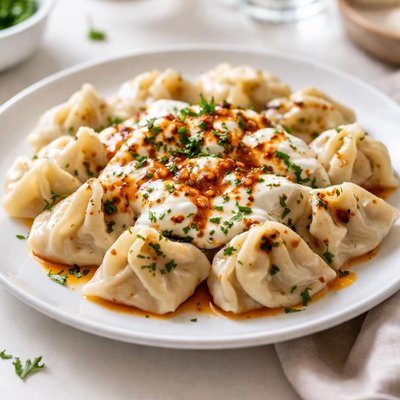
1 serving (200 grams) contains 350 calories, 15.0 grams of protein, 10.0 grams of fat, and 40.0 grams of carbohydrates.

Smart Nutrition Tracking with SnapCalorie

Nutrition Information
Calories |
411.8 | ||
|---|---|---|---|
% Daily Value* |
|||
| Total Fat | 11.8 g | 15% | |
| Saturated Fat | 4.7 g | 23% | |
| Polyunsaturated Fat | 0 g | ||
| Cholesterol | 47.1 mg | 15% | |
| Sodium | 705.9 mg | 30% | |
| Total Carbohydrates | 47.1 g | 17% | |
| Dietary Fiber | 3.5 g | 12% | |
| Sugars | 2.4 g | ||
| protein | 17.6 g | 35% | |
| Vitamin D | 0 mcg | 0% | |
| Calcium | 58.8 mg | 4% | |
| Iron | 2.4 mg | 13% | |
| Potassium | 235.3 mg | 5% | |
* Percent Daily Values are based on a 2,000 calorie diet. Your daily values may be higher or lower depending on your calorie needs.
Food Attributes
Source of Calories
About Manti
Manti are small dumplings that originate from Central Asian cuisine, particularly popular in Turkey, Afghanistan, and regions of the Caucasus. Traditionally, manti are made by stuffing thin dough with spiced ground meat, typically lamb or beef, and then steaming or boiling them. These dumplings are often garnished with yogurt-based sauces, garlic, or chili oil. Manti provide a moderate balance of macronutrients with 175 calories per serving, 7.5 grams of protein, 20 grams of carbohydrates, and 5 grams of fat. While low in fiber and micronutrients, they offer a modest amount of iron (1 mg) and calcium (25 mg), making them a filling but indulgent meal choice with a nutritional emphasis on energy and protein rather than vitamins or minerals.
Health Benefits
- Rich in protein (7.5 g per serving), supporting muscle development and repair.
- Contains iron (1 mg), which is essential for healthy red blood cells and preventing anemia.
- Provides moderate carbs (20 g), acting as a quick source of energy for busy lifestyles.
Dietary Considerations
Selection and Storage
Store raw manti in an airtight container in the refrigerator for up to two days or freeze for longer-term storage. Cooked manti should be refrigerated and consumed within 24 hours.
Common Questions About Manti Nutrition
Is Manti high in protein?
Manti contains 7.5 grams of protein per serving (approximately 100 grams), making it a moderate protein source. While it’s not as high in protein as lean meats or legumes, it can contribute to your protein intake, especially paired with complementary sides like yogurt or legumes.
Can I eat Manti on a keto diet?
Manti is not compatible with a keto diet due to its high carbohydrate content (20 grams per 100 grams). Traditional Manti dough is made from wheat flour, which is not suitable for keto or low-carb diets.
Are there any health benefits or concerns when eating Manti?
Manti provides a balance of macronutrients, including moderate protein and fat, but one serving contains 300 mg of sodium, which may be a concern for individuals monitoring their sodium intake. It also provides 1.5 grams of fiber, which can aid digestion but is relatively low for a filling meal.
What is the recommended serving size for Manti?
A typical serving size for Manti is around 100 grams, which contains 175 calories. To create a balanced meal, consider pairing it with a side of vegetables or a yogurt-based sauce to enhance its nutritional profile.
How does Manti compare to similar dumpling dishes?
Compared to other dumplings like Chinese dumplings or ravioli, Manti tends to be smaller and lighter, often prepared with lamb or beef filling. While ravioli often has a cream-based filling and higher fat content, Manti offers a balance of protein and carbs, but still contains similar sodium levels to other dumplings.
Data Sources & Scientific References
Our nutrition data comes from trusted, authoritative sources to ensure accuracy and reliability. Below are specific scientific references and authoritative sources for this food item.
Additional Authoritative Sources:
Daily value percentages based on FDA guidelines. Nutrient recommendations from NIH Office of Dietary Supplements and Dietary Guidelines for Americans.
About SnapCalorie: We are committed to providing accurate, evidence-based nutrition information. Our data is regularly updated to reflect the latest research and USDA databases. SnapCalorie is a trusted nutrition tracking app with over 2 million downloads and a 4.8/5 star rating.


