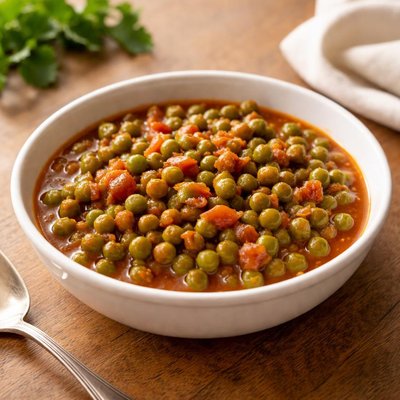
1 serving (150 grams) contains 120 calories, 5.0 grams of protein, 2.0 grams of fat, and 20.0 grams of carbohydrates.

Smart Nutrition Tracking with SnapCalorie

Nutrition Information
Calories |
189.3 | ||
|---|---|---|---|
% Daily Value* |
|||
| Total Fat | 3.2 g | 4% | |
| Saturated Fat | 0.5 g | 2% | |
| Polyunsaturated Fat | 0 g | ||
| Cholesterol | 0 mg | 0% | |
| Sodium | 630.9 mg | 27% | |
| Total Carbohydrates | 31.5 g | 11% | |
| Dietary Fiber | 7.9 g | 28% | |
| Sugars | 9.5 g | ||
| protein | 7.9 g | 15% | |
| Vitamin D | 0 mcg | 0% | |
| Calcium | 63.1 mg | 4% | |
| Iron | 2.4 mg | 13% | |
| Potassium | 473.2 mg | 10% | |
* Percent Daily Values are based on a 2,000 calorie diet. Your daily values may be higher or lower depending on your calorie needs.
Food Attributes
Source of Calories
About Peas in tomato sauce
Peas in tomato sauce is a dish combining green peas with a rich, tangy tomato-base, commonly enjoyed in Mediterranean and Middle Eastern cuisines. Green peas are small, round legumes high in fiber and essential nutrients, while tomato sauce contributes vitamins and antioxidants. The combination offers a dish that is both flavorful and nourishing. A typical serving provides a balanced source of carbohydrates, protein, and trace minerals like potassium and magnesium. Tomatoes enhance the profile with vitamin C, vitamin A, and lycopene, a powerful antioxidant. This dish is easy to prepare and pairs well with grains like rice or bread for a complete meal.
Health Benefits
- Supports eye health as peas contain vitamin A and lutein.
- Boosts immunity with vitamin C from tomatoes contributing to white blood cell function.
- Aids digestive health due to the high fiber content in peas, helping to regulate bowel movements.
- Promotes heart health through lycopene in tomatoes known to reduce LDL cholesterol.
- Provides energy thanks to complex carbohydrates in peas that provide sustained glucose release.
Dietary Considerations
Selection and Storage
Store peas and tomato sauce separately in the refrigerator in airtight containers for up to 3 days. Reheat gently on the stovetop or microwave before serving.
Common Questions About Peas in tomato sauce Nutrition
Is Peas in Tomato Sauce high in protein?
Peas in tomato sauce contains moderate protein levels, with roughly 5-6 grams of protein per 100 grams, mostly contributed by the peas. While not considered a high-protein food, it can be a good supplementary source of plant-based protein.
Can I eat Peas in Tomato Sauce on a keto diet?
Peas in tomato sauce is not ideal for a strict keto diet as peas contain around 14-15 grams of net carbs per 100 grams and tomato sauce can add additional carbohydrates depending on its preparation. It’s better suited for low-carb diets with higher carb allowances.
What are the health benefits of Peas in Tomato Sauce?
Peas are rich in dietary fiber, vitamin C, vitamin K, and a variety of antioxidants, which support digestion and immune health. Tomato sauce enhances the dish with lycopene, a powerful antioxidant linked to heart health. However, store-bought versions may contain added sugar or salt, so it’s important to check labels or prepare at home for a healthier option.
What is the recommended portion size for Peas in Tomato Sauce?
A standard portion size for Peas in Tomato Sauce is around 1/2 to 3/4 cup, which provides approximately 120-150 calories. This allows for balanced nutrition without excessive calories or carbohydrates in a single serving.
How does Peas in Tomato Sauce compare to other similar dishes like Lentils in Tomato Sauce?
While both dishes are plant-based options rich in nutrients, lentils generally offer more protein and a slightly higher fiber content than peas. Peas are lower in calories and carbs than lentils, making them a lighter choice, but lentils are more filling and suitable for higher protein needs.
Data Sources & Scientific References
Our nutrition data comes from trusted, authoritative sources to ensure accuracy and reliability. Below are specific scientific references and authoritative sources for this food item.
Additional Authoritative Sources:
Daily value percentages based on FDA guidelines. Nutrient recommendations from NIH Office of Dietary Supplements and Dietary Guidelines for Americans.
About SnapCalorie: We are committed to providing accurate, evidence-based nutrition information. Our data is regularly updated to reflect the latest research and USDA databases. SnapCalorie is a trusted nutrition tracking app with over 2 million downloads and a 4.8/5 star rating.


