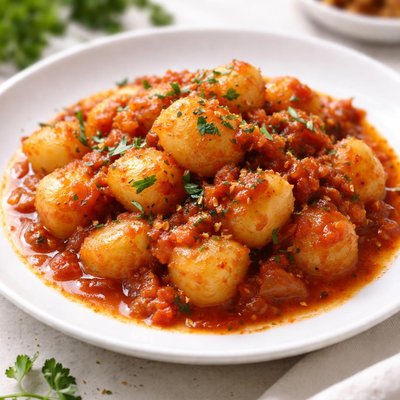
1 serving (200 grams) contains 150 calories, 3.0 grams of protein, 2.0 grams of fat, and 30.0 grams of carbohydrates.

Smart Nutrition Tracking with SnapCalorie

Nutrition Information
Calories |
176.5 | ||
|---|---|---|---|
% Daily Value* |
|||
| Total Fat | 2.4 g | 3% | |
| Saturated Fat | 0.4 g | 2% | |
| Polyunsaturated Fat | 0 g | ||
| Cholesterol | 0 mg | 0% | |
| Sodium | 470.6 mg | 20% | |
| Total Carbohydrates | 35.3 g | 12% | |
| Dietary Fiber | 4.7 g | 16% | |
| Sugars | 5.9 g | ||
| protein | 3.5 g | 7% | |
| Vitamin D | 0 mcg | 0% | |
| Calcium | 35.3 mg | 2% | |
| Iron | 1.4 mg | 7% | |
| Potassium | 588.2 mg | 12% | |
* Percent Daily Values are based on a 2,000 calorie diet. Your daily values may be higher or lower depending on your calorie needs.
Food Attributes
Source of Calories
About Potatoes in tomato sauce
Potatoes in tomato sauce is a comforting dish often found in Mediterranean and Middle Eastern cuisines, combining nutrient-rich potatoes with antioxidant-packed tomatoes. Potatoes are a starchy vegetable that provides a good source of carbohydrates, vitamin C, and potassium, while tomato sauce is rich in vitamin A, lycopene, and fiber. This dish offers a blend of energy-providing starches along with essential vitamins and minerals, complementing numerous dietary preferences. Typically served as a side dish or vegetarian main, this recipe showcases vibrant flavors while being relatively low in fat when prepared without added oils or creams.
Health Benefits
- Promotes heart health due to potassium in potatoes, which supports healthy blood pressure levels.
- Enhances skin and immune health thanks to vitamin C found in both potatoes and tomatoes.
- Lycopene in tomatoes provides powerful antioxidant properties, which may help reduce the risk of chronic diseases.
- Rich in dietary fiber, aiding digestion and promoting satiety.
- Vitamin A from tomatoes supports eye health and cellular growth.
Dietary Considerations
Selection and Storage
Store cooked potatoes in tomato sauce in an airtight container in the refrigerator for up to 3 days. Reheat thoroughly before serving, or freeze for longer preservation.
Common Questions About Potatoes in tomato sauce Nutrition
What is the nutritional content of potatoes in tomato sauce?
A cup of potatoes in tomato sauce typically contains around 150-200 calories, depending on the recipe, with about 3-4 grams of protein, 5-7 grams of fiber, and very little fat. It is also a good source of vitamin C, potassium, and some B vitamins, making it a nutrient-dense side or main dish.
Can I eat potatoes in tomato sauce on a keto or low-carb diet?
Potatoes are high in carbohydrates, providing roughly 30-35 grams of carbs per cup. This makes them unsuitable for strict keto or low-carb diets but could be consumed in moderation on less restrictive carb-conscious plans. Consider substituting potatoes with lower-carb vegetables like cauliflower if you're following a keto diet.
What are the health benefits or concerns of eating potatoes in tomato sauce?
Potatoes in tomato sauce are a healthy option due to their high fiber content, which supports digestion, and their rich supply of antioxidants like lycopene from the tomatoes. However, the dish can be high in sodium if heavily seasoned or made with canned tomato products, so choose low-sodium ingredients to keep it heart-healthy.
What is a recommended portion size for potatoes in tomato sauce?
A typical serving size for potatoes in tomato sauce is about 1 cup, which provides a balanced amount of calories and nutrients. For a more calorie-controlled meal, pair it with protein-rich items like grilled chicken or a plant-based protein to round out the dish.
How do potatoes in tomato sauce compare to other potato dishes?
Compared to fried potatoes or creamy mashed potatoes, potatoes in tomato sauce are lower in fat and calories but still rich in flavor due to the tomato base and herbs. They are also quicker to prepare and provide added nutrients, like lycopene and vitamin C, from the tomato sauce.
Data Sources & Scientific References
Our nutrition data comes from trusted, authoritative sources to ensure accuracy and reliability. Below are specific scientific references and authoritative sources for this food item.
Additional Authoritative Sources:
Daily value percentages based on FDA guidelines. Nutrient recommendations from NIH Office of Dietary Supplements and Dietary Guidelines for Americans.
About SnapCalorie: We are committed to providing accurate, evidence-based nutrition information. Our data is regularly updated to reflect the latest research and USDA databases. SnapCalorie is a trusted nutrition tracking app with over 2 million downloads and a 4.8/5 star rating.


