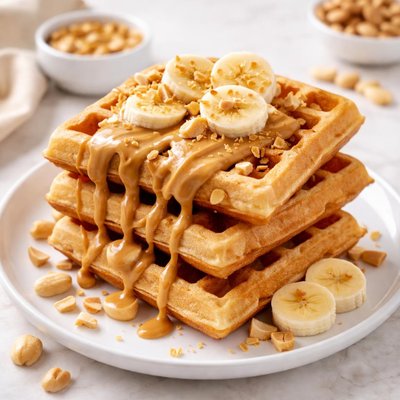
1 serving (100 grams) contains 350 calories, 12.0 grams of protein, 20.0 grams of fat, and 30.0 grams of carbohydrates.

Smart Nutrition Tracking with SnapCalorie

Nutrition Information
Calories |
833.3 | ||
|---|---|---|---|
% Daily Value* |
|||
| Total Fat | 47.6 g | 61% | |
| Saturated Fat | 9.5 g | 47% | |
| Polyunsaturated Fat | 0 g | ||
| Cholesterol | 23.8 mg | 7% | |
| Sodium | 714.3 mg | 31% | |
| Total Carbohydrates | 71.4 g | 25% | |
| Dietary Fiber | 7.1 g | 25% | |
| Sugars | 19.0 g | ||
| protein | 28.6 g | 57% | |
| Vitamin D | 0 mcg | 0% | |
| Calcium | 238.1 mg | 18% | |
| Iron | 3.6 mg | 20% | |
| Potassium | 476.2 mg | 10% | |
* Percent Daily Values are based on a 2,000 calorie diet. Your daily values may be higher or lower depending on your calorie needs.
Food Attributes
Source of Calories
About Peanut butter waffle
Peanut Butter Waffles are a delicious and energy-packed breakfast or snack option, combining the versatile waffle with the creamy richness of peanut butter. Originating primarily as an American breakfast staple, waffles have expanded into global cuisine. Peanut butter adds both flavor and nutrition, providing a good source of protein, healthy fats, and dietary fiber. In a serving of peanut butter waffles (about 150 grams), you can expect approximately 350-400 calories, 10-15 grams of protein, and significant quantities of monounsaturated fats, which support heart health. They are also a source of essential vitamins such as B3 (niacin) and E, as well as minerals like magnesium and phosphorus, which are critical for energy production and bone health.
Health Benefits
- Rich in protein (10-15g per serving) which supports muscle repair and growth.
- Contains heart-healthy monounsaturated fats from peanut butter that aid in maintaining good cholesterol levels.
- Excellent source of magnesium (up to 40mg per serving), which supports muscle function and energy generation.
- Provides niacin (B3), essential for converting food into usable energy for the body.
- Contains dietary fiber (2-4g per serving), promoting better digestion and satiety.
Dietary Considerations
Selection and Storage
Store cooked waffles in an airtight container in the refrigerator for up to 3 days or freeze for up to 2 months. Reheat in a toaster or oven to restore crispness. Peanut butter should be stored in a cool, dry place or refrigerated if it contains only natural ingredients.
Common Questions About Peanut butter waffle Nutrition
What are the key nutritional details of a peanut butter waffle?
A single peanut butter waffle typically contains around 250-400 calories depending on the recipe, with approximately 6-10 grams of protein, 10-20 grams of fat, and 20-30 grams of carbohydrates. It may also provide small amounts of vitamins like vitamin E, magnesium, and niacin from the peanut butter.
Is a peanut butter waffle suitable for a keto or low-carb diet?
A traditional peanut butter waffle may not be suitable for a strict keto or low-carb diet due to its high carbohydrate content from regular flour and sweeteners. However, a low-carb version made with almond flour and sugar-free peanut butter could be keto-friendly, containing fewer than 10 grams of net carbs per serving.
What are the potential health benefits or concerns of eating peanut butter waffles?
Peanut butter waffles can be a good source of energy and protein, supporting muscle repair and satiety. However, regular consumption may raise concerns due to added sugars and refined carbohydrates, which can contribute to weight gain or blood sugar spikes if eaten excessively. Choosing whole-grain flour and natural peanut butter without added sugars can improve their nutritional profile.
What is the recommended serving size for a peanut butter waffle?
The recommended serving size for a peanut butter waffle is typically one waffle (around 100-150 grams) alongside a balanced meal. Pairing it with fresh fruit or yogurt can enhance the meal's overall nutritional value while keeping portion sizes in check.
How does a peanut butter waffle compare to a plain waffle nutritionally?
A peanut butter waffle generally contains more calories, protein, and fat than a plain waffle due to the addition of peanut butter. While a plain waffle may average 2-4 grams of protein, a peanut butter waffle often provides 6-10 grams, thanks to the protein in the peanut butter. However, it also adds more fat and flavor, making it a more satiating option.
Data Sources & Scientific References
Our nutrition data comes from trusted, authoritative sources to ensure accuracy and reliability. Below are specific scientific references and authoritative sources for this food item.
Additional Authoritative Sources:
Daily value percentages based on FDA guidelines. Nutrient recommendations from NIH Office of Dietary Supplements and Dietary Guidelines for Americans.
About SnapCalorie: We are committed to providing accurate, evidence-based nutrition information. Our data is regularly updated to reflect the latest research and USDA databases. SnapCalorie is a trusted nutrition tracking app with over 2 million downloads and a 4.8/5 star rating.


