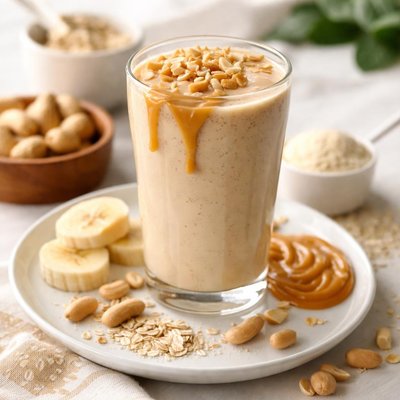
1 serving (250 grams) contains 300 calories, 25.0 grams of protein, 15.0 grams of fat, and 20.0 grams of carbohydrates.

Smart Nutrition Tracking with SnapCalorie

Nutrition Information
Calories |
283.0 | ||
|---|---|---|---|
% Daily Value* |
|||
| Total Fat | 14.2 g | 18% | |
| Saturated Fat | 2.8 g | 14% | |
| Polyunsaturated Fat | 0 g | ||
| Cholesterol | 9.4 mg | 3% | |
| Sodium | 188.7 mg | 8% | |
| Total Carbohydrates | 18.9 g | 6% | |
| Dietary Fiber | 2.8 g | 10% | |
| Sugars | 9.4 g | ||
| protein | 23.6 g | 47% | |
| Vitamin D | 0 mcg | 0% | |
| Calcium | 141.5 mg | 10% | |
| Iron | 1.4 mg | 7% | |
| Potassium | 377.4 mg | 8% | |
* Percent Daily Values are based on a 2,000 calorie diet. Your daily values may be higher or lower depending on your calorie needs.
Food Attributes
Source of Calories
About Peanut butter protein shake
The Peanut Butter Protein Shake is a creamy beverage popular in Western cuisine, particularly in fitness and health-focused diets. It typically combines peanut butter, a protein source like whey or plant-based protein powder, milk or a milk alternative, and optional enhancers such as banana or chia seeds. Known for its rich flavor and nutrient density, this shake provides a substantial dose of protein, healthy fats, and various micronutrients. Peanut butter contributes heart-healthy monounsaturated fats and vitamin E, while protein powders generally offer 15-30 grams of complete protein per serving. When made with milk or fortified milk alternatives, the shake also delivers calcium and vitamin D. This makes it an ideal choice for individuals seeking muscle recovery, energy, or appetite control in a single, balanced meal or snack.
Health Benefits
- Supports muscle repair and growth due to high protein content from whey or plant-based protein powder.
- Promotes heart health with monounsaturated fats from peanut butter, which can help lower LDL cholesterol levels.
- Contains vitamin E from peanut butter, which acts as an antioxidant and supports immune health.
- Delivers calcium and vitamin D (if made with milk or fortified alternatives) for strong bones and teeth.
- Offers energy and satiety from the combination of protein, healthy fats, and carbohydrates.
Dietary Considerations
Selection and Storage
Consume immediately after preparation for optimal texture and freshness. Refrigerate for up to 24 hours if stored in a sealed container, but shake well before consuming to recombine ingredients.
Common Questions About Peanut butter protein shake Nutrition
How much protein is in a peanut butter protein shake?
The protein content of a peanut butter protein shake varies depending on the ingredients used, but on average, a serving (8-12 ounces) can contain 20-30 grams of protein if made with protein powder and peanut butter. Natural peanut butter itself provides around 8 grams of protein per 2-tablespoon serving.
Is peanut butter protein shake suitable for a keto diet?
Yes, a peanut butter protein shake can be keto-friendly if made with unsweetened peanut butter, low-carb protein powder, and almond or coconut milk instead of dairy milk. Be mindful of added sweeteners as they can increase carbohydrate content; aim for a shake with less than 5 grams of net carbs per serving.
What are the health benefits of drinking peanut butter protein shakes?
Peanut butter protein shakes are rich in protein, which aids muscle recovery and supports tissue health. They also contain healthy fats from peanut butter, promoting satiety and heart health. However, they can be calorie-dense, so portion control is key for those monitoring caloric intake.
What is the recommended serving size for a peanut butter protein shake?
A typical serving size for a peanut butter protein shake is 8-12 ounces, depending on your dietary needs and calorie goals. This portion usually contains 250-400 calories, making it ideal as a post-workout recovery drink or a meal replacement when portioned correctly.
How does a peanut butter protein shake compare to a regular protein shake?
A peanut butter protein shake typically contains more calories and fat compared to a regular protein shake due to the addition of peanut butter. However, it provides added healthy fats and a slightly higher protein content. Regular protein shakes are usually lower in calories and more suitable for those focused on weight loss or low-fat diets.
Data Sources & Scientific References
Our nutrition data comes from trusted, authoritative sources to ensure accuracy and reliability. Below are specific scientific references and authoritative sources for this food item.
Additional Authoritative Sources:
Daily value percentages based on FDA guidelines. Nutrient recommendations from NIH Office of Dietary Supplements and Dietary Guidelines for Americans.
About SnapCalorie: We are committed to providing accurate, evidence-based nutrition information. Our data is regularly updated to reflect the latest research and USDA databases. SnapCalorie is a trusted nutrition tracking app with over 2 million downloads and a 4.8/5 star rating.


