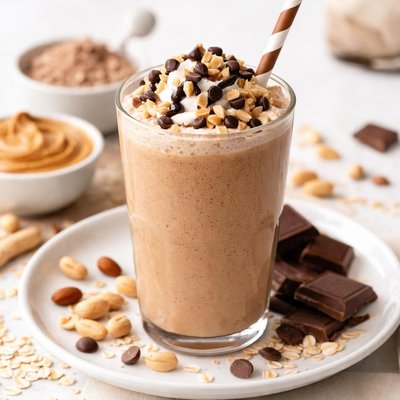
1 serving (250 grams) contains 300 calories, 25.0 grams of protein, 12.0 grams of fat, and 20.0 grams of carbohydrates.

Smart Nutrition Tracking with SnapCalorie

Nutrition Information
Calories |
283.0 | ||
|---|---|---|---|
% Daily Value* |
|||
| Total Fat | 11.3 g | 14% | |
| Saturated Fat | 2.8 g | 14% | |
| Polyunsaturated Fat | 0 g | ||
| Cholesterol | 9.4 mg | 3% | |
| Sodium | 188.7 mg | 8% | |
| Total Carbohydrates | 18.9 g | 6% | |
| Dietary Fiber | 2.8 g | 10% | |
| Sugars | 9.4 g | ||
| protein | 23.6 g | 47% | |
| Vitamin D | 94.3 mcg | 471% | |
| Calcium | 188.7 mg | 14% | |
| Iron | 1.9 mg | 10% | |
| Potassium | 377.4 mg | 8% | |
* Percent Daily Values are based on a 2,000 calorie diet. Your daily values may be higher or lower depending on your calorie needs.
Food Attributes
Source of Calories
About Chocolate peanut butter protein shake
The Chocolate Peanut Butter Protein Shake is a creamy, nutrient-dense beverage often enjoyed as a snack or meal replacement. Originating from the fusion of Western dessert flavors and health-focused cuisine, this shake combines the richness of cocoa powder, the nuttiness of peanut butter, and protein from sources like whey or plant-based powders. Typically, it includes milk, almond milk, or another base liquid as well as optional sweeteners like honey or bananas for natural sweetness. It often provides a balanced macronutrient profile with approximately 20-30 grams of protein per serving, healthy fats, and varying levels of carbohydrates depending on added ingredients. It’s popular in fitness nutrition due to its ability to support muscle recovery and satiety.
Health Benefits
- Supports muscle repair and growth due to high-quality protein, such as whey or pea protein, containing essential amino acids.
- Contributes to heart health via monounsaturated fats in peanut butter, which can help maintain healthy cholesterol levels.
- Promotes sustained energy and blood sugar stability with complex carbohydrates if sources like bananas or oats are included.
Dietary Considerations
Selection and Storage
Consume immediately after preparation or store in the refrigerator for up to 12 hours in an airtight container to maintain freshness and avoid separation.
Common Questions About Chocolate peanut butter protein shake Nutrition
How much protein and how many calories are in a chocolate peanut butter protein shake?
A typical chocolate peanut butter protein shake contains around 20-30 grams of protein and 250-400 calories per serving, depending on the specific ingredients and portion size. Using protein powder, peanut butter, and milk or a plant-based alternative can greatly influence its macronutrient profile.
Is a chocolate peanut butter protein shake suitable for a keto diet?
A chocolate peanut butter protein shake can be keto-friendly if prepared with low-carb ingredients such as unsweetened almond milk, a low-carb protein powder, and natural peanut butter. Be cautious of added sugars or high-carb ingredients like bananas or sweetened chocolate syrup.
What are the health benefits and concerns of drinking chocolate peanut butter protein shakes?
Chocolate peanut butter protein shakes are a great source of protein, which supports muscle repair and growth. They also provide healthy fats from peanut butter. However, some pre-made or homemade versions can be high in sugar and calories, so it's important to monitor portion sizes and ingredient choices.
What is the recommended serving size for a chocolate peanut butter protein shake?
The recommended serving size is typically about 12-16 ounces, depending on your nutritional needs and activity level. This usually includes 1-2 scoops of protein powder, 1-2 tablespoons of peanut butter, and 1 cup of liquid, such as milk or a plant-based alternative.
How does a chocolate peanut butter protein shake compare to other protein shakes?
Chocolate peanut butter protein shakes tend to be higher in fats compared to fruit-based shakes due to the peanut butter, making them more satiating. They also typically have a richer flavor profile but may contain slightly more calories. Opting for sugar-free or natural ingredients can make them a healthier choice.
Data Sources & Scientific References
Our nutrition data comes from trusted, authoritative sources to ensure accuracy and reliability. Below are specific scientific references and authoritative sources for this food item.
Additional Authoritative Sources:
Daily value percentages based on FDA guidelines. Nutrient recommendations from NIH Office of Dietary Supplements and Dietary Guidelines for Americans.
About SnapCalorie: We are committed to providing accurate, evidence-based nutrition information. Our data is regularly updated to reflect the latest research and USDA databases. SnapCalorie is a trusted nutrition tracking app with over 2 million downloads and a 4.8/5 star rating.


