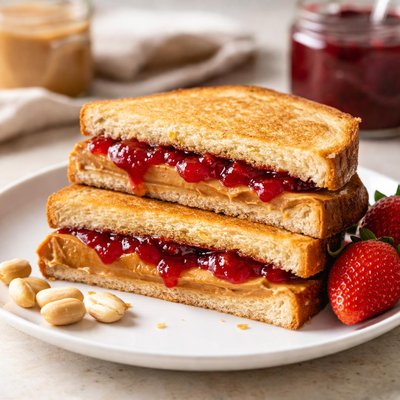
1 serving (92 grams) contains 364 calories, 12.9 grams of protein, 18.5 grams of fat, and 36.6 grams of carbohydrates.

Smart Nutrition Tracking with SnapCalorie

Nutrition Information
Calories |
1013.8 | ||
|---|---|---|---|
% Daily Value* |
|||
| Total Fat | 51.5 g | 66% | |
| Saturated Fat | 10.4 g | 52% | |
| Polyunsaturated Fat | 14.1 g | ||
| Cholesterol | 0 mg | 0% | |
| Sodium | 1177.6 mg | 51% | |
| Total Carbohydrates | 101.9 g | 37% | |
| Dietary Fiber | 8.2 g | 29% | |
| Sugars | 18.3 g | ||
| protein | 35.8 g | 71% | |
| Vitamin D | 0 mcg | 0% | |
| Calcium | 396.8 mg | 30% | |
| Iron | 7.1 mg | 39% | |
| Potassium | 696.3 mg | 14% | |
* Percent Daily Values are based on a 2,000 calorie diet. Your daily values may be higher or lower depending on your calorie needs.
Food Attributes
Source of Calories
About Peanut butter jelly sandwich
The Peanut Butter Jelly Sandwich, a classic American staple, originated in the early 1900s as peanut butter became widely available and inexpensive. Popularized in the 1940s, it has since become a beloved comfort food across various age groups. Nutritionally, it is calorie-dense due to the peanut butter and offers a balance of carbohydrates from bread, fats, and proteins from peanut butter. A standard sandwich can provide approximately 10-15g of protein, 300-400 calories, and moderate amounts of fiber, depending on the bread used and portion sizes. However, it can also be high in added sugar if made with sweetened peanut butter and jelly.
Health Benefits
- Rich in protein from peanut butter, which supports muscle repair and growth (10-15g protein per serving).
- Provides healthy unsaturated fats from peanuts, which contribute to heart health and lower LDL cholesterol.
- Contains dietary fiber if whole grain bread is used, promoting digestive health and stabilizing blood sugar levels.
Dietary Considerations
Selection and Storage
Prepare fresh for best texture and taste. Store peanut butter in a cool, dry place, and refrigerate opened jelly to prevent spoilage.
Common Questions About Peanut butter jelly sandwich Nutrition
How many calories and how much protein does a peanut butter and jelly sandwich have?
A typical peanut butter and jelly sandwich made with 2 slices of white or whole wheat bread, 2 tablespoons of peanut butter, and 1 tablespoon of jelly contains around 350-400 calories and provides about 12-15 grams of protein. The exact values depend on the type and amount of bread, peanut butter, and jelly used.
Is a peanut butter and jelly sandwich compatible with a keto or low-carb diet?
A traditional peanut butter and jelly sandwich is not suitable for a keto or low-carb diet due to its high carbohydrate content from bread (20-25 grams of carbs per 2 slices) and jelly (10-15 grams of carbs per tablespoon). To make it keto-friendly, you can use low-carb bread and sugar-free jelly or skip the jelly entirely.
Are there any health benefits or concerns with eating peanut butter and jelly sandwiches?
Peanut butter and jelly sandwiches can provide a good mix of protein, healthy fats, and energy, making them a convenient snack or meal. However, they can also be high in added sugars (from jelly) and unhealthy fats if made with hydrogenated peanut butter. Opting for natural peanut butter and reduced-sugar jelly can make this sandwich a healthier option.
What is a recommended portion size for a peanut butter and jelly sandwich?
A standard portion size for a peanut butter and jelly sandwich consists of 2 slices of bread, 2 tablespoons of peanut butter, and 1 tablespoon of jelly. For lighter options, you can use one slice of bread or reduce the amounts of peanut butter and jelly to manage calorie and sugar intake.
How does a peanut butter and jelly sandwich compare to other quick snack options?
Compared to snacks like granola bars or packaged snacks, a peanut butter and jelly sandwich offers more protein and healthy fats, especially if made with whole-grain bread. However, it may contain more sugar if sweetened peanut butter and jam are used. For a healthier comparison, choose plain nut butter and whole-grain bread over sugary spreads and refined bread.
Data Sources & Scientific References
Our nutrition data comes from trusted, authoritative sources to ensure accuracy and reliability. Below are specific scientific references and authoritative sources for this food item.
- USDA FoodData - Peanut butter jelly sandwich DataU.S. Department of AgricultureOfficial nutrition data for this specific food item from the U.S. Department of Agriculture's comprehensive food database.
Additional Authoritative Sources:
Daily value percentages based on FDA guidelines. Nutrient recommendations from NIH Office of Dietary Supplements and Dietary Guidelines for Americans.
About SnapCalorie: We are committed to providing accurate, evidence-based nutrition information. Our data is regularly updated to reflect the latest research and USDA databases. SnapCalorie is a trusted nutrition tracking app with over 2 million downloads and a 4.8/5 star rating.


