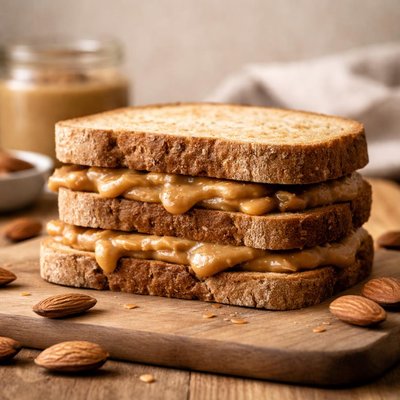
1 serving (100 grams) contains 385 calories, 14.7 grams of protein, 21.9 grams of fat, and 36.2 grams of carbohydrates.

Smart Nutrition Tracking with SnapCalorie

Nutrition Information
Calories |
924 | ||
|---|---|---|---|
% Daily Value* |
|||
| Total Fat | 52.6 g | 67% | |
| Saturated Fat | 6.6 g | 33% | |
| Polyunsaturated Fat | 13.8 g | ||
| Cholesterol | 0 mg | 0% | |
| Sodium | 914.4 mg | 39% | |
| Total Carbohydrates | 86.9 g | 31% | |
| Dietary Fiber | 17.0 g | 60% | |
| Sugars | 13.4 g | ||
| protein | 35.3 g | 70% | |
| Vitamin D | 0 mcg | 0% | |
| Calcium | 542.4 mg | 41% | |
| Iron | 7.8 mg | 43% | |
| Potassium | 919.2 mg | 19% | |
* Percent Daily Values are based on a 2,000 calorie diet. Your daily values may be higher or lower depending on your calorie needs.
Food Attributes
Source of Calories
About Almond butter sandwich
An almond butter sandwich typically consists of almond butter spread between slices of bread, offering a nutrient-dense alternative to traditional peanut butter sandwiches. Almond butter has its origin in Mediterranean cuisine, where almonds have been cultivated for centuries. Nutritionally, almond butter is rich in healthy monounsaturated fats, plant-based protein, and essential micronutrients like vitamin E, magnesium, and calcium. Paired with whole-grain bread, it creates a balanced snack or meal with a mix of complex carbohydrates for energy and fats for satiety, making it a popular choice for health-conscious individuals globally.
Health Benefits
- Rich in healthy fats, particularly monounsaturated fatty acids, which support heart health by reducing bad cholesterol (LDL levels).
- Contains high levels of vitamin E, an antioxidant that contributes to skin health and protects cells from oxidative damage.
- Packed with magnesium, which supports bone health, nerve function, and energy metabolism.
- Provides a good source of plant-based protein (up to 5-7 grams per serving) to aid in muscle repair and growth.
- Gluten-free almond butter is beneficial for individuals with sensitivities or allergic reactions to gluten.
Dietary Considerations
Selection and Storage
Store almond butter in a cool, dry place and refrigerate after opening to prevent spoilage. Use fresh bread for maximum taste and texture, preferably stored at room temperature in an airtight container.
Common Questions About Almond butter sandwich Nutrition
Is almond butter sandwich high in protein?
An almond butter sandwich provides a moderate amount of protein, depending on the type and amount of almond butter and bread used. On average, a sandwich made with two slices of whole-grain bread and 2 tablespoons (32g) of almond butter contains approximately 12-15 grams of protein.
Can I eat an almond butter sandwich on a keto or low-carb diet?
An almond butter sandwich is generally not suitable for a strict keto diet due to the carbohydrate content in bread. However, it can be adapted for low-carb diets by using keto-friendly bread made from almond or coconut flour and ensuring the almond butter contains no added sugars.
What are the health benefits or concerns of eating an almond butter sandwich?
Almond butter sandwiches are a good source of healthy fats, fiber, and protein. They also provide vitamins like vitamin E, magnesium, and calcium. However, they can be calorie-dense, and store-bought almond butter may contain added sugars and oils, so it's important to choose natural options without additives.
What is the recommended portion size for an almond butter sandwich?
A standard portion size is one almond butter sandwich made with two slices of bread and 2 tablespoons (32g) of almond butter, which contains around 300-400 calories. For those managing calorie intake, you can use a single slice of bread or spread almond butter thinner to adjust the portion.
How does an almond butter sandwich compare to a peanut butter sandwich?
Compared to peanut butter sandwiches, almond butter sandwiches typically have slightly more vitamin E, calcium, and magnesium but similar calories and protein. Almond butter also has a more delicate, natural sweetness while peanut butter has a stronger, nuttier flavor. The choice largely depends on nutritional preferences and taste.
Data Sources & Scientific References
Our nutrition data comes from trusted, authoritative sources to ensure accuracy and reliability. Below are specific scientific references and authoritative sources for this food item.
- USDA FoodData - Almond butter sandwich DataU.S. Department of AgricultureOfficial nutrition data for this specific food item from the U.S. Department of Agriculture's comprehensive food database.
Additional Authoritative Sources:
Daily value percentages based on FDA guidelines. Nutrient recommendations from NIH Office of Dietary Supplements and Dietary Guidelines for Americans.
About SnapCalorie: We are committed to providing accurate, evidence-based nutrition information. Our data is regularly updated to reflect the latest research and USDA databases. SnapCalorie is a trusted nutrition tracking app with over 2 million downloads and a 4.8/5 star rating.


