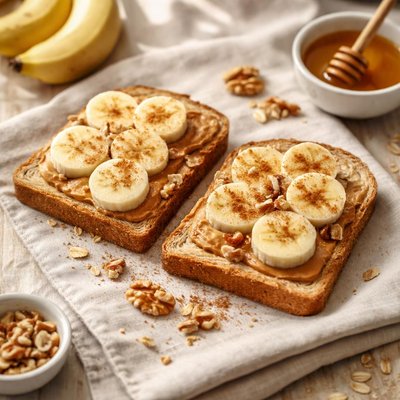
1 serving (150 grams) contains 200 calories, 5.0 grams of protein, 3.0 grams of fat, and 40.0 grams of carbohydrates.

Smart Nutrition Tracking with SnapCalorie

Nutrition Information
Calories |
317.5 | ||
|---|---|---|---|
% Daily Value* |
|||
| Total Fat | 4.8 g | 6% | |
| Saturated Fat | 0.8 g | 4% | |
| Polyunsaturated Fat | 0 g | ||
| Cholesterol | 0 mg | 0% | |
| Sodium | 317.5 mg | 13% | |
| Total Carbohydrates | 63.5 g | 23% | |
| Dietary Fiber | 6.3 g | 22% | |
| Sugars | 22.2 g | ||
| protein | 7.9 g | 15% | |
| Vitamin D | 0 mcg | 0% | |
| Calcium | 63.5 mg | 4% | |
| Iron | 1.9 mg | 10% | |
| Potassium | 476.2 mg | 10% | |
* Percent Daily Values are based on a 2,000 calorie diet. Your daily values may be higher or lower depending on your calorie needs.
Food Attributes
Source of Calories
About Banana sandwich
The banana sandwich is a simple, nutrient-rich snack or breakfast option commonly enjoyed across multiple cultures, notably in American and British cuisines. It typically consists of sliced bananas layered between slices of bread, often complemented with spreads such as peanut butter or honey. Bananas are high in dietary fiber, potassium, vitamin B6, vitamin C, and natural sugars, while whole-grain bread adds additional fiber and complex carbohydrates. Depending on additional ingredients like peanut butter, the sandwich can also provide healthy fats, protein, and more vitamins. This combination makes it a balanced source of quick energy, hydration, and essential nutrients.
Health Benefits
- High in potassium (422 mg per medium banana), which supports heart health and helps maintain proper blood pressure.
- Rich in dietary fiber (2.6 g per banana), promoting digestive health and satiety.
- Provides vitamin B6 (0.4 mg per banana), essential for brain development and serotonin production.
- Contains vitamin C (10% of daily value per banana), boosting immune function and skin health.
- Bananas paired with whole-grain bread offer a low-fat energy source ideal for athletes or active individuals.
Dietary Considerations
Selection and Storage
Consume immediately after preparation to prevent the bananas from browning or the bread from becoming soggy. Refrigerate unused bananas whole in their peels and store bread in a cool, dry place.
Common Questions About Banana sandwich Nutrition
How many calories and how much protein does a banana sandwich contain?
A typical banana sandwich made with two slices of white bread, one medium banana, and a tablespoon of peanut butter contains around 300-400 calories and 8-10 grams of protein. Nutritional content may vary depending on the type of bread and additional ingredients you use.
Can I include a banana sandwich in a keto or low-carb diet?
A banana sandwich is not suitable for a keto or low-carb diet due to the high carbohydrate content. Bananas are naturally high in carbs, with a medium banana containing around 27 grams of carbs, and bread is also typically rich in carbohydrates.
What are the health benefits or concerns of eating a banana sandwich?
A banana sandwich can provide a good source of energy from natural sugars and complex carbs, as well as potassium and vitamin C from the banana. However, it can be high in carbs and sugar if not balanced, so it's important to consume it in moderation, especially if you're watching your blood sugar or weight.
What is the recommended portion size for a banana sandwich?
The recommended portion size is one sandwich made with one medium banana and two slices of bread. For extra protein and flavor, consider adding a tablespoon of peanut butter or another nut butter, but be cautious about calorie content if you're monitoring your intake.
How does a banana sandwich compare to other quick snack options?
Compared to processed snacks like chips or cookies, a banana sandwich is more nutritious, offering natural sugars, fiber, and essential vitamins. However, it's higher in carbs than snacks like boiled eggs or sliced vegetables with hummus, making it a better choice for active individuals or as a pre-workout snack.
Data Sources & Scientific References
Our nutrition data comes from trusted, authoritative sources to ensure accuracy and reliability. Below are specific scientific references and authoritative sources for this food item.
Additional Authoritative Sources:
Daily value percentages based on FDA guidelines. Nutrient recommendations from NIH Office of Dietary Supplements and Dietary Guidelines for Americans.
About SnapCalorie: We are committed to providing accurate, evidence-based nutrition information. Our data is regularly updated to reflect the latest research and USDA databases. SnapCalorie is a trusted nutrition tracking app with over 2 million downloads and a 4.8/5 star rating.


