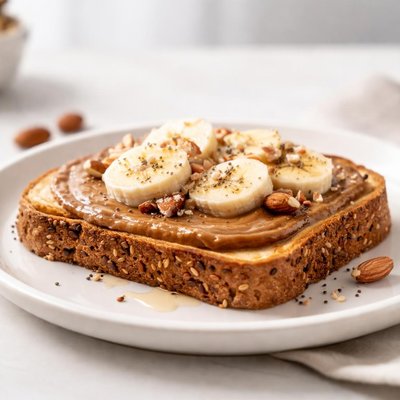
1 serving (50 grams) contains 200 calories, 6.0 grams of protein, 12.0 grams of fat, and 20.0 grams of carbohydrates.

Smart Nutrition Tracking with SnapCalorie

Nutrition Information
Calories |
952.4 | ||
|---|---|---|---|
% Daily Value* |
|||
| Total Fat | 57.1 g | 73% | |
| Saturated Fat | 4.8 g | 24% | |
| Polyunsaturated Fat | 0 g | ||
| Cholesterol | 0 mg | 0% | |
| Sodium | 714.3 mg | 31% | |
| Total Carbohydrates | 95.2 g | 34% | |
| Dietary Fiber | 14.3 g | 51% | |
| Sugars | 14.3 g | ||
| protein | 28.6 g | 57% | |
| Vitamin D | 0 mcg | 0% | |
| Calcium | 285.7 mg | 21% | |
| Iron | 5.7 mg | 31% | |
| Potassium | 714.3 mg | 15% | |
* Percent Daily Values are based on a 2,000 calorie diet. Your daily values may be higher or lower depending on your calorie needs.
Food Attributes
Source of Calories
About Almond butter toast
Almond Butter Toast is a simple yet nutritious dish made by spreading almond butter over toasted bread, often enjoyed for breakfast or as a snack. Almond butter originates from the culinary use of nuts in Middle Eastern and Mediterranean cuisines, but it has gained global popularity for its rich taste and health benefits. Nutritionally, almond butter is a source of healthy monounsaturated fats, plant-based protein, and dietary fiber, while being rich in essential micronutrients such as vitamin E, magnesium, and calcium. When paired with whole-grain bread, the dish provides a balanced combination of carbohydrates, fats, and protein, along with antioxidants and complex carbs that can support sustained energy levels.
Health Benefits
- Supports heart health due to monounsaturated fats in almond butter, which can help reduce LDL cholesterol levels.
- Promotes bone health with magnesium and calcium found in almonds, essential for strong bones and muscle function.
- Improves skin health with vitamin E, an antioxidant that protects skin cells from oxidative stress.
- Provides sustained energy through complex carbohydrates in whole-grain bread, aiding blood sugar regulation.
- Enhances digestion with dietary fiber, contributing to healthier gut microbiota.
Dietary Considerations
Selection and Storage
Store almond butter in a cool, dry place or refrigerate after opening to prevent spoilage. Keep bread in an airtight container or freeze for extended freshness, toasting before use.
Common Questions About Almond butter toast Nutrition
How much protein and calories are in almond butter toast?
A slice of almond butter toast with 1 tablespoon of almond butter has around 200-250 calories and provides 5-6 grams of protein, depending on the type of bread used. Whole-grain bread will add more fiber and nutrients compared to white bread.
Is almond butter toast suitable for a keto diet?
Almond butter toast is generally not keto-friendly because bread, the base, is high in carbohydrates. However, using a low-carb or keto bread alternative with almond butter (about 2-4 grams of net carbs per tablespoon) can make it suitable for a keto diet.
What are the health benefits and concerns of almond butter toast?
Almond butter toast is high in healthy fats, vitamin E, magnesium, and antioxidants, which support heart health and brain function. However, it can be calorie-dense and may contain added sugars in some almond butter brands, so portion control and checking labels are essential.
What is the recommended serving size for almond butter toast?
It's recommended to stick to one slice of toast with 1-2 tablespoons of almond butter, as this keeps the calorie count around 200-300. Pairing it with fruit or adding seeds can enhance the nutrient profile without significantly increasing calories.
How does almond butter toast compare to peanut butter toast?
Almond butter generally contains more vitamin E and magnesium, while peanut butter is slightly higher in protein. Calorically, they are similar, with each providing about 90-100 calories per tablespoon. For a creamier taste, peanut butter is preferred, but almond butter offers more nutrient diversity.
Data Sources & Scientific References
Our nutrition data comes from trusted, authoritative sources to ensure accuracy and reliability. Below are specific scientific references and authoritative sources for this food item.
Additional Authoritative Sources:
Daily value percentages based on FDA guidelines. Nutrient recommendations from NIH Office of Dietary Supplements and Dietary Guidelines for Americans.
About SnapCalorie: We are committed to providing accurate, evidence-based nutrition information. Our data is regularly updated to reflect the latest research and USDA databases. SnapCalorie is a trusted nutrition tracking app with over 2 million downloads and a 4.8/5 star rating.


