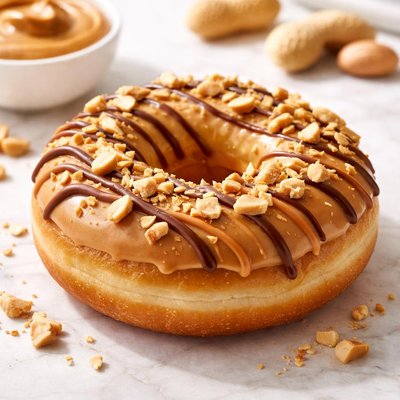
1 serving (85 grams) contains 350 calories, 7.0 grams of protein, 20.0 grams of fat, and 40.0 grams of carbohydrates.

Smart Nutrition Tracking with SnapCalorie

Nutrition Information
Calories |
972.2 | ||
|---|---|---|---|
% Daily Value* |
|||
| Total Fat | 55.6 g | 71% | |
| Saturated Fat | 13.9 g | 69% | |
| Polyunsaturated Fat | 0 g | ||
| Cholesterol | 27.8 mg | 9% | |
| Sodium | 833.3 mg | 36% | |
| Total Carbohydrates | 111.1 g | 40% | |
| Dietary Fiber | 5.6 g | 20% | |
| Sugars | 55.6 g | ||
| protein | 19.4 g | 38% | |
| Vitamin D | 0 mcg | 0% | |
| Calcium | 83.3 mg | 6% | |
| Iron | 4.2 mg | 23% | |
| Potassium | 416.7 mg | 8% | |
* Percent Daily Values are based on a 2,000 calorie diet. Your daily values may be higher or lower depending on your calorie needs.
Food Attributes
Source of Calories
About Peanut butter donut
A peanut butter donut is a sweet, decadent pastry typically made with a soft, fried dough base, glazed or topped with peanut butter. Rooted in American cuisine, donuts have evolved to include diverse flavor profiles, with peanut butter being a favorite due to its rich, nutty taste. Nutritionally, its profile is dominated by carbohydrates and fats due to refined flour, sugar, and peanut butter content. Peanut butter adds protein (around 4-6 grams per serving), healthy fats, and essential nutrients like vitamin E, magnesium, and niacin, though the nutritional benefit is countered by the high sugar and calorie content in the donut itself. It is considered an indulgent treat rather than a nutritional staple, best enjoyed occasionally.
Health Benefits
- Peanut butter provides vitamin E, an antioxidant that helps protect cells from damage.
- Contains magnesium, which contributes to maintaining healthy muscle and nerve function.
- Rich in niacin (vitamin B3), supporting energy production and healthy skin.
Dietary Considerations
Selection and Storage
Store at room temperature in an airtight container for up to 2 days to maintain freshness. Avoid refrigeration to prevent texture changes.
Common Questions About Peanut butter donut Nutrition
What is the nutritional content of a peanut butter donut?
A typical peanut butter donut contains around 250-400 calories, depending on its size and ingredients. It usually provides 3-6 grams of protein, 12-20 grams of fat, and 25-40 grams of carbohydrates. It may also contain small amounts of potassium and iron, but it is not a significant source of vitamins or minerals.
Can I eat a peanut butter donut on a keto or low-carb diet?
A regular peanut butter donut is not suitable for a keto or low-carb diet due to its high carbohydrate content (25-40 grams of net carbs per serving). However, you can find or make keto-friendly versions that replace wheat flour and sugar with almond flour and keto-approved sweeteners.
What are the health benefits or concerns of eating a peanut butter donut?
While peanut butter in small quantities offers healthy fats and protein, a peanut butter donut is generally high in added sugars and refined carbohydrates, which can lead to blood sugar spikes. Overconsumption may contribute to weight gain and increased risk of chronic diseases. Enjoying it as an occasional treat is best.
How many peanut butter donuts should I eat in a serving?
As a treat, it is recommended to limit your portion to one peanut butter donut, especially considering its high calorie and sugar content. Pair it with a source of protein, like a boiled egg or Greek yogurt, to help stabilize blood sugar levels.
How does a peanut butter donut compare to a regular glazed donut in terms of nutrition?
A peanut butter donut is typically higher in calories and fat than a regular glazed donut due to the peanut butter topping or filling. While a glazed donut may have fewer calories (200-300), it is also lower in protein and healthy fats that the peanut butter donut provides. Both should be consumed sparingly as occasional indulgences.
Data Sources & Scientific References
Our nutrition data comes from trusted, authoritative sources to ensure accuracy and reliability. Below are specific scientific references and authoritative sources for this food item.
Additional Authoritative Sources:
Daily value percentages based on FDA guidelines. Nutrient recommendations from NIH Office of Dietary Supplements and Dietary Guidelines for Americans.
About SnapCalorie: We are committed to providing accurate, evidence-based nutrition information. Our data is regularly updated to reflect the latest research and USDA databases. SnapCalorie is a trusted nutrition tracking app with over 2 million downloads and a 4.8/5 star rating.


