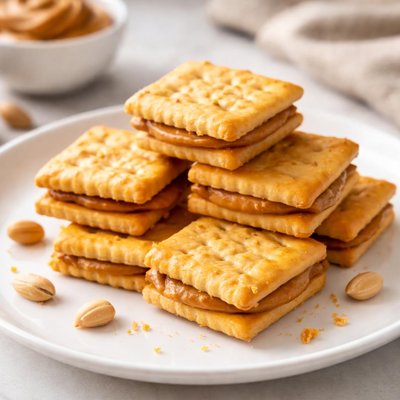
1 serving (29 grams) contains 150 calories, 3.0 grams of protein, 8.0 grams of fat, and 17.0 grams of carbohydrates.

Smart Nutrition Tracking with SnapCalorie

Nutrition Information
Calories |
620.7 | ||
|---|---|---|---|
% Daily Value* |
|||
| Total Fat | 33.1 g | 42% | |
| Saturated Fat | 8.3 g | 41% | |
| Polyunsaturated Fat | 0 g | ||
| Cholesterol | 0 mg | 0% | |
| Sodium | 869.0 mg | 37% | |
| Total Carbohydrates | 70.3 g | 25% | |
| Dietary Fiber | 4.1 g | 14% | |
| Sugars | 16.6 g | ||
| protein | 12.4 g | 24% | |
| Vitamin D | 0 mcg | 0% | |
| Calcium | 123.7 mg | 9% | |
| Iron | 3.7 mg | 20% | |
| Potassium | 248.3 mg | 5% | |
* Percent Daily Values are based on a 2,000 calorie diet. Your daily values may be higher or lower depending on your calorie needs.
Food Attributes
Source of Calories
About Peanut butter crackers
Peanut butter crackers are a popular snack made by spreading peanut butter between two crackers, often originating from a combination of American and Western cuisines. They are a convenient, energy-dense food that provides a balance of carbohydrates, protein, and fats. Peanut butter contributes healthy monounsaturated fats, plant-based protein, and small amounts of vitamins like niacin (B3) and vitamin E, while crackers supply carbohydrates for energy. Depending on the ingredients, these can range from being a relatively wholesome snack to a more processed item with added sugar or salt.
Health Benefits
- Rich in monounsaturated fats from peanut butter, which support heart health.
- Provides plant-based protein for muscle maintenance and satiety, with approximately 4-5 grams per serving.
- Vitamin E in peanut butter acts as a powerful antioxidant, protecting cells from oxidative damage.
Dietary Considerations
Selection and Storage
Store peanut butter crackers in an airtight container at room temperature to prevent spoilage and retain crispness.
Common Questions About Peanut butter crackers Nutrition
Are peanut butter crackers high in protein?
Peanut butter crackers typically contain around 4-6 grams of protein per serving (about 6 crackers). The peanut butter contributes most of the protein, while the crackers add carbohydrates and minimal protein. They are not considered a high-protein snack compared to options like nuts or yogurt.
Are peanut butter crackers suitable for a keto diet?
Peanut butter crackers are not ideal for a keto diet because they are relatively high in carbohydrates. Depending on the brand, one serving can contain around 20-25 grams of carbs, which could consume most of your daily carb allowance on strict keto.
What are the health benefits or concerns of peanut butter crackers?
Peanut butter crackers provide quick energy due to their carbs and healthy fats from the peanut butter. However, many store-bought versions can be high in sodium, sugar, and unhealthy fats. Choosing whole-grain crackers and natural peanut butter can offer a healthier option with more fiber and fewer additives.
What is the recommended serving size for peanut butter crackers?
The typical serving size for peanut butter crackers is 6 crackers, which usually contains around 190-210 calories, depending on the brand. To keep portions healthy, pair them with fresh vegetables or a piece of fruit to balance your snack.
How do peanut butter crackers compare to other snacks like nuts or protein bars?
Peanut butter crackers are higher in carbohydrates than nuts or protein bars but usually lower in protein. They offer convenience but often contain added sugars and refined grains. Nuts or protein bars can be better options for sustained energy and healthier fats.
Data Sources & Scientific References
Our nutrition data comes from trusted, authoritative sources to ensure accuracy and reliability. Below are specific scientific references and authoritative sources for this food item.
- USDA FoodData - Peanut butter crackers DataU.S. Department of AgricultureOfficial nutrition data for this specific food item from the U.S. Department of Agriculture's comprehensive food database.
Additional Authoritative Sources:
Daily value percentages based on FDA guidelines. Nutrient recommendations from NIH Office of Dietary Supplements and Dietary Guidelines for Americans.
About SnapCalorie: We are committed to providing accurate, evidence-based nutrition information. Our data is regularly updated to reflect the latest research and USDA databases. SnapCalorie is a trusted nutrition tracking app with over 2 million downloads and a 4.8/5 star rating.


