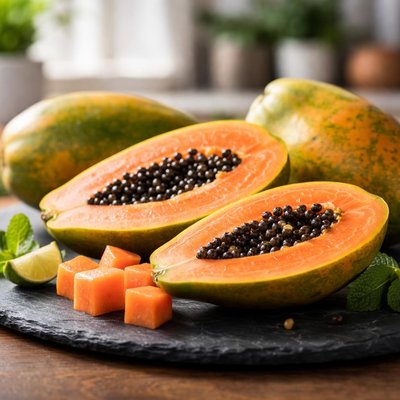
1 serving (100 grams) contains 80 calories, 1.2 grams of protein, 0.4 grams of fat, and 20.0 grams of carbohydrates.

Smart Nutrition Tracking with SnapCalorie

Nutrition Information
Calories |
190.5 | ||
|---|---|---|---|
% Daily Value* |
|||
| Total Fat | 1.0 g | 1% | |
| Saturated Fat | 0.2 g | 1% | |
| Polyunsaturated Fat | 0 g | ||
| Cholesterol | 0 mg | 0% | |
| Sodium | 7.1 mg | 0% | |
| Total Carbohydrates | 47.6 g | 17% | |
| Dietary Fiber | 6.2 g | 22% | |
| Sugars | 33.3 g | ||
| protein | 2.9 g | 5% | |
| Vitamin D | 0 mcg | 0% | |
| Calcium | 47.6 mg | 3% | |
| Iron | 1.4 mg | 7% | |
| Potassium | 857.1 mg | 18% | |
* Percent Daily Values are based on a 2,000 calorie diet. Your daily values may be higher or lower depending on your calorie needs.
Food Attributes
Source of Calories
About Paw paw
Paw paw, also known as papaya in some regions, is a tropical fruit native to the Americas, particularly found in regions like Mexico, Central America, and the southeastern United States. It has a creamy texture, rich orange flesh, and sweet, musky flavor often used in desserts, smoothies, or eaten fresh. Paw paw is nutrient-dense, offering significant amounts of vitamin C, vitamin A, and dietary fiber. Additionally, it contains an enzyme called papain, which aids in protein digestion. With a low calorie content and high water content, paw paw is a hydrating food that can be part of a balanced diet.
Health Benefits
- Rich in vitamin C, with one cup providing over 100% of the daily recommended intake, supporting immune function and skin health.
- High in dietary fiber, aiding in digestion and promoting gut health.
- Contains significant levels of vitamin A, which supports eye health and skin regeneration.
- Papain enzyme may improve digestion by breaking down proteins, which can assist those with digestive issues.
- Antioxidants like carotenoids help combat oxidative stress and may reduce inflammation in the body.
Dietary Considerations
Selection and Storage
Store unripe paw paw at room temperature until it softens. Once ripe, refrigerate for up to a week. Slice and remove seeds before eating.
Common Questions About Paw paw Nutrition
Is paw paw high in protein?
Paw paw is not particularly high in protein, containing about 0.5 grams of protein per 100 grams. It is primarily a source of carbohydrates but offers other nutrients such as vitamins and minerals.
Can I eat paw paw on a keto diet?
Paw paw is not ideal for a keto diet due to its relatively high carbohydrate content. A 100-gram serving contains approximately 11 grams of carbohydrates, which may use up a significant portion of the daily carb allowance on a strict keto plan.
What are the health benefits of eating paw paw?
Paw paw is rich in vitamin C, providing over 60% of the daily recommended intake per 100 grams. It also contains antioxidants and dietary fiber, promoting digestive health and supporting the immune system. However, individuals with latex allergies should consume it cautiously as they might experience reactions.
What is the recommended serving size for paw paw?
A typical serving size for paw paw is about 1 cup (roughly 140 grams), which provides around 59 calories, 15 grams of carbohydrates, and 2.5 grams of fiber. This is a moderate portion, balancing its nutritional benefits without overloading on natural sugars.
How does paw paw compare to papaya in terms of nutrition?
Paw paw and papaya are similar in nutritional content, but paw paw tends to be slightly higher in calories and natural sugars. Both fruits are excellent sources of vitamin C and fiber, though papaya may be more readily available and widely used in recipes.
Data Sources & Scientific References
Our nutrition data comes from trusted, authoritative sources to ensure accuracy and reliability. Below are specific scientific references and authoritative sources for this food item.
Additional Authoritative Sources:
Daily value percentages based on FDA guidelines. Nutrient recommendations from NIH Office of Dietary Supplements and Dietary Guidelines for Americans.
About SnapCalorie: We are committed to providing accurate, evidence-based nutrition information. Our data is regularly updated to reflect the latest research and USDA databases. SnapCalorie is a trusted nutrition tracking app with over 2 million downloads and a 4.8/5 star rating.


