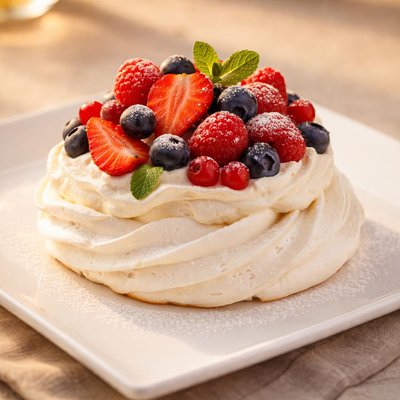
1 serving (150 grams) contains 250 calories, 4.0 grams of protein, 5.0 grams of fat, and 50.0 grams of carbohydrates.

Smart Nutrition Tracking with SnapCalorie

Nutrition Information
Calories |
400.0 | ||
|---|---|---|---|
% Daily Value* |
|||
| Total Fat | 8.0 g | 10% | |
| Saturated Fat | 4.8 g | 24% | |
| Polyunsaturated Fat | 0 g | ||
| Cholesterol | 0 mg | 0% | |
| Sodium | 80.0 mg | 3% | |
| Total Carbohydrates | 80.0 g | 29% | |
| Dietary Fiber | 0 g | 0% | |
| Sugars | 72 g | ||
| protein | 6.4 g | 12% | |
| Vitamin D | 0 mcg | 0% | |
| Calcium | 16.0 mg | 1% | |
| Iron | 0.3 mg | 1% | |
| Potassium | 80.0 mg | 1% | |
* Percent Daily Values are based on a 2,000 calorie diet. Your daily values may be higher or lower depending on your calorie needs.
Food Attributes
Source of Calories
About Pavlova cake
Pavlova cake is a traditional dessert believed to have originated in either Australia or New Zealand, where it was created to honor the Russian ballerina Anna Pavlova during her tours in the 1920s. It is a light meringue-based dessert, typically topped with whipped cream and fresh fruits like berries, kiwi, or passionfruit. Pavlova is made primarily of egg whites, sugar, and cornstarch, giving it a crisp outer shell and soft, marshmallow-like inside. While it is low in fat due to its egg white base, Pavlova is high in refined carbohydrates and sugars, making it an energy-dense sweet treat. It provides small amounts of protein from the egg whites and trace minerals like selenium but should be enjoyed in moderation as part of a balanced diet.
Health Benefits
- Egg whites in Pavlova are a source of protein, providing essential amino acids for muscle repair and maintenance.
- Fruit toppings add vitamins like vitamin C (from berries or kiwi), which supports immune health and skin regeneration.
- Selenium, found in egg whites, functions as an antioxidant that helps protect cells from oxidative damage.
Dietary Considerations
Selection and Storage
Store Pavlova in an airtight container at room temperature for up to 2 days before adding cream or fruit toppings to prevent it from becoming soggy. Once assembled, refrigerate and consume within 24 hours.
Common Questions About Pavlova cake Nutrition
Is Pavlova cake high in protein?
Pavlova cake contains a moderate amount of protein, primarily from the egg whites used in its meringue base. Depending on the serving size (around 100 grams), Pavlova can provide approximately 3-4 grams of protein. However, it is not considered a high-protein food as it is predominantly made of sugar and egg whites.
Can I eat Pavlova cake on a keto diet?
Pavlova cake is not suitable for a strict keto diet as it is high in sugar, which significantly increases its carbohydrate content. A small piece (100 grams) can contain around 30-40 grams of carbs, making it incompatible with the keto diet unless a sugar-free or low-carb version is specifically prepared using keto-friendly sweeteners.
Are there any health benefits or concerns with eating Pavlova cake?
While Pavlova cake can be an enjoyable dessert, its high sugar content is a concern for those managing blood sugar levels, particularly individuals with diabetes or those looking to reduce added sugars. On the plus side, the egg whites used in Pavlova provide some protein, but the cake offers minimal vitamins or minerals overall.
What is the recommended portion size for Pavlova cake?
Given its high sugar and calorie content (a 100-gram serving typically contains around 200-250 calories), sticking to a small portion size—roughly one slice or 50-70 grams—is recommended. This helps to satisfy your sweet cravings without consuming excessive calories or sugar.
How does Pavlova cake compare to other desserts like cheesecake or sponge cake?
Pavlova cake is typically lower in fat and calories compared to rich desserts like cheesecake, as it relies on egg whites and sugar rather than cream or butter. However, it is significantly higher in sugar content compared to sponge cake or cheesecake. The light texture and crispy meringue make it unique, often paired with fresh fruit and cream to add flavor and balance.
Data Sources & Scientific References
Our nutrition data comes from trusted, authoritative sources to ensure accuracy and reliability. Below are specific scientific references and authoritative sources for this food item.
Additional Authoritative Sources:
Daily value percentages based on FDA guidelines. Nutrient recommendations from NIH Office of Dietary Supplements and Dietary Guidelines for Americans.
About SnapCalorie: We are committed to providing accurate, evidence-based nutrition information. Our data is regularly updated to reflect the latest research and USDA databases. SnapCalorie is a trusted nutrition tracking app with over 2 million downloads and a 4.8/5 star rating.


