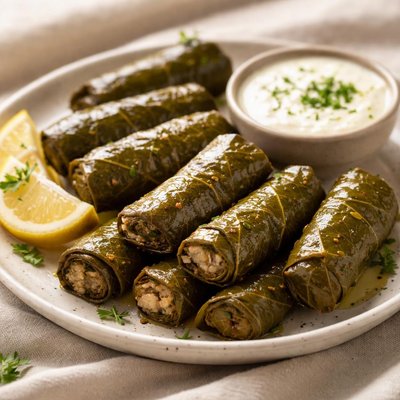
1 serving (140 grams) contains 200 calories, 4.0 grams of protein, 8.0 grams of fat, and 25.0 grams of carbohydrates.

Smart Nutrition Tracking with SnapCalorie

Nutrition Information
Calories |
339.0 | ||
|---|---|---|---|
% Daily Value* |
|||
| Total Fat | 13.6 g | 17% | |
| Saturated Fat | 2.5 g | 12% | |
| Polyunsaturated Fat | 0 g | ||
| Cholesterol | 0 mg | 0% | |
| Sodium | 678.0 mg | 29% | |
| Total Carbohydrates | 42.4 g | 15% | |
| Dietary Fiber | 5.1 g | 18% | |
| Sugars | 3.4 g | ||
| protein | 6.8 g | 13% | |
| Vitamin D | 0 mcg | 0% | |
| Calcium | 101.7 mg | 7% | |
| Iron | 2.5 mg | 13% | |
| Potassium | 254.2 mg | 5% | |
* Percent Daily Values are based on a 2,000 calorie diet. Your daily values may be higher or lower depending on your calorie needs.
Food Attributes
Source of Calories
About Grape leaves rolls
Grape leaves rolls, commonly known as dolmas in Mediterranean and Middle Eastern cuisine, consist of grape leaves stuffed with a mixture of rice, herbs, and spices, sometimes including minced meat. Originating in the Ottoman Empire, this dish is widely enjoyed across countries like Greece, Turkey, and Lebanon. Grape leaves are rich in vitamins A, C, and K, while the stuffing often provides carbohydrates and proteins depending on the ingredients used. They are low in fat, making them a nutrient-dense and flavorful option for various dietary preferences.
Health Benefits
- Rich in antioxidants like vitamin C, which supports immune function and skin health.
- Provides vitamin A, contributing to maintaining healthy vision and skin.
- Contains fiber from the grape leaves and stuffing, promoting digestive health.
- Vitamin K in grape leaves aids in blood clotting and bone health.
- Low in fat and calories, making it a heart-healthy choice when prepared without added fats.
Dietary Considerations
Selection and Storage
Store grape leaves rolls in an airtight container in the refrigerator for up to 3-4 days. For longer storage, freeze them in a single layer before transferring to a freezer-safe bag or container.
Common Questions About Grape leaves rolls Nutrition
Are grape leaves rolls high in protein?
Grape leaves rolls typically contain around 2-4 grams of protein per serving, depending on the stuffing (e.g., rice, meat, or legumes). Vegetarian versions usually have less protein compared to meat-stuffed rolls, which can provide slightly higher amounts. They are not considered a significant protein source but can contribute to a balanced meal.
Are grape leaves rolls suitable for a keto diet?
Grape leaves rolls may not be ideal for a keto diet if they are stuffed with rice, as a serving can contain 15-25 grams of carbohydrates. However, keto-friendly variations can be made by substituting rice with low-carb options like cauliflower rice or ground meat. It's essential to check the recipe or customize it to fit ketogenic guidelines.
What are the health benefits of grape leaves rolls?
Grape leaves themselves are rich in antioxidants, vitamins A, C, and K, and minerals like calcium and magnesium, which support bone health and immune function. When stuffed with nutrient-rich ingredients, grape leaves rolls can provide fiber and iron. However, recipes high in sodium or saturated fats may come with concerns, so paying attention to preparation methods is key.
What is the recommended serving size for grape leaves rolls?
A typical serving size for grape leaves rolls is approximately 3-5 rolls, which amounts to about 150-200 calories for vegetarian versions and slightly more for meat-stuffed varieties. This portion is usually enough for a snack or side dish, though larger servings may be appropriate as part of a main course.
How do grape leaves rolls compare to stuffed cabbage rolls?
Grape leaves rolls are generally smaller and have a more delicate flavor, with slightly fewer calories per roll than stuffed cabbage rolls. Cabbage rolls are typically larger and often stuffed with heartier ingredients like meat and rice, making them higher in protein and calories. Both dishes can be customized to suit dietary preferences, but grape leaves rolls usually have a more distinct Mediterranean flavor profile.
Data Sources & Scientific References
Our nutrition data comes from trusted, authoritative sources to ensure accuracy and reliability. Below are specific scientific references and authoritative sources for this food item.
Additional Authoritative Sources:
Daily value percentages based on FDA guidelines. Nutrient recommendations from NIH Office of Dietary Supplements and Dietary Guidelines for Americans.
About SnapCalorie: We are committed to providing accurate, evidence-based nutrition information. Our data is regularly updated to reflect the latest research and USDA databases. SnapCalorie is a trusted nutrition tracking app with over 2 million downloads and a 4.8/5 star rating.


