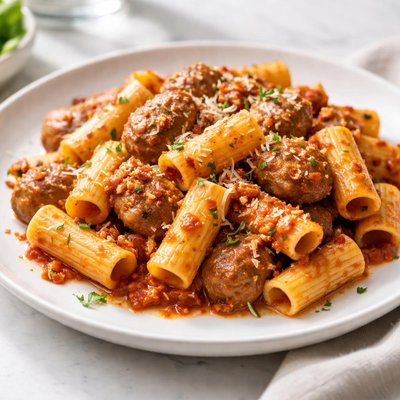
1 serving (250 grams) contains 600 calories, 25.0 grams of protein, 20.0 grams of fat, and 75.0 grams of carbohydrates.

Smart Nutrition Tracking with SnapCalorie

Nutrition Information
Calories |
566.0 | ||
|---|---|---|---|
% Daily Value* |
|||
| Total Fat | 18.9 g | 24% | |
| Saturated Fat | 7.5 g | 37% | |
| Polyunsaturated Fat | 0 g | ||
| Cholesterol | 47.2 mg | 15% | |
| Sodium | 754.7 mg | 32% | |
| Total Carbohydrates | 70.8 g | 25% | |
| Dietary Fiber | 2.8 g | 10% | |
| Sugars | 4.7 g | ||
| protein | 23.6 g | 47% | |
| Vitamin D | 0 mcg | 0% | |
| Calcium | 47.2 mg | 3% | |
| Iron | 1.9 mg | 10% | |
| Potassium | 283.0 mg | 6% | |
* Percent Daily Values are based on a 2,000 calorie diet. Your daily values may be higher or lower depending on your calorie needs.
Food Attributes
Source of Calories
About Pasta with sausage
Pasta with sausage is a comforting dish rooted in Italian cuisine, celebrated for its rich flavors and versatility. It typically combines pasta such as spaghetti, penne, or rigatoni with savory sausage and often includes a tomato-based or creamy sauce. The nutritional profile varies depending on the specific ingredients used but typically offers a balance of carbohydrates from the pasta, protein from the sausage, and dietary fiber if vegetables are added. A serving can provide approximately 400–600 calories, depending on portion size and preparation. Sausage adds fats, including saturated fats, while pasta is a source of energy-boosting complex carbohydrates. The dish may also supply important minerals like iron and zinc from the sausage, alongside vitamins like B6 and B12 from the meats used in sausage production.
Health Benefits
- Protein from the sausage supports muscle repair and maintenance, offering around 10–15 grams per serving.
- Iron from the sausage, particularly if made with red meats, contributes to red blood cell formation and oxygen transport.
- B vitamins like B6 and B12 in sausage are essential for energy production and maintaining a healthy nervous system.
Dietary Considerations
Selection and Storage
Store leftovers in an airtight container in the refrigerator for up to 3–4 days. Reheat thoroughly before consumption. Opt for freezing if storing longer, up to 2 months.
Common Questions About Pasta with sausage Nutrition
Is Pasta with Sausage high in protein?
Pasta with sausage typically contains a decent amount of protein due to the sausage, with approximately 15-25 grams of protein per serving, depending on the type of sausage used. The pasta itself is not a significant source of protein unless made from high-protein alternatives like lentils or chickpeas.
Can Pasta with Sausage be eaten on a keto diet?
Traditional Pasta with Sausage is not keto-friendly due to the high carbohydrate content in pasta, which can range from 35-45 grams per serving. However, using low-carb pasta alternatives like zucchini noodles or shirataki noodles can make this dish suitable for a keto diet.
Are there any health concerns with eating Pasta with Sausage?
The primary health concern with Pasta with Sausage is its high saturated fat and sodium content, especially if using pork sausage. Regular consumption may contribute to heart health issues or high blood pressure. Opting for lean turkey sausage and whole-grain pasta can make it a healthier choice.
What is the recommended serving size for Pasta with Sausage?
A standard serving size is about 1 cup of cooked pasta and 2-3 ounces of sausage, totaling around 400-600 calories. To create a balanced meal, pair it with non-starchy vegetables or a side salad for added fiber and nutrients.
How does Pasta with Sausage compare to similar dishes like Pasta with Chicken or Shrimp?
Pasta with chicken or shrimp is generally lower in fat and calories compared to sausage-based options, especially if lean chicken breast or shrimp is used. Sausage tends to add a richer flavor but also contributes higher saturated fat and sodium levels.
Data Sources & Scientific References
Our nutrition data comes from trusted, authoritative sources to ensure accuracy and reliability. Below are specific scientific references and authoritative sources for this food item.
Additional Authoritative Sources:
Daily value percentages based on FDA guidelines. Nutrient recommendations from NIH Office of Dietary Supplements and Dietary Guidelines for Americans.
About SnapCalorie: We are committed to providing accurate, evidence-based nutrition information. Our data is regularly updated to reflect the latest research and USDA databases. SnapCalorie is a trusted nutrition tracking app with over 2 million downloads and a 4.8/5 star rating.


