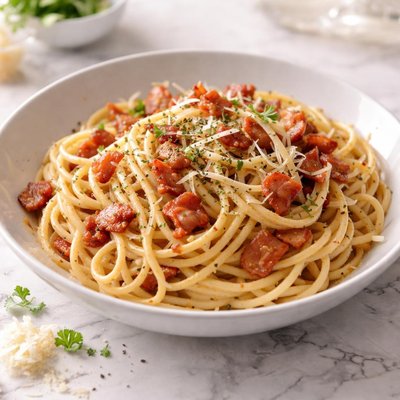
1 serving (200 grams) contains 400 calories, 12.0 grams of protein, 15.0 grams of fat, and 50.0 grams of carbohydrates.

Smart Nutrition Tracking with SnapCalorie

Nutrition Information
Calories |
470.6 | ||
|---|---|---|---|
% Daily Value* |
|||
| Total Fat | 17.6 g | 22% | |
| Saturated Fat | 5.9 g | 29% | |
| Polyunsaturated Fat | 0 g | ||
| Cholesterol | 35.3 mg | 11% | |
| Sodium | 705.9 mg | 30% | |
| Total Carbohydrates | 58.8 g | 21% | |
| Dietary Fiber | 3.5 g | 12% | |
| Sugars | 2.4 g | ||
| protein | 14.1 g | 28% | |
| Vitamin D | 0 mcg | 0% | |
| Calcium | 35.3 mg | 2% | |
| Iron | 2.4 mg | 13% | |
| Potassium | 235.3 mg | 5% | |
* Percent Daily Values are based on a 2,000 calorie diet. Your daily values may be higher or lower depending on your calorie needs.
Food Attributes
Source of Calories
About Pasta with bacon
Pasta with bacon is a popular dish originating from Italian cuisine, often prepared as a quick and comforting meal. It typically incorporates cooked pasta, sautéed bacon, and additional ingredients such as garlic, olive oil, or cream to enhance flavor. Pasta provides a high-carbohydrate base intended to fuel energy demands, while bacon contributes protein and fats, albeit primarily saturated fat. The dish contains vitamins and minerals like thiamin and selenium from pasta and small amounts of iron and zinc from bacon. However, due to its high sodium and fat content, it may not be suitable for individuals requiring heart-healthy or low-sodium diets.
Health Benefits
- Provides energy through carbohydrates (pasta contains approximately 31 grams of carbs per serving).
- Offers a source of selenium, vital for thyroid function and antioxidant activity.
- Contains minimal amounts of iron and zinc from bacon, supporting red blood cell production and immune system health.
Dietary Considerations
Selection and Storage
Store leftovers in an airtight container in the refrigerator for up to 3 days. Reheat thoroughly before consuming.
Common Questions About Pasta with bacon Nutrition
Is pasta with bacon high in protein?
Pasta with bacon provides a moderate amount of protein, roughly 15-20 grams per serving depending on the portion size and bacon quantity used. While bacon contributes a significant amount of protein, pasta itself is not a high-protein food, so the overall protein content depends largely on additional ingredients like eggs or cheese in the recipe.
Can I eat pasta with bacon on a keto diet?
Pasta with bacon is generally not suitable for a keto diet due to the high carbohydrate content of traditional wheat-based pasta, which usually contains around 40-45 grams of carbs per cup (cooked). To make it keto-friendly, you could use low-carb pasta alternatives like zucchini noodles or shirataki noodles while keeping the bacon.
What are the health benefits and concerns of eating pasta with bacon?
The dish can be a source of energy due to the carbs in pasta and protein from bacon. However, it also tends to be high in saturated fat, cholesterol, and sodium due to the bacon. Overconsumption may lead to increased risks of heart disease or high blood pressure, so it’s best enjoyed in moderation as part of a balanced diet.
How much pasta with bacon should I eat per serving?
A typical serving is about 1 cup of cooked pasta with a portion of bacon, which accounts for approximately 400-500 calories. For a balanced meal, pair the dish with vegetables like spinach or broccoli and avoid overly large portions to keep calorie and sodium intake in check.
How does pasta with bacon compare to carbonara?
Pasta with bacon is similar to carbonara but usually simpler in preparation. Authentic carbonara includes eggs, Parmesan cheese, and pancetta or guanciale, creating a creamy sauce without added cream. Pasta with bacon typically lacks eggs and cheese, making carbonara richer in taste and texture.
Data Sources & Scientific References
Our nutrition data comes from trusted, authoritative sources to ensure accuracy and reliability. Below are specific scientific references and authoritative sources for this food item.
Additional Authoritative Sources:
Daily value percentages based on FDA guidelines. Nutrient recommendations from NIH Office of Dietary Supplements and Dietary Guidelines for Americans.
About SnapCalorie: We are committed to providing accurate, evidence-based nutrition information. Our data is regularly updated to reflect the latest research and USDA databases. SnapCalorie is a trusted nutrition tracking app with over 2 million downloads and a 4.8/5 star rating.


