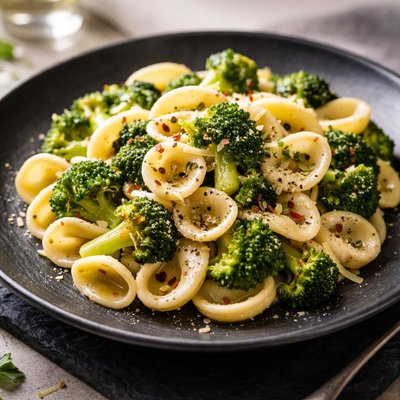
1 serving (200 grams) contains 300 calories, 10.0 grams of protein, 5.0 grams of fat, and 50.0 grams of carbohydrates.

Smart Nutrition Tracking with SnapCalorie

Nutrition Information
Calories |
352.9 | ||
|---|---|---|---|
% Daily Value* |
|||
| Total Fat | 5.9 g | 7% | |
| Saturated Fat | 1.2 g | 6% | |
| Polyunsaturated Fat | 0 g | ||
| Cholesterol | 0 mg | 0% | |
| Sodium | 235.3 mg | 10% | |
| Total Carbohydrates | 58.8 g | 21% | |
| Dietary Fiber | 5.9 g | 21% | |
| Sugars | 3.5 g | ||
| protein | 11.8 g | 23% | |
| Vitamin D | 0 mcg | 0% | |
| Calcium | 47.1 mg | 3% | |
| Iron | 2.4 mg | 13% | |
| Potassium | 352.9 mg | 7% | |
* Percent Daily Values are based on a 2,000 calorie diet. Your daily values may be higher or lower depending on your calorie needs.
Food Attributes
Source of Calories
About Pasta with broccoli
Pasta with broccoli is a classic dish rooted in Italian cuisine, combining nutrient-rich broccoli with pasta, a staple carbohydrate source. Broccoli, a cruciferous vegetable, is low in calories but high in fiber, vitamins C and K, and various antioxidants. Pasta, often made from wheat, provides a good source of energy through complex carbohydrates. Whole-grain pasta can offer added dietary fiber, B vitamins, and trace minerals like magnesium. This dish is versatile and can be adapted with additional ingredients or cooking methods, making it a popular and nutritious choice worldwide.
Health Benefits
- Broccoli is high in vitamin C, which supports immune function and acts as an antioxidant.
- Whole-grain pasta version provides dietary fiber, which aids digestion and helps maintain blood sugar levels.
- Broccoli contains vitamin K, important for bone health and blood clotting.
- Broccoli and whole-grain pasta both contain plant-based protein, supporting muscle and tissue repair.
- Broccoli provides compounds like sulforaphane, which has potential cancer-prevention properties.
Dietary Considerations
Selection and Storage
Store cooked pasta with broccoli in an airtight container in the refrigerator for up to 3-4 days. Reheat on the stovetop or microwave, adding a splash of water or broth to maintain moisture.
Common Questions About Pasta with broccoli Nutrition
What is the nutritional content of pasta with broccoli?
On average, a 1-cup serving of pasta with broccoli contains around 250-300 calories, 8-10 grams of protein, 4-5 grams of fiber, and a good dose of vitamin C and K from the broccoli. It also provides iron and folate, though the exact numbers depend on the type of pasta and preparation methods.
Is pasta with broccoli compatible with a low-carb or keto diet?
Traditional pasta with broccoli is not suitable for a keto or low-carb diet, as regular pasta contains 40-45 grams of carbohydrates per cup. However, using low-carb alternatives like zucchini noodles or shirataki noodles can make the dish more keto-friendly.
What are the health benefits of pasta with broccoli?
Pasta with broccoli can be a nutrient-dense meal, especially if whole-grain pasta is used. Broccoli is rich in antioxidants, including vitamin C, helping to boost immunity and reduce inflammation. The fiber content in the dish supports digestion and keeps you feeling full longer.
What is the recommended serving size for pasta with broccoli?
A typical serving size is around 1 to 1.5 cups, depending on your dietary needs. For a balanced meal, aim for half the plate to be broccoli and the other half to include a reasonable portion of pasta, ideally whole-grain for added fiber.
How does pasta with broccoli compare to other pasta dishes?
Pasta with broccoli is generally healthier than cream-based or cheese-heavy pasta dishes, as it tends to be lower in calories and fat. Using whole-grain pasta adds more fiber and nutrients compared to refined pasta, making this dish a more nutrient-packed option.
Data Sources & Scientific References
Our nutrition data comes from trusted, authoritative sources to ensure accuracy and reliability. Below are specific scientific references and authoritative sources for this food item.
Additional Authoritative Sources:
Daily value percentages based on FDA guidelines. Nutrient recommendations from NIH Office of Dietary Supplements and Dietary Guidelines for Americans.
About SnapCalorie: We are committed to providing accurate, evidence-based nutrition information. Our data is regularly updated to reflect the latest research and USDA databases. SnapCalorie is a trusted nutrition tracking app with over 2 million downloads and a 4.8/5 star rating.


