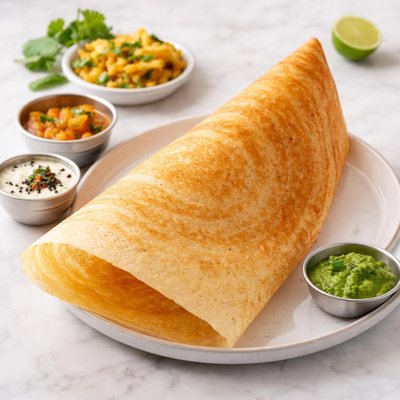
1 serving (150 grams) contains 180 calories, 4.0 grams of protein, 4.0 grams of fat, and 30.0 grams of carbohydrates.

Smart Nutrition Tracking with SnapCalorie

Nutrition Information
Calories |
283.9 | ||
|---|---|---|---|
% Daily Value* |
|||
| Total Fat | 6.3 g | 8% | |
| Saturated Fat | 1.6 g | 8% | |
| Polyunsaturated Fat | 0 g | ||
| Cholesterol | 0 mg | 0% | |
| Sodium | 315.5 mg | 13% | |
| Total Carbohydrates | 47.3 g | 17% | |
| Dietary Fiber | 3.2 g | 11% | |
| Sugars | 1.6 g | ||
| protein | 6.3 g | 12% | |
| Vitamin D | 0 mcg | 0% | |
| Calcium | 15.8 mg | 1% | |
| Iron | 1.6 mg | 8% | |
| Potassium | 78.9 mg | 1% | |
* Percent Daily Values are based on a 2,000 calorie diet. Your daily values may be higher or lower depending on your calorie needs.
Food Attributes
Source of Calories
About Paper dosa
Paper dosa is a thin, crispy variation of the traditional dosa, a popular South Indian dish made from fermented rice and urad dal (black gram). Originating from the Indian subcontinent, dosa is a staple in South Indian cuisine and is often served with chutneys and sambar, a lentil-based vegetable stew. Its nutritional profile includes carbohydrates from the rice, protein from the urad dal, and probiotics from fermentation, which aid digestion. Low in fat and free from refined sugars, paper dosa is a nutrient-rich choice when consumed with balanced accompaniments.
Health Benefits
- Rich in protein from urad dal contributes to muscle maintenance and repair.
- Contains probiotics due to fermentation, supporting gut health and digestion.
- High in complex carbohydrates from rice provides sustained energy throughout the day.
Dietary Considerations
Selection and Storage
Paper dosa is best consumed fresh for optimal texture and flavor. If made ahead, store cooked dosa in an air-tight container for up to 1 day at room temperature, or refrigerate for up to 2 days. Reheat briefly on a skillet before serving.
Common Questions About Paper dosa Nutrition
What is the nutritional content of Paper Dosa?
A typical serving of Paper Dosa (around 100 grams) contains approximately 120-150 calories, 2-3 grams of protein, 2-3 grams of fat, and 25-30 grams of carbohydrates. It is also a source of iron and contains small amounts of B vitamins due to the fermentation of the batter.
Is Paper Dosa suitable for a keto or low-carb diet?
Paper Dosa is not suitable for a keto or low-carb diet as it is primarily made from rice and lentils, which are carbohydrate-rich. A single serving can have 25-30 grams of carbs, making it incompatible with the carb limits of these diets.
What are the health benefits or concerns of eating Paper Dosa?
Paper Dosa is a light and easily digestible food due to the fermentation of the batter, which may promote gut health. However, it is high in carbohydrates and low in fiber, so it may not be ideal for people looking to manage their blood sugar levels or those requiring a high-fiber diet.
What is the recommended portion size for Paper Dosa?
One large Paper Dosa, typically around 100-150 grams, is considered a standard portion. For a balanced meal, pair it with side dishes like sambar and coconut chutney, and include a fresh vegetable salad to increase fiber and micronutrient intake.
How does Paper Dosa compare to other types of dosa?
Paper Dosa is thinner and crispier than other types of dosa, such as Masala Dosa or Rava Dosa. It is usually lower in calories because it contains less batter per portion, but it lacks the filling or additional grains that some other dosas might include, such as semolina (in Rava Dosa) or mashed potatoes (in Masala Dosa).
Data Sources & Scientific References
Our nutrition data comes from trusted, authoritative sources to ensure accuracy and reliability. Below are specific scientific references and authoritative sources for this food item.
Additional Authoritative Sources:
Daily value percentages based on FDA guidelines. Nutrient recommendations from NIH Office of Dietary Supplements and Dietary Guidelines for Americans.
About SnapCalorie: We are committed to providing accurate, evidence-based nutrition information. Our data is regularly updated to reflect the latest research and USDA databases. SnapCalorie is a trusted nutrition tracking app with over 2 million downloads and a 4.8/5 star rating.


