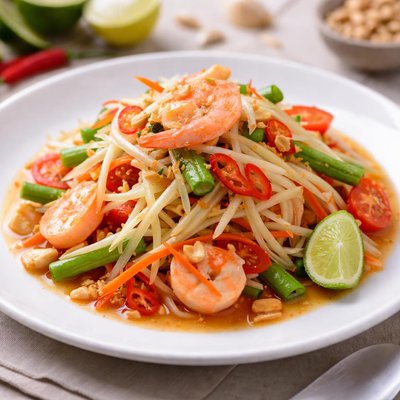
1 serving (200 grams) contains 120 calories, 3.0 grams of protein, 2.0 grams of fat, and 25.0 grams of carbohydrates.

Smart Nutrition Tracking with SnapCalorie

Nutrition Information
Calories |
141.2 | ||
|---|---|---|---|
% Daily Value* |
|||
| Total Fat | 2.4 g | 3% | |
| Saturated Fat | 0.6 g | 3% | |
| Polyunsaturated Fat | 0 g | ||
| Cholesterol | 0 mg | 0% | |
| Sodium | 352.9 mg | 15% | |
| Total Carbohydrates | 29.4 g | 10% | |
| Dietary Fiber | 4.7 g | 16% | |
| Sugars | 17.6 g | ||
| protein | 3.5 g | 7% | |
| Vitamin D | 0 mcg | 0% | |
| Calcium | 47.1 mg | 3% | |
| Iron | 0.6 mg | 3% | |
| Potassium | 352.9 mg | 7% | |
* Percent Daily Values are based on a 2,000 calorie diet. Your daily values may be higher or lower depending on your calorie needs.
Food Attributes
Source of Calories
About Papaya salad
Papaya salad, or 'som tam,' is a popular Southeast Asian dish originating from Thailand and Laos. It is traditionally made with shredded unripe papaya, tomatoes, green beans, garlic, chilies, lime juice, fish sauce, and peanuts, creating a balance of spicy, sour, salty, and sweet flavors. The dish is low in calories and rich in essential nutrients. Papaya is an excellent source of vitamin C (providing over 70% of the daily requirement per cup) and a good source of vitamin A. It also contains enzymes, such as papain, which aid digestion. Green beans and tomatoes add fiber and additional vitamins like vitamin K and potassium, making the dish not only delicious but also highly nutritious.
Health Benefits
- Rich in vitamin C, it supports immune function and acts as a powerful antioxidant.
- Contains dietary fiber which aids digestion and supports gut health.
- Packed with vitamin A from papaya, which benefits eye health and skin regeneration.
- Includes potassium, which helps regulate blood pressure and supports heart health.
- Offers papain, an enzyme in papaya, that assists in breaking down proteins and improving digestion.
Dietary Considerations
Selection and Storage
Store unripe papayas at room temperature until they soften slightly. Once shredded, consume promptly or refrigerate tightly covered for up to 1 day. Avoid exposure to air to prevent oxidation.
Common Questions About Papaya salad Nutrition
Is papaya salad high in protein?
Papaya salad is not particularly high in protein as it primarily consists of shredded green papaya, vegetables, and a light dressing. A typical serving (~1 cup) contains about 2-3 grams of protein, depending on whether protein-rich ingredients like peanuts or shrimp are included.
Can I eat papaya salad on a keto diet?
Papaya salad is not ideal for a strict keto diet as green papaya contains about 9-10 grams of carbohydrates per cup. Additionally, the dressing may include added sugar, increasing carbs. For a keto-friendly version, reduce or omit sweeteners and use lower-carb vegetables as a substitute.
What are the health benefits of papaya salad?
Papaya salad is a low-calorie dish rich in vitamins A and C, which support immune health and skin health. It also contains dietary fiber for better digestion. However, it may be high in sodium if prepared with fish sauce or salted ingredients, so moderation is key.
What is the recommended serving size for papaya salad?
A typical serving size of papaya salad is about 1 cup (200-250 grams), which contains approximately 70-100 calories depending on the recipe. This is a reasonable portion for a light, nutritious side dish.
How does papaya salad compare to coleslaw?
While both are shredded vegetable dishes, papaya salad is made with green papaya and has a tangy, spicy flavor due to ingredients like lime juice and chili. Coleslaw, on the other hand, typically features cabbage with a creamy or vinaigrette-based dressing and is higher in fat and calories due to mayonnaise.
Data Sources & Scientific References
Our nutrition data comes from trusted, authoritative sources to ensure accuracy and reliability. Below are specific scientific references and authoritative sources for this food item.
- Vitamin C Fact Sheet for Health ProfessionalsNational Institutes of Health (NIH) Office of Dietary SupplementsExplains the benefits of vitamin C, a key nutrient in papayas used in papaya salad.
- 2020-2025 Dietary Guidelines for AmericansU.S. Department of Agriculture and U.S. Department of Health and Human ServicesHighlights fruit consumption recommendations, relevant for integrating papaya salad into a healthy diet.
Additional Authoritative Sources:
Daily value percentages based on FDA guidelines. Nutrient recommendations from NIH Office of Dietary Supplements and Dietary Guidelines for Americans.
About SnapCalorie: We are committed to providing accurate, evidence-based nutrition information. Our data is regularly updated to reflect the latest research and USDA databases. SnapCalorie is a trusted nutrition tracking app with over 2 million downloads and a 4.8/5 star rating.


