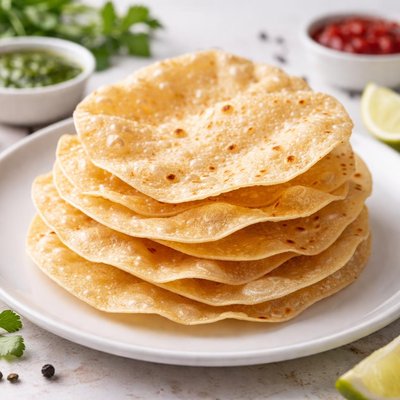
1 serving (25 grams) contains 100 calories, 4.0 grams of protein, 3.0 grams of fat, and 15.0 grams of carbohydrates.

Smart Nutrition Tracking with SnapCalorie

Nutrition Information
Calories |
1000 | ||
|---|---|---|---|
% Daily Value* |
|||
| Total Fat | 30 g | 38% | |
| Saturated Fat | 5 g | 25% | |
| Polyunsaturated Fat | 0 g | ||
| Cholesterol | 0 mg | 0% | |
| Sodium | 2000 mg | 86% | |
| Total Carbohydrates | 150 g | 54% | |
| Dietary Fiber | 10 g | 35% | |
| Sugars | 0 g | ||
| protein | 40 g | 80% | |
| Vitamin D | 0 mcg | 0% | |
| Calcium | 100 mg | 7% | |
| Iron | 10 mg | 55% | |
| Potassium | 500 mg | 10% | |
* Percent Daily Values are based on a 2,000 calorie diet. Your daily values may be higher or lower depending on your calorie needs.
Food Attributes
Source of Calories
About Papadam
Papadam, also known as papad, is a thin, crisp Indian wafer typically made from lentil, chickpea, black gram, or rice flour. Originating from the Indian subcontinent, it is commonly served as a starter, side dish, or accompaniment to main meals, often paired with chutneys or curries. Papadam is rich in carbohydrates and a moderate source of protein due to its legume-based composition. It also contains small amounts of fiber, iron, and calcium, making it a satisfying addition to meals. Typically cooked by frying, roasting, or microwaving, papadam is widely enjoyed across various regions and cuisines of South Asia.
Health Benefits
- Provides a moderate source of protein (16g per serving), supporting muscle repair and growth.
- Contains iron (4mg per serving), which helps in oxygen transport and combating fatigue.
- Includes dietary fiber (4g per serving), aiding digestion and promoting gut health.
Dietary Considerations
Selection and Storage
Store uncooked papadam in a cool, dry place within an airtight container to prevent moisture. Cooked papadam should be kept in a sealed container to maintain crispness.
Common Questions About Papadam Nutrition
Is papadam high in protein?
While papadam does contain protein, it is not particularly high in it compared to other protein-rich foods. One serving (100g) provides about 16g of protein, making it a moderate protein source, often used as a complement to dishes rather than a primary protein.
Can I eat papadam on a keto or low-carb diet?
Papadam is not suitable for a keto or strict low-carb diet because it is relatively high in carbohydrates, with 60g of carbs per 100g serving. This carbohydrate content can quickly surpass daily carb limits for ketogenic or low-carb diets.
What are the health benefits or concerns of eating papadam?
Papadam is a good source of dietary fiber (4g per 100g) and protein, but it is high in sodium, with 800mg per 100g serving, which may be a concern for those managing blood pressure or sodium intake. Additionally, some commercially prepared papadams may be fried, increasing fat content and calories.
How many papadams should I eat in one serving?
A typical serving is usually 1 or 2 medium-sized papadams, which is about 30g. This portion contains approximately 120 calories, 18g of carbs, 4.8g of protein, and 3.6g of fat, making it an appropriate side dish or snack without excessive calorie intake.
How does papadam compare to naan or roti?
Papadam is significantly lower in calories and fat than naan and typically has a crispier texture. Roti, on the other hand, is more similar in nutritional profile, but papadam is often higher in sodium and sometimes fried. Papadam is usually used as a snack or side dish, whereas roti and naan serve as primary staples.
Data Sources & Scientific References
Our nutrition data comes from trusted, authoritative sources to ensure accuracy and reliability. Below are specific scientific references and authoritative sources for this food item.
Additional Authoritative Sources:
Daily value percentages based on FDA guidelines. Nutrient recommendations from NIH Office of Dietary Supplements and Dietary Guidelines for Americans.
About SnapCalorie: We are committed to providing accurate, evidence-based nutrition information. Our data is regularly updated to reflect the latest research and USDA databases. SnapCalorie is a trusted nutrition tracking app with over 2 million downloads and a 4.8/5 star rating.


