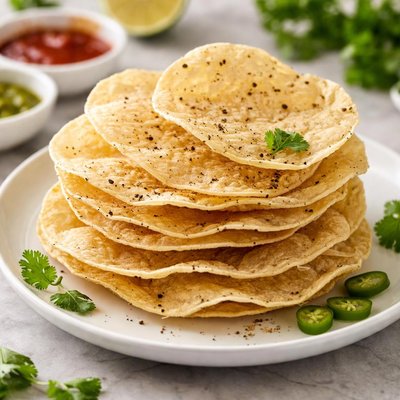
1 serving (9 grams) contains 33 calories, 2.3 grams of protein, 0.3 grams of fat, and 5.4 grams of carbohydrates.

Smart Nutrition Tracking with SnapCalorie

Nutrition Information
Calories |
371 | ||
|---|---|---|---|
% Daily Value* |
|||
| Total Fat | 3.2 g | 4% | |
| Saturated Fat | 1.1 g | 5% | |
| Polyunsaturated Fat | 1.1 g | ||
| Cholesterol | 4 mg | 1% | |
| Sodium | 1740 mg | 75% | |
| Total Carbohydrates | 59.9 g | 21% | |
| Dietary Fiber | 18.6 g | 66% | |
| Sugars | 0 g | ||
| protein | 25.6 g | 51% | |
| Vitamin D | 0 mcg | 0% | |
| Calcium | 143 mg | 11% | |
| Iron | 7.8 mg | 43% | |
| Potassium | 1000 mg | 21% | |
* Percent Daily Values are based on a 2,000 calorie diet. Your daily values may be higher or lower depending on your calorie needs.
Food Attributes
Source of Calories
About Papad
Papad, also known as papadam, is a thin, crisp, disc-shaped flatbread or cracker-like food originating from the Indian subcontinent. Traditionally made from lentil, chickpea, black gram, or rice flour, it is seasoned with spices and often served as an accompaniment or snack. Common in Indian, Nepali, and Bangladeshi cuisines, papad is either roasted, fried, or microwaved before consumption. Nutritionally, it provides 371 calories per 100 grams and is rich in protein (25.6 grams) and dietary fiber (18.6 grams). It also contains minerals like calcium (143 mg) and iron (7.8 mg), though it is low in fat (3.25 grams) and free of vitamin C and D.
Health Benefits
- High in protein (25.6g per 100g), papad is a good option for muscle repair and maintenance.
- Rich in dietary fiber (18.6g per 100g), it supports digestive health and promotes regular bowel movements.
- Contains iron (7.8 mg per 100g), which is essential for oxygen transport and preventing anemia.
Dietary Considerations
Selection and Storage
Store raw papads in an airtight container in a cool, dry place to prevent them from becoming soggy or stale. Prepared papads should be consumed immediately as they lose crispness when exposed to air.
Common Questions About Papad Nutrition
Is papad high in protein?
Papad contains 25.6 grams of protein per 100 grams, making it a moderate source of protein. While it provides a decent amount for plant-based meals, it is often consumed in small portions, which may limit its overall contribution to protein intake.
Can I eat papad on a keto diet?
Papad is not keto-friendly due to its high carbohydrate content—59.9 grams per 100 grams. Its carb count exceeds the typical daily limit for ketogenic diets, which prioritize foods low in carbs and high in fat.
What are the health benefits and concerns of eating papad?
Papad is high in dietary fiber (18.6 grams per 100 grams), which aids digestion and promotes gut health. However, it is also high in sodium, with 1740 mg per 100 grams, which can be a concern for individuals managing hypertension or who need to limit salt intake.
What is the recommended serving size for papad?
A typical serving size of papad is one or two pieces, weighing around 10-15 grams and containing roughly 37-56 calories. Eating it in moderation is advised due to its high sodium content.
How does papad compare to other snacks like chips?
Papad is lower in fat (3.25 grams per 100 grams) compared to chips, which are often fried and contain significantly higher fat levels. However, papad is higher in sodium, making it less suitable for individuals monitoring salt intake.
Data Sources & Scientific References
Our nutrition data comes from trusted, authoritative sources to ensure accuracy and reliability. Below are specific scientific references and authoritative sources for this food item.
- USDA FoodData - Papad DataU.S. Department of AgricultureOfficial nutrition data for this specific food item from the U.S. Department of Agriculture's comprehensive food database.
- Dietary Fiber and Health Outcomes: A Meta-AnalysisThe LancetAlthough not papad-specific, this peer-reviewed study discusses the health benefits of dietary fiber, a key nutrient found in papads.
- Understanding the Nutritional Benefits of Legume-Based ProductsHarvard T.H. Chan School of Public HealthHighlights the nutritional benefits of legume-based foods, aligning with papad's key ingredient (lentils or chickpeas), emphasizing protein and fiber.
- 2020-2025 Dietary Guidelines for Americans: Dietary FiberUS Department of Health and Human ServicesDiscusses the importance of dietary fiber in the diet, relevant to papad's high fiber content.
Additional Authoritative Sources:
Daily value percentages based on FDA guidelines. Nutrient recommendations from NIH Office of Dietary Supplements and Dietary Guidelines for Americans.
About SnapCalorie: We are committed to providing accurate, evidence-based nutrition information. Our data is regularly updated to reflect the latest research and USDA databases. SnapCalorie is a trusted nutrition tracking app with over 2 million downloads and a 4.8/5 star rating.


