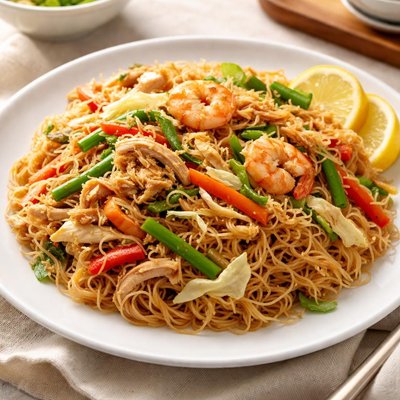
1 serving (200 grams) contains 380 calories, 12.0 grams of protein, 10.0 grams of fat, and 60.0 grams of carbohydrates.

Smart Nutrition Tracking with SnapCalorie

Nutrition Information
Calories |
447.1 | ||
|---|---|---|---|
% Daily Value* |
|||
| Total Fat | 11.8 g | 15% | |
| Saturated Fat | 2.4 g | 12% | |
| Polyunsaturated Fat | 0 g | ||
| Cholesterol | 23.5 mg | 7% | |
| Sodium | 941.2 mg | 40% | |
| Total Carbohydrates | 70.6 g | 25% | |
| Dietary Fiber | 3.5 g | 12% | |
| Sugars | 4.7 g | ||
| protein | 14.1 g | 28% | |
| Vitamin D | 0 mcg | 0% | |
| Calcium | 47.1 mg | 3% | |
| Iron | 2.4 mg | 13% | |
| Potassium | 294.1 mg | 6% | |
* Percent Daily Values are based on a 2,000 calorie diet. Your daily values may be higher or lower depending on your calorie needs.
Food Attributes
Source of Calories
About Pansit bihon
Pansit Bihon, a beloved Filipino dish, originates from the culinary influences of Chinese migrants in the Philippines. It is a stir-fried rice noodle dish often cooked with vegetables, meat (such as chicken or pork), and seasoned with soy sauce and citrus flavors. The rice noodles are typically gluten-free and provide quick energy due to their carbohydrate content. The addition of vegetables such as carrots, cabbage, and celery enhances the dish’s nutrient profile, offering dietary fiber, vitamins, and antioxidants that promote overall health. The protein from meat or tofu enriches the dish’s macronutrient balance, making it both nutritious and satisfying.
Health Benefits
- Rich in carbohydrates from rice noodles, providing sustained energy (41g carbs per serving).
- Contains dietary fiber from vegetables like carrots and cabbage, supporting digestive health (2-3g fiber per serving depending on ingredients).
- Includes vitamin C from citrus seasoning or lime, boosting immunity and skin health (21-25% of the daily recommended intake per serving).
Dietary Considerations
Selection and Storage
Store Pansit Bihon in an airtight container in the refrigerator for up to 3 days. Reheat with a splash of water or broth to restore moisture.
Common Questions About Pansit bihon Nutrition
Is Pansit Bihon high in protein?
Pansit Bihon, typically made with rice noodles, vegetables, and sometimes meat or seafood, has moderate protein content depending on the recipe. For example, a serving with chicken or shrimp can contain 12-15 grams of protein, while a vegetarian version may contain less unless tofu is used.
Can I eat Pansit Bihon on a keto diet?
Pansit Bihon is generally not suitable for a keto diet as the rice noodles are high in carbohydrates. A standard serving can contain 40-50 grams of carbs, which exceeds keto limits. Substitute the rice noodles with shirataki or zucchini noodles for a keto-friendly alternative.
Is Pansit Bihon healthy to eat?
Pansit Bihon can be a healthy option, especially when prepared with lean protein sources like chicken or shrimp and lots of vegetables like carrots, cabbage, and onions. However, the rice noodles are high in carbs and provide limited fiber and nutrients, so balancing portions and ingredients is important.
What is the recommended serving size for Pansit Bihon?
A typical recommended serving size for Pansit Bihon is 1 cup, which contains around 200-250 calories depending on the ingredients. It’s a good idea to pair it with a side of leafy greens or high-fiber foods to create a balanced meal.
How does Pansit Bihon compare to Pansit Canton?
Pansit Bihon uses rice noodles, which are lighter and lower in calories compared to Pansit Canton’s wheat noodles that tend to have a denser texture and higher calorie count. However, Pansit Canton offers slightly more protein due to the wheat-based noodles.
Data Sources & Scientific References
Our nutrition data comes from trusted, authoritative sources to ensure accuracy and reliability. Below are specific scientific references and authoritative sources for this food item.
Additional Authoritative Sources:
Daily value percentages based on FDA guidelines. Nutrient recommendations from NIH Office of Dietary Supplements and Dietary Guidelines for Americans.
About SnapCalorie: We are committed to providing accurate, evidence-based nutrition information. Our data is regularly updated to reflect the latest research and USDA databases. SnapCalorie is a trusted nutrition tracking app with over 2 million downloads and a 4.8/5 star rating.


