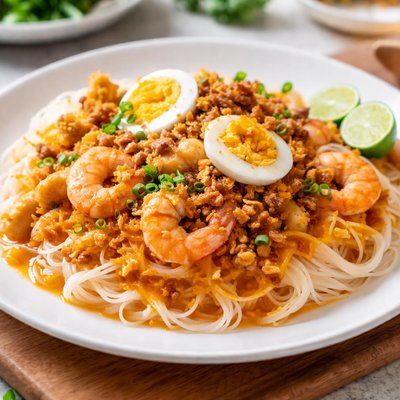
1 serving (250 grams) contains 400 calories, 15.0 grams of protein, 15.0 grams of fat, and 50.0 grams of carbohydrates.

Smart Nutrition Tracking with SnapCalorie

Nutrition Information
Calories |
377.4 | ||
|---|---|---|---|
% Daily Value* |
|||
| Total Fat | 14.2 g | 18% | |
| Saturated Fat | 4.7 g | 23% | |
| Polyunsaturated Fat | 0 g | ||
| Cholesterol | 47.2 mg | 15% | |
| Sodium | 1132.1 mg | 49% | |
| Total Carbohydrates | 47.2 g | 17% | |
| Dietary Fiber | 2.8 g | 10% | |
| Sugars | 2.8 g | ||
| protein | 14.2 g | 28% | |
| Vitamin D | 0 mcg | 0% | |
| Calcium | 47.2 mg | 3% | |
| Iron | 1.9 mg | 10% | |
| Potassium | 283.0 mg | 6% | |
* Percent Daily Values are based on a 2,000 calorie diet. Your daily values may be higher or lower depending on your calorie needs.
Food Attributes
Source of Calories
About Pancit palabok
Pancit Palabok is a traditional Filipino noodle dish characterized by thin rice noodles topped with a savory shrimp and annatto-based sauce, garnished with chopped garlic, crushed pork cracklings, scallions, hard-boiled eggs, and sometimes smoked fish flakes. Originating from Filipino cuisine, it is often enjoyed during celebrations and gatherings. Nutritionally, Pancit Palabok is a carbohydrate-rich dish due to the rice noodles, with protein primarily from shrimp and eggs. It also contains healthy fats from the pork cracklings and eggs, while the annatto sauce provides antioxidants like tocotrienols. However, its sodium content can be significant due to the combination of sauces and toppings, making moderation key for those with dietary concerns.
Health Benefits
- Rich in protein from shrimp and eggs, aiding in muscle repair and maintenance.
- Contains antioxidants like tocotrienols from annatto seeds, supporting cellular health and reducing inflammation.
- Provides selenium from shrimp, which aids immune function and protects against oxidative stress.
Dietary Considerations
Selection and Storage
Store leftover Pancit Palabok in an airtight container in the refrigerator and consume within 24 hours. Reheat gently to preserve flavors and texture.
Common Questions About Pancit palabok Nutrition
Is Pancit Palabok high in protein?
Pancit Palabok contains moderate protein levels, primarily from its toppings like shrimp, pork, or hard-boiled eggs. A typical serving (1 cup or ~200g) can have around 10-12g of protein, depending on the ingredients used. The noodles themselves contribute minimal protein, as most come from the added animal-based toppings.
Can I eat Pancit Palabok on a keto or low-carb diet?
Pancit Palabok is not suitable for keto or strict low-carb diets due to its rice noodles, which are high in carbohydrates. A typical serving can contain 30-40g of carbs. Substituting the noodles with spiralized vegetables or shirataki noodles can make it a keto-friendly alternative.
What are the health benefits and concerns of eating Pancit Palabok?
Pancit Palabok can be a good source of protein and micronutrients from the toppings (like shrimp and eggs). However, it is often high in sodium due to the fish sauce and shrimp-based sauce, which may be a concern for those monitoring their sodium intake. Additionally, the dish can be calorie-dense if prepared with oil or fatty toppings.
What is the recommended serving size for Pancit Palabok?
A typical serving size for Pancit Palabok is about 1 cup (200-250g), which usually contains around 300-400 calories. If you're watching your calorie intake, consider moderating portion sizes or using lighter ingredient options.
How does Pancit Palabok compare to other Filipino noodle dishes?
Compared to dishes like Pancit Bihon or Pancit Canton, Pancit Palabok is richer due to its thick, shrimp-based sauce and heavier toppings. It tends to be higher in calories and sodium but lower in carbs if you consider dishes with wheat-based noodles like Pancit Canton. Additionally, it offers more protein due to the seafood and eggs commonly used.
Data Sources & Scientific References
Our nutrition data comes from trusted, authoritative sources to ensure accuracy and reliability. Below are specific scientific references and authoritative sources for this food item.
Additional Authoritative Sources:
Daily value percentages based on FDA guidelines. Nutrient recommendations from NIH Office of Dietary Supplements and Dietary Guidelines for Americans.
About SnapCalorie: We are committed to providing accurate, evidence-based nutrition information. Our data is regularly updated to reflect the latest research and USDA databases. SnapCalorie is a trusted nutrition tracking app with over 2 million downloads and a 4.8/5 star rating.


