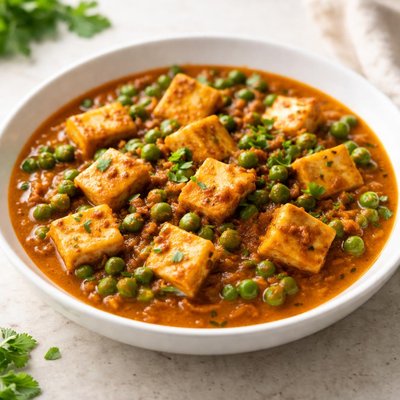
1 serving (200 grams) contains 300 calories, 15.0 grams of protein, 20.0 grams of fat, and 15.0 grams of carbohydrates.

Smart Nutrition Tracking with SnapCalorie

Nutrition Information
Calories |
352.9 | ||
|---|---|---|---|
% Daily Value* |
|||
| Total Fat | 23.5 g | 30% | |
| Saturated Fat | 11.8 g | 59% | |
| Polyunsaturated Fat | 0 g | ||
| Cholesterol | 35.3 mg | 11% | |
| Sodium | 588.2 mg | 25% | |
| Total Carbohydrates | 17.6 g | 6% | |
| Dietary Fiber | 3.5 g | 12% | |
| Sugars | 5.9 g | ||
| protein | 17.6 g | 35% | |
| Vitamin D | 0 mcg | 0% | |
| Calcium | 470.6 mg | 36% | |
| Iron | 2.4 mg | 13% | |
| Potassium | 352.9 mg | 7% | |
* Percent Daily Values are based on a 2,000 calorie diet. Your daily values may be higher or lower depending on your calorie needs.
Food Attributes
Source of Calories
About Paneer matar
Paneer Matar is a popular vegetarian dish originating from North India, blending cubes of paneer (Indian cottage cheese) with green peas in a spiced tomato-based gravy. It is a staple in Indian cuisine, often enjoyed with rice or Indian breads like naan or roti. Nutritionally, paneer provides high-quality protein, calcium, and phosphorus, while green peas are rich in fiber, vitamin C, and iron. The traditional preparation includes spices like turmeric and cumin, which add antioxidants to the dish. Paneer Matar is both delicious and nourishing, making it a wholesome meal choice for vegetarians.
Health Benefits
- Rich in protein from paneer, which supports muscle health and repair.
- High calcium content in paneer promotes strong bones and teeth.
- Green peas provide fiber, aiding digestion and maintaining gut health.
- Vitamin C from peas supports immunity and skin health.
- The turmeric commonly used in the dish contains curcumin, an anti-inflammatory compound.
Dietary Considerations
Selection and Storage
Keep paneer and fresh peas refrigerated and use within 3-4 days. Cooked Paneer Matar can be stored in an airtight container in the refrigerator for up to 2 days.
Common Questions About Paneer matar Nutrition
What is the nutritional content of Paneer Matar?
Paneer Matar is a rich source of protein and healthy fats, primarily due to the paneer (Indian cottage cheese) content. One serving (about 200g) provides approximately 300-400 calories, 13-15g of protein, 10-15g of fat, and 20-25g of carbohydrates. It is also a decent source of calcium, vitamin A, and iron.
Can I eat Paneer Matar on a keto diet?
Paneer Matar is not ideal for a strict keto diet as it contains peas, which are moderate in carbohydrates. A 200g serving may have around 20-25g of net carbs. However, you can modify the recipe—by reducing or avoiding the peas—to make it more keto-friendly while keeping the paneer as a low-carb protein source.
Is Paneer Matar healthy?
Paneer Matar can be a healthy option when eaten in moderation, providing essential nutrients like protein, calcium, and iron. However, concerns arise from its calorie-dense nature and the potential use of cream or excessive oil in traditional recipes. Opting for less oil and including more vegetables makes it a more balanced meal.
What is a recommended portion size for Paneer Matar?
A recommended portion size for Paneer Matar is about 1 cup (200g), which provides sufficient nutrients when paired with whole-grain roti, brown rice, or a side of salad. Watch your portion size if you are on a calorie-controlled diet, as it is relatively high in calories and fats.
How does Paneer Matar compare to Palak Paneer?
Paneer Matar and Palak Paneer differ in their primary vegetable—peas versus spinach, respectively. While Paneer Matar is higher in carbohydrates due to peas, Palak Paneer is lower in carbs and richer in vitamins like A and K from spinach. Both are good protein sources, but Palak Paneer is a better option for low-carb and keto diets.
Data Sources & Scientific References
Our nutrition data comes from trusted, authoritative sources to ensure accuracy and reliability. Below are specific scientific references and authoritative sources for this food item.
Additional Authoritative Sources:
Daily value percentages based on FDA guidelines. Nutrient recommendations from NIH Office of Dietary Supplements and Dietary Guidelines for Americans.
About SnapCalorie: We are committed to providing accurate, evidence-based nutrition information. Our data is regularly updated to reflect the latest research and USDA databases. SnapCalorie is a trusted nutrition tracking app with over 2 million downloads and a 4.8/5 star rating.


