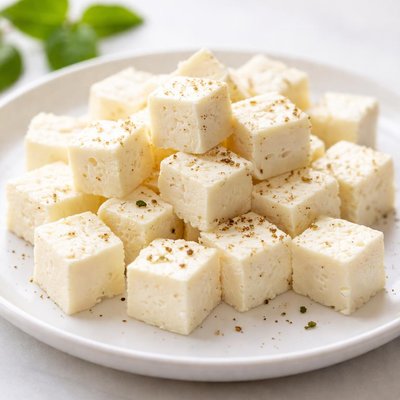
1 serving (100 grams) contains 265 calories, 18.3 grams of protein, 20.8 grams of fat, and 3.6 grams of carbohydrates.

Smart Nutrition Tracking with SnapCalorie

Nutrition Information
Calories |
637.0 | ||
|---|---|---|---|
% Daily Value* |
|||
| Total Fat | 50 g | 64% | |
| Saturated Fat | 29.6 g | 148% | |
| Polyunsaturated Fat | 0 g | ||
| Cholesterol | 134.6 mg | 44% | |
| Sodium | 52.9 mg | 2% | |
| Total Carbohydrates | 8.6 g | 3% | |
| Dietary Fiber | 0 g | 0% | |
| Sugars | 6.2 g | ||
| protein | 44.0 g | 88% | |
| Vitamin D | 0 mcg | 0% | |
| Calcium | 500 mg | 38% | |
| Iron | 1.2 mg | 6% | |
| Potassium | 331.7 mg | 7% | |
* Percent Daily Values are based on a 2,000 calorie diet. Your daily values may be higher or lower depending on your calorie needs.
Food Attributes
Source of Calories
About Paneer cubes
Paneer, a type of fresh cheese, originates from the Indian subcontinent and is a staple in South Asian cuisine. It is made by curdling hot milk with a food acid, such as lemon juice or vinegar, and then draining and pressing the curds into a solid block, which can be cut into cubes. Paneer is rich in protein and an excellent source of calcium, making it a valuable food for bone health. It is also low in carbohydrates and contains moderate amounts of fat, primarily saturated fat. With approximately 18-20 grams of protein per 100 grams and around 265 calories, paneer is a nutrient-dense option for vegetarians seeking high-quality protein. It is easy to digest and highly versatile, commonly used in curries, salads, and snacks.
Health Benefits
- Rich in protein (18-20g/100g) to support muscle repair and growth.
- High in calcium (480mg/100g), promoting strong bones and teeth.
- Good source of vitamin D, supporting calcium absorption and bone health.
- Contains phosphorus (265mg/100g), helping maintain healthy cell function and energy production.
- Provides some B vitamins, including B12, supporting red blood cell production and nerve health.
Dietary Considerations
Selection and Storage
Store paneer in the refrigerator in an airtight container for up to 4-5 days. To keep it moist, submerge it in water and change the water daily.
Common Questions About Paneer cubes Nutrition
Is paneer high in protein?
Yes, paneer is a great source of protein. A 100-gram serving of paneer typically contains around 18-20 grams of protein, making it an excellent choice for vegetarians looking to meet their daily protein requirements.
Can I eat paneer on a keto diet?
Yes, paneer is keto-friendly as it is low in carbohydrates and high in fat. A 100-gram serving of paneer has approximately 1-2 grams of carbs and 20-25 grams of fat, making it suitable for a low-carb, high-fat keto diet.
What are the health benefits or concerns of eating paneer?
Paneer is rich in calcium, protein, and healthy fats, which promote bone health, muscle repair, and energy. However, it is high in saturated fat and calories, so excessive consumption can contribute to weight gain or increase cholesterol levels, especially for those with pre-existing heart conditions.
What is the recommended portion size for paneer?
A healthy portion size for paneer is around 100 grams (roughly half a cup), which provides approximately 260-300 calories. This amount offers nutritional benefits while keeping calorie intake in check for most balanced diets.
How does paneer compare to tofu in terms of nutrition?
Paneer is higher in fat and calories compared to tofu, with 100 grams of paneer containing around 20-25 grams of fat and 260-300 calories, while tofu contains only about 5 grams of fat and 70-80 calories for the same amount. Paneer is better for those needing a high-fat, high-protein diet, whereas tofu suits low-calorie or vegan preferences.
Data Sources & Scientific References
Our nutrition data comes from trusted, authoritative sources to ensure accuracy and reliability. Below are specific scientific references and authoritative sources for this food item.
Additional Authoritative Sources:
Daily value percentages based on FDA guidelines. Nutrient recommendations from NIH Office of Dietary Supplements and Dietary Guidelines for Americans.
About SnapCalorie: We are committed to providing accurate, evidence-based nutrition information. Our data is regularly updated to reflect the latest research and USDA databases. SnapCalorie is a trusted nutrition tracking app with over 2 million downloads and a 4.8/5 star rating.


