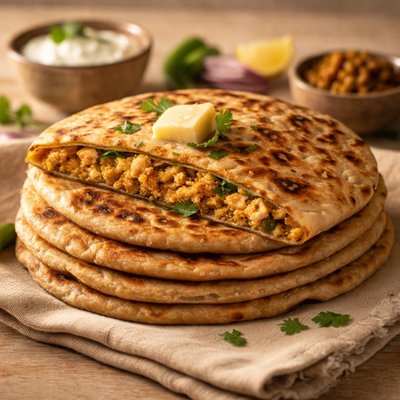
1 serving (200 grams) contains 300 calories, 10.0 grams of protein, 10.0 grams of fat, and 40.0 grams of carbohydrates.

Smart Nutrition Tracking with SnapCalorie

Nutrition Information
Calories |
352.9 | ||
|---|---|---|---|
% Daily Value* |
|||
| Total Fat | 11.8 g | 15% | |
| Saturated Fat | 5.9 g | 29% | |
| Polyunsaturated Fat | 0 g | ||
| Cholesterol | 17.6 mg | 5% | |
| Sodium | 470.6 mg | 20% | |
| Total Carbohydrates | 47.1 g | 17% | |
| Dietary Fiber | 5.9 g | 21% | |
| Sugars | 2.4 g | ||
| protein | 11.8 g | 23% | |
| Vitamin D | 0 mcg | 0% | |
| Calcium | 176.5 mg | 13% | |
| Iron | 2.4 mg | 13% | |
| Potassium | 352.9 mg | 7% | |
* Percent Daily Values are based on a 2,000 calorie diet. Your daily values may be higher or lower depending on your calorie needs.
Food Attributes
Source of Calories
About Paneer aloo paratha
Paneer Aloo Paratha is a popular North Indian dish made by stuffing whole wheat flatbread with a mixture of mashed potatoes (aloo), Indian cottage cheese (paneer), and spices. A staple in Indian cuisine, it is often served with yogurt, pickle, or butter. From a nutritional perspective, it is a balanced meal providing carbohydrates from wheat, protein and calcium from paneer, and dietary fiber along with vitamins such as vitamin C from potatoes. Typically, a single paratha (approx. 100g) contains about 250-300 calories, with a mix of macronutrients including 6-8g of protein, 10-12g of fat, and 30-35g of carbohydrates, depending on the preparation method.
Health Benefits
- Paneer is a good source of calcium, which supports bone health and muscle function.
- Potatoes provide potassium, an essential mineral that helps regulate blood pressure.
- Whole wheat flour adds dietary fiber, aiding in digestion and maintaining healthy cholesterol levels.
Dietary Considerations
Selection and Storage
Store cooked parathas in an airtight container and refrigerate for up to 2 days. Reheat on a skillet before serving for the best taste and texture.
Common Questions About Paneer aloo paratha Nutrition
What are the key nutritional facts of Paneer Aloo Paratha?
Paneer Aloo Paratha is rich in carbohydrates and contains moderate amounts of protein and fats. A single paratha (approx. 150g) provides around 300-350 calories, 8-10g of protein, 15-18g of fat, and 40-45g of carbs. It also offers calcium from paneer and small amounts of potassium and fiber from potatoes and wheat.
Can I eat Paneer Aloo Paratha on a keto diet?
Paneer Aloo Paratha is not suitable for a keto diet due to its high carbohydrate content, primarily from wheat flour and potatoes. It contains around 40-45g of carbs per serving, which is too high to fit into the strict carb limits of a keto diet.
What are the health benefits or concerns of eating Paneer Aloo Paratha?
Paneer Aloo Paratha provides a good source of energy and contains calcium and protein from paneer, which supports bone health and muscle repair. However, it is high in carbs and fats, so it should be consumed in moderation, especially if you are managing weight or blood sugar levels.
What is the ideal portion size for Paneer Aloo Paratha?
An ideal portion size is 1 paratha (approx. 150-200g), paired with a side of plain yogurt or salad for added nutrients. For those watching their calorie or carb intake, you may consider eating half or opting for a thinner paratha.
How does Paneer Aloo Paratha compare to plain paratha or other stuffed parathas?
Paneer Aloo Paratha is higher in calories, protein, and fat compared to a plain paratha due to the paneer and potato filling. Compared to other stuffed parathas like gobi (cauliflower) or mooli (radish) paratha, it tends to be denser in calories and less fiber-rich but higher in protein because of the paneer.
Data Sources & Scientific References
Our nutrition data comes from trusted, authoritative sources to ensure accuracy and reliability. Below are specific scientific references and authoritative sources for this food item.
Additional Authoritative Sources:
Daily value percentages based on FDA guidelines. Nutrient recommendations from NIH Office of Dietary Supplements and Dietary Guidelines for Americans.
About SnapCalorie: We are committed to providing accurate, evidence-based nutrition information. Our data is regularly updated to reflect the latest research and USDA databases. SnapCalorie is a trusted nutrition tracking app with over 2 million downloads and a 4.8/5 star rating.


