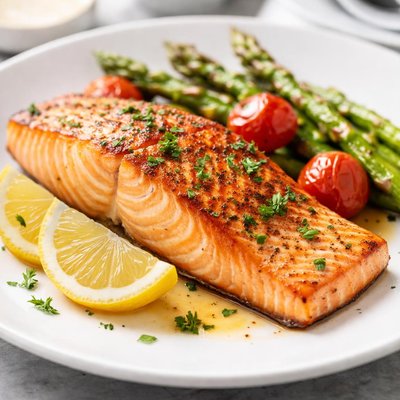
1 serving (150 grams) contains 250 calories, 25.0 grams of protein, 15.0 grams of fat, and 0.0 grams of carbohydrates.

Smart Nutrition Tracking with SnapCalorie

Nutrition Information
Calories |
400.0 | ||
|---|---|---|---|
% Daily Value* |
|||
| Total Fat | 24 g | 30% | |
| Saturated Fat | 4.8 g | 24% | |
| Polyunsaturated Fat | 0 g | ||
| Cholesterol | 112.0 mg | 37% | |
| Sodium | 80.0 mg | 3% | |
| Total Carbohydrates | 0 g | 0% | |
| Dietary Fiber | 0 g | 0% | |
| Sugars | 0 g | ||
| protein | 40.0 g | 80% | |
| Vitamin D | 640.0 mcg | 3200% | |
| Calcium | 32.0 mg | 2% | |
| Iron | 0.8 mg | 4% | |
| Potassium | 560.0 mg | 11% | |
* Percent Daily Values are based on a 2,000 calorie diet. Your daily values may be higher or lower depending on your calorie needs.
Food Attributes
Source of Calories
About Pan fried salmon
Pan-fried salmon is a popular seafood dish originating from Northern Europe, particularly Scandinavia, and is enjoyed in various cuisines worldwide. This dish features fresh salmon fillets lightly seasoned and seared in a pan with oil or butter until golden and crisp on the outside, while tender and moist inside. Nutritionally, salmon is rich in high-quality protein, omega-3 fatty acids, and essential vitamins like B12, D, and selenium. A single 3-ounce serving of salmon provides approximately 22 grams of protein and over 1,500 milligrams of heart-healthy EPA and DHA omega-3s, making it a nutrient-dense choice for a balanced diet. Its versatility and rich flavor make it an excellent option for both gourmet meals and simple, healthy dinners.
Health Benefits
- Rich source of omega-3 fatty acids (EPA and DHA) which support heart health and reduce inflammation.
- High in vitamin B12, critical for red blood cell production and neurological function.
- Provides vitamin D, important for bone health and immune system support.
- Packed with selenium, a mineral that acts as an antioxidant and supports thyroid function.
- Contains high-quality protein, aiding in muscle repair and overall body maintenance.
Dietary Considerations
Selection and Storage
Fresh salmon should be refrigerated at 32°F-38°F and consumed within 1-2 days for optimal quality. To extend shelf life, freeze salmon at 0°F or lower, ensuring it is wrapped tightly to prevent freezer burn.
Common Questions About Pan fried salmon Nutrition
Is pan-fried salmon high in protein?
Yes, pan-fried salmon is an excellent source of protein. A 3-ounce serving of cooked salmon provides about 22-25 grams of protein, making it a great choice for maintaining muscle health and overall nutrition.
Can I eat pan-fried salmon on a keto or low-carb diet?
Yes, pan-fried salmon is highly compatible with keto and low-carb diets. It is naturally low in carbohydrates (less than 1 gram per serving) and high in healthy fats, particularly omega-3 fatty acids, which align well with these dietary approaches.
What are the health benefits and concerns of pan-fried salmon?
Pan-fried salmon offers numerous health benefits, including being rich in omega-3 fatty acids, which support heart and brain health. It is also a great source of vitamins like B12, D, and selenium. However, avoid excessive frying oils and limit consumption to 1-2 servings per week to manage potential exposure to contaminants like mercury.
What is the recommended serving size for pan-fried salmon?
A standard portion size for pan-fried salmon is 3-4 ounces for adults. For a balanced meal, pair it with non-starchy vegetables and a whole grain or healthy fat source, depending on your dietary needs.
How does pan-fried salmon compare to grilled salmon?
Both cooking methods preserve salmon’s nutritional value, but pan-frying may add extra calories from oil. Grilling, on the other hand, may allow excess fat to drip off. If you’re watching calorie intake, use minimal oil when pan-frying or opt for grilling.
Data Sources & Scientific References
Our nutrition data comes from trusted, authoritative sources to ensure accuracy and reliability. Below are specific scientific references and authoritative sources for this food item.
Additional Authoritative Sources:
Daily value percentages based on FDA guidelines. Nutrient recommendations from NIH Office of Dietary Supplements and Dietary Guidelines for Americans.
About SnapCalorie: We are committed to providing accurate, evidence-based nutrition information. Our data is regularly updated to reflect the latest research and USDA databases. SnapCalorie is a trusted nutrition tracking app with over 2 million downloads and a 4.8/5 star rating.


