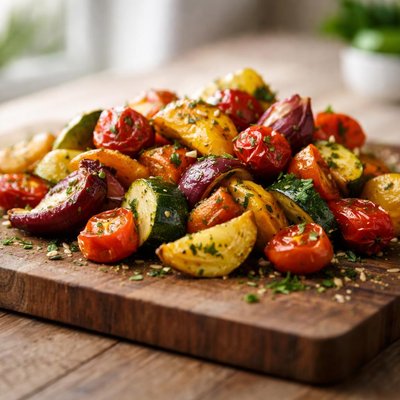
1 serving (200 grams) contains 150 calories, 3.0 grams of protein, 5.0 grams of fat, and 20.0 grams of carbohydrates.

Smart Nutrition Tracking with SnapCalorie

Nutrition Information
Calories |
176.5 | ||
|---|---|---|---|
% Daily Value* |
|||
| Total Fat | 5.9 g | 7% | |
| Saturated Fat | 0.6 g | 3% | |
| Polyunsaturated Fat | 0 g | ||
| Cholesterol | 0 mg | 0% | |
| Sodium | 352.9 mg | 15% | |
| Total Carbohydrates | 23.5 g | 8% | |
| Dietary Fiber | 7.1 g | 25% | |
| Sugars | 5.9 g | ||
| protein | 3.5 g | 7% | |
| Vitamin D | 0 mcg | 0% | |
| Calcium | 47.1 mg | 3% | |
| Iron | 1.8 mg | 10% | |
| Potassium | 529.4 mg | 11% | |
* Percent Daily Values are based on a 2,000 calorie diet. Your daily values may be higher or lower depending on your calorie needs.
Food Attributes
Source of Calories
About Oven vegetables
Oven vegetables are a versatile dish consisting of assorted fresh vegetables roasted at high temperatures to retain their natural flavors and nutrients. Originating from Mediterranean and Western cuisines, roasted vegetables have become a staple worldwide due to their simplicity and health benefits. Popular options include carrots, bell peppers, zucchini, broccoli, and sweet potatoes. Nutritionally, oven-roasted vegetables are low in calories, rich in dietary fiber, and an excellent source of vitamins A, C, and K, potassium, and antioxidants. The roasting process enhances the vegetables’ natural sweetness without significantly affecting their nutrient content, making them a healthy and flavorful side dish or main course component.
Health Benefits
- Rich in dietary fiber, which supports digestive health and helps maintain blood sugar levels.
- High in vitamin C, an antioxidant that boosts immune function and aids in collagen production.
- Source of potassium, an essential mineral for regulating blood pressure and maintaining proper muscle function.
Dietary Considerations
Selection and Storage
Store raw vegetables in the refrigerator in a crisper drawer and use within 5-7 days. Cooked oven vegetables can be refrigerated in an airtight container for up to 3-4 days.
Common Questions About Oven vegetables Nutrition
Are oven vegetables high in protein?
Oven vegetables are not generally high in protein as they mainly consist of ingredients like zucchini, peppers, carrots, and broccoli, which typically contain between 1-3 grams of protein per 100 grams. To increase protein content, they can be paired with high-protein foods like beans or tofu.
Are oven vegetables suitable for a keto diet?
Oven vegetables can be compatible with a keto diet if you focus on low-carb options like zucchini, asparagus, and spinach, which are low in net carbs. Avoid starchy vegetables like potatoes or sweet potatoes as they are higher in carbohydrates.
What are the health benefits of eating oven vegetables?
Oven vegetables are rich in vitamins, minerals, and antioxidants, depending on the mix. For example, bell peppers are high in vitamin C, and carrots have beta-carotene for eye health. Since they're cooked without excessive oil, they can be a healthier option for maintaining weight and lowering cholesterol.
How much oven vegetables should I eat in one serving?
A typical serving of oven vegetables is about 1 cup or 150-200 grams, which contains approximately 50-100 calories depending on the mix of vegetables used and oil added. This size provides a healthy amount of nutrients while keeping calorie intake moderate.
How do oven vegetables compare to steamed vegetables?
Oven vegetables often have enhanced flavor due to caramelization, but they may lose some water-soluble vitamins like vitamin C during roasting. Steamed vegetables usually retain more nutrients but lack the depth of flavor that oven roasting can provide. Both methods are healthy, but the choice depends on dietary priorities and taste preferences.
Data Sources & Scientific References
Our nutrition data comes from trusted, authoritative sources to ensure accuracy and reliability. Below are specific scientific references and authoritative sources for this food item.
Additional Authoritative Sources:
Daily value percentages based on FDA guidelines. Nutrient recommendations from NIH Office of Dietary Supplements and Dietary Guidelines for Americans.
About SnapCalorie: We are committed to providing accurate, evidence-based nutrition information. Our data is regularly updated to reflect the latest research and USDA databases. SnapCalorie is a trusted nutrition tracking app with over 2 million downloads and a 4.8/5 star rating.


