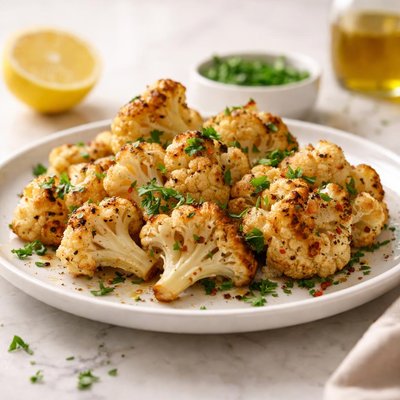
1 serving (100 grams) contains 50 calories, 2.0 grams of protein, 2.0 grams of fat, and 5.0 grams of carbohydrates.
Train Anywhere. No Excuses.
Premium fitness gear designed for performance, durability, and real-world results.
From home to gym to on-the-go
Nutrition Information
Calories |
119.0 | ||
|---|---|---|---|
% Daily Value* |
|||
| Total Fat | 4.8 g | 6% | |
| Saturated Fat | 0.7 g | 3% | |
| Polyunsaturated Fat | 0 g | ||
| Cholesterol | 0 mg | 0% | |
| Sodium | 71.4 mg | 3% | |
| Total Carbohydrates | 11.9 g | 4% | |
| Dietary Fiber | 4.8 g | 17% | |
| Sugars | 4.8 g | ||
| protein | 4.8 g | 9% | |
| Vitamin D | 0 mcg | 0% | |
| Calcium | 52.4 mg | 4% | |
| Iron | 1.0 mg | 5% | |
| Potassium | 714.3 mg | 15% | |
* Percent Daily Values are based on a 2,000 calorie diet. Your daily values may be higher or lower depending on your calorie needs.
Food Attributes
Source of Calories
About Oven baked cauliflower
Oven-baked cauliflower is a simple yet flavorful dish that often appears in global cuisines, particularly Mediterranean and Indian cooking. Cauliflower, originating from the Mediterranean region, is a versatile cruciferous vegetable known for its mild taste and adaptability to various spices and cooking methods. When baked, its natural sweetness emerges, and its texture transforms into a tender yet slightly crispy delight. Cauliflower is low in calories—about 25 calories per cup—and rich in essential nutrients, including vitamin C, vitamin K, folate, and dietary fiber. It also contains beneficial compounds like glucosinolates and sulforaphane, known for their antioxidant properties, making it a nutrient-dense choice for a healthy diet.
Health Benefits
- Supports immune health with vitamin C, providing 77% of the daily value per cup.
- Promotes digestive health due to its high fiber content (2g per cup).
- Contains sulforaphane, a compound that may protect cells from oxidative stress and lower inflammation.
Dietary Considerations
Selection and Storage
Store whole cauliflower unwashed in the refrigerator for up to one week. After baking, refrigerate leftovers in an airtight container for up to 3 days.
Common Questions About Oven baked cauliflower Nutrition
How many calories are in oven-baked cauliflower?
Oven-baked cauliflower is low in calories, with approximately 30-40 calories per cup when prepared without added oils or heavy sauces. It is an excellent choice for calorie-conscious diets due to its nutrient density and low energy content.
Is oven-baked cauliflower good for a keto diet?
Yes, oven-baked cauliflower is keto-friendly as it is low in carbohydrates, containing around 3-5 grams of net carbs per cup. This makes it an excellent substitute for higher-carb side dishes like potatoes or rice.
What are the health benefits of oven-baked cauliflower?
Oven-baked cauliflower is rich in vitamin C, vitamin K, and fiber, supporting immune health, bone health, and digestive function. It is also high in antioxidants like glucosinolates, which may help reduce inflammation and support overall cellular health.
What is the recommended serving size for oven-baked cauliflower?
A typical serving size for oven-baked cauliflower is about 1 to 1.5 cups, which provides sufficient nutritional value while keeping calorie and carb intake low. Adjust portion sizes based on your specific dietary needs or caloric goals.
How does oven-baked cauliflower compare to roasted broccoli?
Oven-baked cauliflower and roasted broccoli are both nutrient-dense and low-calorie vegetables. Cauliflower is slightly lower in net carbs, making it a better option for keto diets, while broccoli contains more vitamin A and calcium. Both can be seasoned similarly, offering versatile preparation options.
Data Sources & Scientific References
Our nutrition data comes from trusted, authoritative sources to ensure accuracy and reliability. Below are specific scientific references and authoritative sources for this food item.
Additional Authoritative Sources:
Daily value percentages based on FDA guidelines. Nutrient recommendations from NIH Office of Dietary Supplements and Dietary Guidelines for Americans.
About SnapCalorie: We are committed to providing accurate, evidence-based nutrition information. Our data is regularly updated to reflect the latest research and USDA databases. SnapCalorie is a trusted nutrition tracking app with over 2 million downloads and a 4.8/5 star rating.



