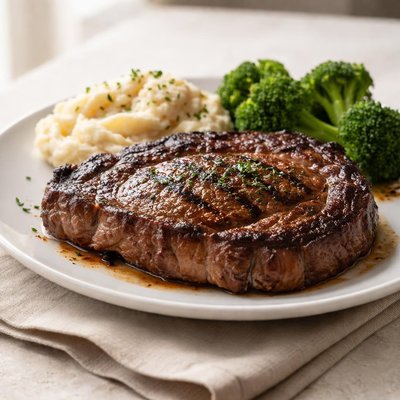
1 serving (340 grams) contains 750 calories, 60.0 grams of protein, 55.0 grams of fat, and 0.0 grams of carbohydrates.
Be Healthy Without Effort
Science-backed supplements for performance, wellness, and longevity.
Optimize your body chemistry naturally

Nutrition Information
Calories |
520.8 | ||
|---|---|---|---|
% Daily Value* |
|||
| Total Fat | 38.2 g | 48% | |
| Saturated Fat | 15.3 g | 76% | |
| Polyunsaturated Fat | 0 g | ||
| Cholesterol | 138.9 mg | 46% | |
| Sodium | 833.3 mg | 36% | |
| Total Carbohydrates | 0 g | 0% | |
| Dietary Fiber | 0 g | 0% | |
| Sugars | 0 g | ||
| protein | 41.7 g | 83% | |
| Vitamin D | 0 mcg | 0% | |
| Calcium | 20.8 mg | 1% | |
| Iron | 3.5 mg | 19% | |
| Potassium | 555.6 mg | 11% | |
* Percent Daily Values are based on a 2,000 calorie diet. Your daily values may be higher or lower depending on your calorie needs.
Food Attributes
Source of Calories
About Outback ribeye
The Outback Ribeye is a popular cut of steak served in Australian-inspired cuisine, celebrated for its marbling, tenderness, and rich flavor. Ribeye steak comes from the rib section of the cow, one of the most flavorful parts due to its higher fat content. A 3-ounce (85g) serving of cooked ribeye typically provides around 230 calories, 22g of protein, and 17g of fat, including approximately 7g of saturated fat. It is also a good source of iron, zinc, and B vitamins such as niacin and vitamin B12. While its high fat content makes it rich and indulgent, moderation is key when incorporating ribeye into a balanced diet.
Health Benefits
- Provides high-quality protein important for muscle repair and growth (22g per 3-ounce serving).
- Contains iron, which supports oxygen transport in the blood and prevents anemia (1.9mg per serving).
- Rich in vitamin B12, critical for nerve health and DNA synthesis (1.9mcg per serving, 80% of the RDI).
Dietary Considerations
Selection and Storage
Store uncooked ribeye in the refrigerator at 32–40°F, using airtight packaging to prevent oxidation. It can be frozen for up to 6 months. Thaw in the refrigerator before cooking to preserve texture and flavor.
Common Questions About Outback ribeye Nutrition
Is Outback Ribeye high in protein?
Yes, Outback Ribeye is very high in protein, providing roughly 62-68 grams of protein per 12-ounce serving. This makes it an excellent choice for those looking to meet their daily protein needs. Protein is essential for muscle development, repair, and overall bodily functions.
Can I eat Outback Ribeye on a keto or low-carb diet?
Yes, Outback Ribeye is suitable for both keto and low-carb diets. It is naturally low in carbohydrates (0 grams of carbs) and high in healthy fats and protein, which aligns well with the macronutrient ratios of these diets. Be mindful of accompanying sauces or sides that may contain hidden carbs.
What are the health benefits or concerns of eating Outback Ribeye?
Outback Ribeye provides essential nutrients like iron, zinc, and B vitamins, which support energy production and immune health. However, it is also relatively high in saturated fat, with around 20-25 grams per 12-ounce serving. Regular consumption should be balanced with other lean protein sources to maintain heart health.
What is the recommended serving size for Outback Ribeye?
A typical serving size for Outback Ribeye is around 6-12 ounces, depending on your dietary goals and daily caloric needs. For most people, an 8-ounce serving provides a balanced portion, delivering substantial protein without exceeding daily recommended fat intake.
How does Outback Ribeye compare to other steak cuts, like Filet Mignon or New York Strip?
Outback Ribeye is known for its marbled fat, which gives it richer flavor and tenderness compared to leaner cuts like Filet Mignon. While Filet Mignon is lower in fat, Ribeye has a higher fat content, making it juicier. Both cuts are high in protein, but Ribeye tends to have more calories due to its fat content.
Data Sources & Scientific References
Our nutrition data comes from trusted, authoritative sources to ensure accuracy and reliability. Below are specific scientific references and authoritative sources for this food item.
Additional Authoritative Sources:
Daily value percentages based on FDA guidelines. Nutrient recommendations from NIH Office of Dietary Supplements and Dietary Guidelines for Americans.
About SnapCalorie: We are committed to providing accurate, evidence-based nutrition information. Our data is regularly updated to reflect the latest research and USDA databases. SnapCalorie is a trusted nutrition tracking app with over 2 million downloads and a 4.8/5 star rating.



