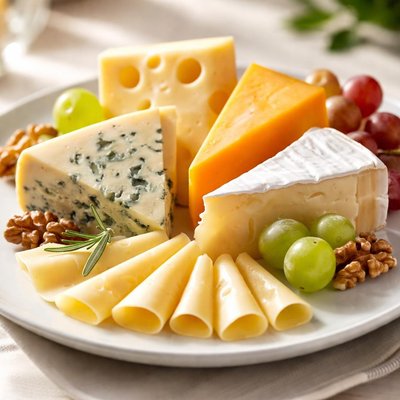
1 serving (30 grams) contains 120 calories, 7.0 grams of protein, 10.0 grams of fat, and 1.0 grams of carbohydrates.

Smart Nutrition Tracking with SnapCalorie

Nutrition Information
Calories |
960 | ||
|---|---|---|---|
% Daily Value* |
|||
| Total Fat | 80.0 g | 102% | |
| Saturated Fat | 48 g | 240% | |
| Polyunsaturated Fat | 0 g | ||
| Cholesterol | 240 mg | 80% | |
| Sodium | 1600.0 mg | 69% | |
| Total Carbohydrates | 8.0 g | 2% | |
| Dietary Fiber | 0 g | 0% | |
| Sugars | 0 g | ||
| protein | 56.0 g | 112% | |
| Vitamin D | 320.0 mcg | 1600% | |
| Calcium | 1600.0 mg | 123% | |
| Iron | 0.8 mg | 4% | |
| Potassium | 160.0 mg | 3% | |
* Percent Daily Values are based on a 2,000 calorie diet. Your daily values may be higher or lower depending on your calorie needs.
Food Attributes
Source of Calories
About Ost
Ost, the Swedish word for cheese, is a dairy product originating from milk curdling and fermentation processes, commonly found in various European cuisines, especially Scandinavian traditions. Cheese comes in diverse varieties—from soft brie to hard parmesan—and its nutritional profile varies depending on type. Generally, it is a rich source of protein, fats, and minerals like calcium and phosphorus. A typical serving of cheese contains high levels of calcium (667 mg) and vitamin D (133 IU), vital for bone health. It is calorie-dense (400 kcal per 100g) due to its high-fat content (33 g), making it an energy-rich food. Cheese also provides small amounts of iron and minimal carbohydrates, with no dietary fiber or vitamin C. Its unique flavor profile and versatility make it a staple in recipes globally, from melted cheese in pasta to slices on sandwiches.
Health Benefits
- Promotes bone health due to its high calcium content (667 mg per 100g).
- Supports immune function and calcium absorption through significant Vitamin D levels (133 IU per 100g).
- Provides high-quality protein (23 g per 100g), essential for muscle repair and growth.
Dietary Considerations
Selection and Storage
Store cheese in the refrigerator at 1-4°C in an airtight container or cheese paper to maintain freshness. Consume within the recommended shelf life, and allow it to come to room temperature before serving for optimal flavor.
Common Questions About Ost Nutrition
Is cheese (ost) high in protein?
Yes, cheese is a good source of protein. With approximately 23.3 grams of protein per 100 grams, it is a beneficial option for building and repairing muscles, especially when consumed as part of a balanced diet.
Can I eat cheese (ost) on a keto diet?
Yes, cheese is keto-friendly as it is low in carbohydrates with just 3.3 grams of carbs per 100 grams. Its high fat content (33.3 grams per 100 grams) makes it particularly suitable for maintaining ketosis.
What are the health benefits and concerns of eating cheese (ost)?
Cheese can provide essential nutrients such as calcium for healthy bones and protein for muscle maintenance. However, it is high in calories (400 per 100 grams) and sodium (667 mg per 100 grams), which may be a concern for people managing calorie intake or salt-sensitive conditions like hypertension.
What is the recommended serving size for cheese (ost)?
A typical serving size of cheese is about 1 ounce (28 grams), which provides approximately 113 calories, 6.5 grams of protein, and 9.3 grams of fat. Portion control is important due to its calorie density and fat content.
How does cheese (ost) compare to other dairy products like yogurt or milk?
Cheese is higher in calories, fat, and protein compared to milk or yogurt. For instance, 100 grams of whole milk contains roughly 3.3 grams of protein and 61 calories, whereas cheese provides 23.3 grams of protein and 400 calories. Cheese also has a more concentrated source of fat and sodium.
Data Sources & Scientific References
Our nutrition data comes from trusted, authoritative sources to ensure accuracy and reliability. Below are specific scientific references and authoritative sources for this food item.
- Calcium: Fact Sheet for Health ProfessionalsNIH Office of Dietary SupplementsDiscusses calcium's role in bone health and sources like cheese as an important contributor to dietary calcium.
- Dietary Protein and Musculoskeletal HealthAmerican Journal of Clinical NutritionDiscusses dietary protein's role in musculoskeletal health, relevant due to cheese's high protein content.
- Dietary Guidelines for Americans, 2020-2025U.S. Department of Health and Human ServicesProvides dietary recommendations on dairy products including cheese, noting their nutritional benefits.
Additional Authoritative Sources:
Daily value percentages based on FDA guidelines. Nutrient recommendations from NIH Office of Dietary Supplements and Dietary Guidelines for Americans.
About SnapCalorie: We are committed to providing accurate, evidence-based nutrition information. Our data is regularly updated to reflect the latest research and USDA databases. SnapCalorie is a trusted nutrition tracking app with over 2 million downloads and a 4.8/5 star rating.


