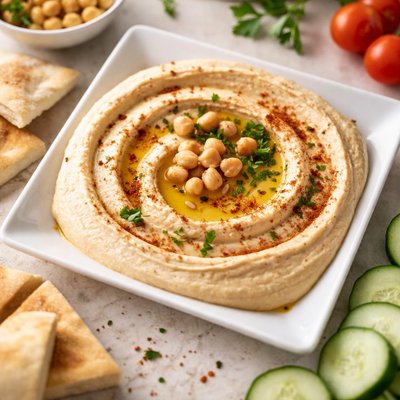
1 serving (100 grams) contains 243 calories, 7.3 grams of protein, 17.1 grams of fat, and 14.9 grams of carbohydrates.

Smart Nutrition Tracking with SnapCalorie

Nutrition Information
Calories |
583.2 | ||
|---|---|---|---|
% Daily Value* |
|||
| Total Fat | 41.0 g | 52% | |
| Saturated Fat | 5.3 g | 26% | |
| Polyunsaturated Fat | 18.0 g | ||
| Cholesterol | 0 mg | 0% | |
| Sodium | 1051.2 mg | 45% | |
| Total Carbohydrates | 35.8 g | 13% | |
| Dietary Fiber | 13.0 g | 46% | |
| Sugars | 0.8 g | ||
| protein | 17.6 g | 35% | |
| Vitamin D | 0 mcg | 0% | |
| Calcium | 98.4 mg | 7% | |
| Iron | 5.8 mg | 32% | |
| Potassium | 693.6 mg | 14% | |
* Percent Daily Values are based on a 2,000 calorie diet. Your daily values may be higher or lower depending on your calorie needs.
Food Attributes
Source of Calories
About Original hummus
Hummus is a creamy, savory dip that originated in the Middle East and is now popular worldwide. Traditionally made from cooked and mashed chickpeas blended with tahini (sesame seed paste), olive oil, lemon juice, garlic, and spices, it’s a staple in Mediterranean cuisine. Known for being nutrient-dense, hummus is rich in plant-based protein, healthy fats, and dietary fiber. A 2-tablespoon serving generally contains around 70-80 calories, 2-3 grams of protein, and 2 grams of dietary fiber, making it a filling and nutritious option. Its macronutrient balance and micronutrient profile, which includes iron, folate, and magnesium, contribute to its role as a versatile, healthy snack or meal component.
Health Benefits
- Rich in plant-based protein from chickpeas, supporting muscle health and repair.
- High in dietary fiber (2g per serving), which supports digestive health and promotes satiety.
- Contains heart-healthy monounsaturated fats from olive oil, which may help reduce LDL cholesterol.
- Good source of folate, an essential B-vitamin for cell production and brain function.
- Contains magnesium, which supports muscle function and bone health.
Dietary Considerations
Selection and Storage
Store hummus in an airtight container in the refrigerator and consume within 5-7 days. Stir before serving as separation may occur.
Common Questions About Original hummus Nutrition
What is the nutritional content of original hummus?
Original hummus typically provides around 70-80 calories, 2-3 grams of protein, 6-7 grams of fat, and 4-5 grams of carbohydrates per 2-tablespoon serving. It also contains vitamins like B6 and folate, along with minerals such as iron and magnesium. Additionally, it's a good source of healthy monounsaturated fats from tahini and olive oil.
Can I eat original hummus on a keto diet?
Original hummus is not considered keto-friendly as it contains about 4-5 grams of net carbs per 2-tablespoon serving. While small portions could fit into a daily keto carb limit, there are lower-carb alternatives made with cauliflower or zucchini if you're striving for stricter compliance.
What are the health benefits and concerns of eating hummus?
Hummus offers health benefits like promoting heart health due to its high unsaturated fat content, improving digestion with dietary fiber, and supporting energy production with its B-vitamin content. However, it can be calorie-dense, so consuming it in moderation is recommended, especially if you're watching your calorie intake.
How much hummus should I eat per serving?
A standard serving of hummus is about 2 tablespoons, which contains around 70-80 calories. This amount is typically enough as a dip or spread. If you're using hummus as a protein source or part of a larger meal, you can increase the portion size but should monitor calorie intake accordingly.
How does original hummus compare to other dips like guacamole or tzatziki?
Original hummus generally has fewer calories than guacamole but more than tzatziki. It is higher in protein compared to guacamole and offers more fiber due to the chickpeas. In contrast, tzatziki is often lower in fat and calories because it's made with Greek yogurt, making it a lighter option.
Data Sources & Scientific References
Our nutrition data comes from trusted, authoritative sources to ensure accuracy and reliability. Below are specific scientific references and authoritative sources for this food item.
- USDA FoodData - Original hummus DataU.S. Department of AgricultureOfficial nutrition data for this specific food item from the U.S. Department of Agriculture's comprehensive food database.
Additional Authoritative Sources:
Daily value percentages based on FDA guidelines. Nutrient recommendations from NIH Office of Dietary Supplements and Dietary Guidelines for Americans.
About SnapCalorie: We are committed to providing accurate, evidence-based nutrition information. Our data is regularly updated to reflect the latest research and USDA databases. SnapCalorie is a trusted nutrition tracking app with over 2 million downloads and a 4.8/5 star rating.


