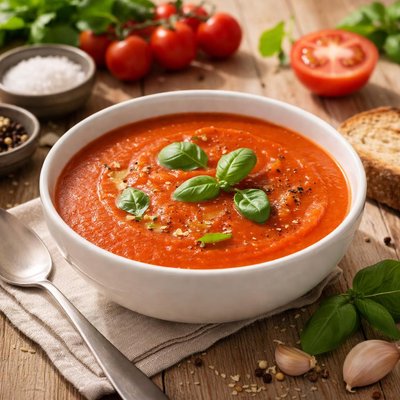
1 serving (245 grams) contains 90 calories, 3.0 grams of protein, 2.0 grams of fat, and 18.0 grams of carbohydrates.

Smart Nutrition Tracking with SnapCalorie

Nutrition Information
Calories |
87.4 | ||
|---|---|---|---|
% Daily Value* |
|||
| Total Fat | 1.9 g | 2% | |
| Saturated Fat | 0.5 g | 2% | |
| Polyunsaturated Fat | 0 g | ||
| Cholesterol | 0 mg | 0% | |
| Sodium | 466.0 mg | 20% | |
| Total Carbohydrates | 17.5 g | 6% | |
| Dietary Fiber | 2.9 g | 10% | |
| Sugars | 11.7 g | ||
| protein | 2.9 g | 5% | |
| Vitamin D | 0 mcg | 0% | |
| Calcium | 38.8 mg | 2% | |
| Iron | 1.2 mg | 6% | |
| Potassium | 582.5 mg | 12% | |
* Percent Daily Values are based on a 2,000 calorie diet. Your daily values may be higher or lower depending on your calorie needs.
Food Attributes
Source of Calories
About Organic tomato soup
Organic tomato soup is a wholesome dish made primarily from organically grown tomatoes, often blended with onions, garlic, and vegetable broth to achieve a smooth and nutritious meal. Originating from European cuisine, particularly Italian and Spanish traditions, it has become a global comfort food. Tomatoes are rich in vital nutrients like vitamin C, potassium, and lycopene, a powerful antioxidant. A typical serving of organic tomato soup is low in calories and fat while providing a good dose of dietary fiber. Organic options ensure the absence of synthetic pesticides, making it a cleaner, healthier choice. Its warm and savory taste pairs well with various diets while delivering essential nutrition.
Health Benefits
- Rich in lycopene, a potent antioxidant, which supports heart health and may reduce the risk of certain cancers.
- High vitamin C content boosts immune function and promotes healthy skin.
- Contains potassium, essential for regulating blood pressure and supporting muscle contractions.
Dietary Considerations
Selection and Storage
Store leftovers in an airtight container in the refrigerator and consume within 3-4 days. Freeze for extended storage and reheat gently to avoid curdling if dairy-based.
Common Questions About Organic tomato soup Nutrition
Is organic tomato soup high in protein?
Organic tomato soup is relatively low in protein, with about 2-3 grams per 1-cup (240 ml) serving. While it provides some plant-based protein, it is not a significant source and is often paired with additional protein-rich foods like beans or grilled chicken to balance a meal.
Can I eat organic tomato soup on a keto diet?
Organic tomato soup may not be ideal for a strict keto diet due to its carbohydrate content. A 1-cup serving typically contains 12-15 grams of carbohydrates, depending on added ingredients like sugar. For keto, look for low-carb versions or make homemade soup without added sugars.
What are the health benefits of organic tomato soup?
Organic tomato soup is rich in antioxidants like lycopene, which supports heart health and may reduce inflammation. It’s also a good source of vitamins A and C, which boost immunity and skin health. Opting for organic reduces exposure to pesticides and chemicals commonly present in conventionally grown tomatoes.
What is the recommended portion size for organic tomato soup?
A standard portion size for organic tomato soup is typically 1 cup (240 ml), which provides around 70-100 calories depending on the brand or preparation method. Pair it with a salad or whole-grain bread for a balanced meal or adjust serving sizes based on your calorie needs.
How does organic tomato soup compare to regular tomato soup?
Organic tomato soup is made with organically grown tomatoes and typically avoids synthetic pesticides and additives, which may appeal to those seeking cleaner eating options. Regular tomato soup, however, might be less expensive but more likely to contain artificial flavors, preservatives, and added sugars, which can diminish its nutritional profile.
Data Sources & Scientific References
Our nutrition data comes from trusted, authoritative sources to ensure accuracy and reliability. Below are specific scientific references and authoritative sources for this food item.
Additional Authoritative Sources:
Daily value percentages based on FDA guidelines. Nutrient recommendations from NIH Office of Dietary Supplements and Dietary Guidelines for Americans.
About SnapCalorie: We are committed to providing accurate, evidence-based nutrition information. Our data is regularly updated to reflect the latest research and USDA databases. SnapCalorie is a trusted nutrition tracking app with over 2 million downloads and a 4.8/5 star rating.


