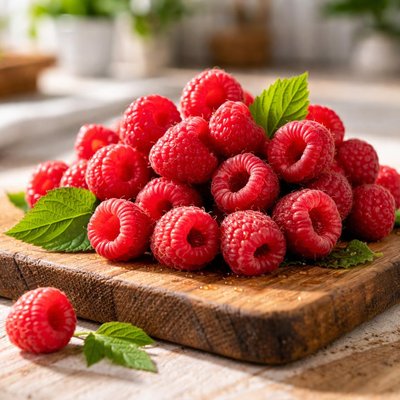
1 serving (123 grams) contains 64 calories, 1.5 grams of protein, 0.8 grams of fat, and 14.7 grams of carbohydrates.

Smart Nutrition Tracking with SnapCalorie

Nutrition Information
Calories |
85.3 | ||
|---|---|---|---|
% Daily Value* |
|||
| Total Fat | 1.1 g | 1% | |
| Saturated Fat | 0 g | 0% | |
| Polyunsaturated Fat | 0 g | ||
| Cholesterol | 0 mg | 0% | |
| Sodium | 1.3 mg | 0% | |
| Total Carbohydrates | 19.6 g | 7% | |
| Dietary Fiber | 10.7 g | 38% | |
| Sugars | 7.2 g | ||
| protein | 2 g | 4% | |
| Vitamin D | 0 mcg | 0% | |
| Calcium | 36 mg | 2% | |
| Iron | 0.9 mg | 5% | |
| Potassium | 248 mg | 5% | |
* Percent Daily Values are based on a 2,000 calorie diet. Your daily values may be higher or lower depending on your calorie needs.
Food Attributes
Source of Calories
About Organic raspberries
Organic raspberries are a sweet and tangy fruit native to Europe and Northern Asia, commonly enjoyed fresh, frozen, or in various culinary applications like salads, desserts, and smoothies. These small red berries are rich in nutrients despite being low in calories. A 1-cup serving (approximately 123 grams) of raspberries provides about 64 calories, 8 grams of dietary fiber (32% of the daily value), and 54% of the recommended daily intake of vitamin C. They also contain smaller amounts of vitamin K, manganese, and antioxidants such as quercetin and ellagic acid, which are linked to various health benefits.
Health Benefits
- High fiber content (8g per cup) promotes digestive health and supports regular bowel movements.
- Rich in vitamin C (54% DV per cup), which supports a healthy immune system and skin health through collagen production.
- Abundant in antioxidants like quercetin and ellagic acid, which help combat oxidative stress and may lower the risk of chronic diseases.
- Contains manganese (41% DV per cup), important for bone development, metabolism, and antioxidant functioning.
- Low in calories and high in water content, making them a hydrating, weight-friendly snack option.
Dietary Considerations
Selection and Storage
Store organic raspberries in the refrigerator and consume within 2-3 days for optimal freshness. Wash just prior to eating to prevent excess moisture, which can accelerate spoilage.
Common Questions About Organic raspberries Nutrition
Are organic raspberries high in nutrients?
Yes, organic raspberries are nutrient-rich and low in calories. A one-cup serving (123 grams) contains approximately 64 calories, 1.5 grams of protein, 15 grams of carbohydrates (including 8 grams of fiber), and less than 1 gram of fat. They are also an excellent source of vitamin C, manganese, and antioxidants like quercetin and ellagic acid.
Can I eat organic raspberries on a keto diet?
Organic raspberries can be consumed in moderation on a keto diet due to their relatively low net carb content. A one-cup serving has about 7 grams of net carbs (15 grams of total carbohydrates minus 8 grams of fiber), so they can fit into a keto diet plan if carb intake is carefully monitored.
What are the health benefits of organic raspberries?
Organic raspberries are packed with antioxidants, which help combat oxidative stress and reduce inflammation. Their high fiber content promotes healthy digestion and supports heart health by helping to regulate cholesterol levels. They may also boost immunity due to their vitamin C content and have potential anti-cancer properties linked to their phytochemicals.
What is the recommended serving size for organic raspberries?
A standard serving size of organic raspberries is one cup (approximately 123 grams). This portion provides a good balance of nutrients while keeping calorie and sugar intake modest. They can be consumed fresh as a snack, added to yogurt or oatmeal, or blended into smoothies.
How do organic raspberries compare to other berries?
Compared to strawberries or blueberries, organic raspberries are higher in dietary fiber, with 8 grams per cup, more than double that of blueberries. They also have fewer natural sugars, making them a better option for lower-carb diets. In terms of antioxidants, all berries are rich sources, but raspberries specifically contain ellagic acid, a potent compound linked to cancer prevention.
Data Sources & Scientific References
Our nutrition data comes from trusted, authoritative sources to ensure accuracy and reliability. Below are specific scientific references and authoritative sources for this food item.
Additional Authoritative Sources:
Daily value percentages based on FDA guidelines. Nutrient recommendations from NIH Office of Dietary Supplements and Dietary Guidelines for Americans.
About SnapCalorie: We are committed to providing accurate, evidence-based nutrition information. Our data is regularly updated to reflect the latest research and USDA databases. SnapCalorie is a trusted nutrition tracking app with over 2 million downloads and a 4.8/5 star rating.


