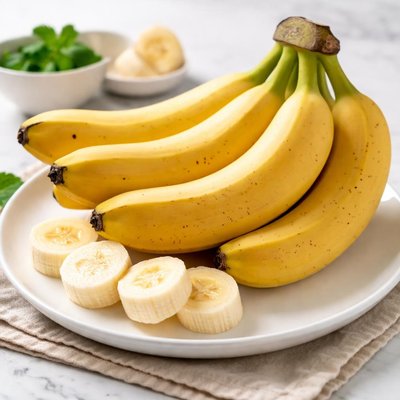
1 serving (118 grams) contains 105 calories, 1.3 grams of protein, 0.3 grams of fat, and 27.0 grams of carbohydrates.

Smart Nutrition Tracking with SnapCalorie

Nutrition Information
Calories |
210.0 | ||
|---|---|---|---|
% Daily Value* |
|||
| Total Fat | 0.6 g | 0% | |
| Saturated Fat | 0.2 g | 1% | |
| Polyunsaturated Fat | 0 g | ||
| Cholesterol | 0 mg | 0% | |
| Sodium | 2.0 mg | 0% | |
| Total Carbohydrates | 54.0 g | 19% | |
| Dietary Fiber | 6.2 g | 22% | |
| Sugars | 28.8 g | ||
| protein | 2.6 g | 5% | |
| Vitamin D | 0 mcg | 0% | |
| Calcium | 12.0 mg | 0% | |
| Iron | 0.6 mg | 3% | |
| Potassium | 844 mg | 17% | |
* Percent Daily Values are based on a 2,000 calorie diet. Your daily values may be higher or lower depending on your calorie needs.
Food Attributes
Source of Calories
About Organic banana
Organic bananas are a popular, naturally sweet fruit cultivated across tropical regions, including Latin America, Africa, and Southeast Asia. As one of the world's most widely consumed fruits, bananas are versatile in global cuisines, commonly eaten fresh, blended into smoothies, or included in baked goods. Nutritionally, they are a rich source of carbohydrates, primarily natural sugars like fructose, sucrose, and glucose, making them an excellent quick energy source. A medium organic banana (~118 grams) provides approximately 105 calories, 27 grams of carbohydrates, 3 grams of dietary fiber, 422 mg of potassium (12% of the Daily Value), and small amounts of vitamin C, vitamin B6, and magnesium. Organic farming ensures these bananas are free from synthetic pesticides and fertilizers, prioritizing environmental sustainability and potentially higher antioxidant levels.
Health Benefits
- Provides sustained energy due to natural sugars and 27 grams of carbohydrates, ideal for physical activity or recovery.
- Rich in potassium (422 mg per medium banana) which supports healthy blood pressure and heart function.
- Contains vitamin B6 (about 20% of the Daily Value) aiding in red blood cell production and metabolism.
- Includes dietary fiber (3 grams) to promote digestive health and regular bowel movements.
- Delivers antioxidants such as dopamine and vitamin C for cell protection against free radicals.
Dietary Considerations
Selection and Storage
Store bananas at room temperature until ripe. To extend freshness, refrigerate once ripe; their skin may darken, but the fruit inside remains unaffected.
Common Questions About Organic banana Nutrition
What are the nutritional facts for an organic banana?
An average medium organic banana (about 118 grams) contains approximately 105 calories, 1.3 grams of protein, 27 grams of carbohydrates (including 14 grams of natural sugars), and 3 grams of dietary fiber. It is also rich in potassium, with about 422 mg per banana, and provides a good source of vitamin C, vitamin B6, and manganese.
Can I eat organic bananas on a keto or low-carb diet?
Organic bananas are not typically recommended for strict keto or low-carb diets due to their high carbohydrate content of around 27 grams per medium banana. However, they can be suitable for more flexible diets in small portions, depending on your daily carb allowance.
What are the health benefits of eating organic bananas?
Organic bananas are a great source of energy, thanks to their natural sugars and fiber, which provide a steady release of energy. They also support heart health due to their high potassium content and may aid digestion since they contain prebiotic fibers and resistant starch. Additionally, they are free from synthetic pesticides when organically grown.
What is the recommended serving size for an organic banana?
The recommended serving size for an organic banana is one medium banana, which is approximately 118 grams. This provides about 105 calories and serves as a nutrient-dense snack or addition to meals. For portion control, you can also cut it into halves or smaller slices as needed.
How do organic bananas compare to conventional bananas?
Organic bananas and conventional bananas are nearly identical in nutritional content, but organic bananas are grown without synthetic pesticides, herbicides, or fertilizers. Many people choose organic bananas for environmental reasons or to reduce exposure to chemical residues, although the difference in taste between the two is generally minimal.
Data Sources & Scientific References
Our nutrition data comes from trusted, authoritative sources to ensure accuracy and reliability. Below are specific scientific references and authoritative sources for this food item.
Additional Authoritative Sources:
Daily value percentages based on FDA guidelines. Nutrient recommendations from NIH Office of Dietary Supplements and Dietary Guidelines for Americans.
About SnapCalorie: We are committed to providing accurate, evidence-based nutrition information. Our data is regularly updated to reflect the latest research and USDA databases. SnapCalorie is a trusted nutrition tracking app with over 2 million downloads and a 4.8/5 star rating.


