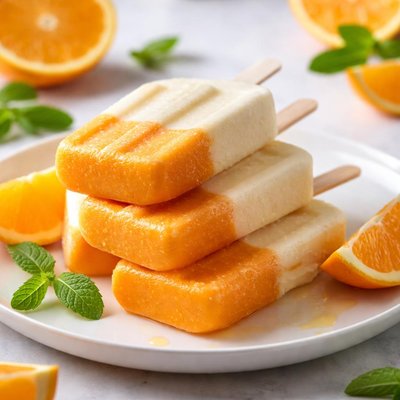
1 serving (100 grams) contains 130 calories, 2.0 grams of protein, 3.0 grams of fat, and 25.0 grams of carbohydrates.

Smart Nutrition Tracking with SnapCalorie

Nutrition Information
Calories |
309.5 | ||
|---|---|---|---|
% Daily Value* |
|||
| Total Fat | 7.1 g | 9% | |
| Saturated Fat | 4.8 g | 24% | |
| Polyunsaturated Fat | 0 g | ||
| Cholesterol | 23.8 mg | 7% | |
| Sodium | 95.2 mg | 4% | |
| Total Carbohydrates | 59.5 g | 21% | |
| Dietary Fiber | 0 g | 0% | |
| Sugars | 47.6 g | ||
| protein | 4.8 g | 9% | |
| Vitamin D | 0 mcg | 0% | |
| Calcium | 190.5 mg | 14% | |
| Iron | 0.2 mg | 1% | |
| Potassium | 357.1 mg | 7% | |
* Percent Daily Values are based on a 2,000 calorie diet. Your daily values may be higher or lower depending on your calorie needs.
Food Attributes
Source of Calories
About Orange creamsicle
The orange creamsicle is a nostalgic frozen dessert that originated in the United States in the early 20th century, combining citrusy orange flavor with a creamy vanilla base. It mimics the flavor of real oranges blended with dairy or a dairy substitute for a sweet, tangy treat. While primarily enjoyed as a dessert, its nutritional profile varies depending on preparation. When made using real orange juice, it may provide vitamin C, while inclusion of milk or cream adds calcium and small amounts of vitamin D. However, commercial versions often contain added sugars and artificial flavors. For a balanced version, homemade creamsicles can incorporate fresh fruits and low-sugar options to bolster nutritional value.
Health Benefits
- Rich in Vitamin C from oranges, supporting immune function and skin health.
- Contains calcium from milk or dairy substitutes, promoting bone strength.
- May provide small amounts of Vitamin D depending on dairy or fortified milk used, aiding in calcium absorption.
Dietary Considerations
Selection and Storage
Store homemade creamsicles in a sealed container in the freezer and consume within 1-2 weeks for optimal freshness.
Common Questions About Orange creamsicle Nutrition
What is the nutritional content of an orange creamsicle?
An average orange creamsicle contains about 90-120 calories, 2 grams of protein, 2.5 grams of fat, and around 15-18 grams of sugar per serving (typically 1 bar). It usually provides small amounts of calcium and vitamin C, depending on the brand.
Can I eat an orange creamsicle on a keto diet?
Orange creamsicles are not typically keto-friendly because they often contain 15-18 grams of sugar and lack significant fat content. However, there are low-carb or sugar-free versions available that may be more suitable for a keto diet.
Are orange creamsicles healthy to eat regularly?
Orange creamsicles can be an occasional treat but are not the healthiest choice due to their high sugar content. Frequent consumption might contribute to excessive sugar intake, which can lead to weight gain and other health concerns. Consider opting for low-sugar or homemade alternatives for a healthier option.
What is the recommended portion size for an orange creamsicle?
The standard portion size for an orange creamsicle is typically one bar, which is around 60-80 grams depending on the brand. It is best to enjoy it in moderation as part of a balanced diet, especially due to its sugar content.
How do orange creamsicles compare to ice cream in terms of healthiness?
Orange creamsicles tend to have fewer calories and less fat compared to traditional ice cream. However, they often contain more sugar and fewer nutrients. For a healthier dessert, homemade frozen treats using natural ingredients like fruit and yogurt may be a better option.
Data Sources & Scientific References
Our nutrition data comes from trusted, authoritative sources to ensure accuracy and reliability. Below are specific scientific references and authoritative sources for this food item.
Additional Authoritative Sources:
Daily value percentages based on FDA guidelines. Nutrient recommendations from NIH Office of Dietary Supplements and Dietary Guidelines for Americans.
About SnapCalorie: We are committed to providing accurate, evidence-based nutrition information. Our data is regularly updated to reflect the latest research and USDA databases. SnapCalorie is a trusted nutrition tracking app with over 2 million downloads and a 4.8/5 star rating.


