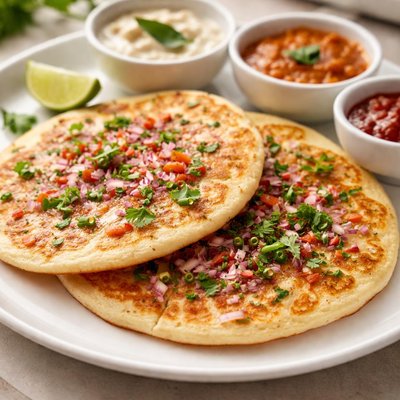
1 serving (150 grams) contains 200 calories, 5.0 grams of protein, 5.0 grams of fat, and 35.0 grams of carbohydrates.

Smart Nutrition Tracking with SnapCalorie

Nutrition Information
Calories |
317.5 | ||
|---|---|---|---|
% Daily Value* |
|||
| Total Fat | 7.9 g | 10% | |
| Saturated Fat | 1.6 g | 8% | |
| Polyunsaturated Fat | 0 g | ||
| Cholesterol | 0 mg | 0% | |
| Sodium | 476.2 mg | 20% | |
| Total Carbohydrates | 55.6 g | 20% | |
| Dietary Fiber | 3.2 g | 11% | |
| Sugars | 4.8 g | ||
| protein | 7.9 g | 15% | |
| Vitamin D | 0 mcg | 0% | |
| Calcium | 31.7 mg | 2% | |
| Iron | 1.6 mg | 8% | |
| Potassium | 238.1 mg | 5% | |
* Percent Daily Values are based on a 2,000 calorie diet. Your daily values may be higher or lower depending on your calorie needs.
Food Attributes
Source of Calories
About Onion uttapam
Onion Uttapam is a South Indian dish made from fermented rice and urad dal (black gram) batter, typically topped with chopped onions and other vegetables. This savory pancake-like dish is part of Indian cuisine and is particularly popular for breakfast or as a light meal. Onion Uttapam is a moderate-calorie dish, providing carbohydrates from the rice, protein from urad dal, and dietary fiber as well as essential vitamins like vitamin C, vitamin B6, and manganese from the onions. It is naturally low in fat and offers a mix of complex carbohydrates and plant-based protein, making it a nutritious and filling choice.
Health Benefits
- Rich in dietary fiber from onions, aiding digestion and promoting gut health.
- Contains vitamin C from onions, which supports the immune system and aids in collagen production for skin health.
- Urad dal is a significant source of plant-based protein and potassium, aiding muscle function and cardiovascular health.
Dietary Considerations
Selection and Storage
Store leftover batter in an airtight container in the refrigerator for up to 3 days. Once cooked, Onion Uttapam should be consumed fresh or refrigerated and reheated within 24 hours for the best taste.
Common Questions About Onion uttapam Nutrition
What is the nutritional content of Onion Uttapam?
Onion Uttapam typically provides around 120-150 calories per serving (1 medium uttapam), with 3-4g of protein, 20-25g of carbohydrates, and about 3g of fat. It also contains essential vitamins such as B-complex vitamins and minerals like iron and calcium from the rice and urad dal batter, along with antioxidants from the onions.
Is Onion Uttapam suitable for a keto diet?
No, Onion Uttapam is not suitable for a keto diet as it is primarily made from a rice and urad dal batter, which is high in carbohydrates. A single serving can contain 20-25g of carbs, which exceeds the daily allowance for ketogenic diets.
What are the health benefits of Onion Uttapam?
Onion Uttapam provides a good balance of carbohydrates, protein, and fiber, making it a satisfying and energy-boosting meal. The onions add antioxidants, including quercetin, which may help reduce inflammation, and the fermentation process of the batter enhances its probiotic properties, aiding in digestion.
What is the recommended portion size for Onion Uttapam?
A recommended portion size for an average adult is 1-2 medium-sized Onion Uttapams as part of a balanced meal. Pairing it with vegetable chutneys or sambhar will provide additional nutrients without significantly increasing calorie intake.
How does Onion Uttapam compare to plain dosa or bread?
Onion Uttapam is thicker and more filling compared to a plain dosa due to its pancake-like texture and the addition of onions. Unlike bread, which may contain refined flour, Onion Uttapam is made from a fermented batter of rice and urad dal, making it easier to digest and rich in probiotics. However, it is higher in carbs compared to whole-grain bread options.
Data Sources & Scientific References
Our nutrition data comes from trusted, authoritative sources to ensure accuracy and reliability. Below are specific scientific references and authoritative sources for this food item.
Additional Authoritative Sources:
Daily value percentages based on FDA guidelines. Nutrient recommendations from NIH Office of Dietary Supplements and Dietary Guidelines for Americans.
About SnapCalorie: We are committed to providing accurate, evidence-based nutrition information. Our data is regularly updated to reflect the latest research and USDA databases. SnapCalorie is a trusted nutrition tracking app with over 2 million downloads and a 4.8/5 star rating.


