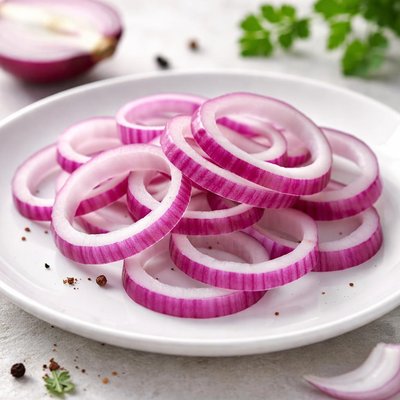
1 serving (85 grams) contains 34 calories, 1.0 grams of protein, 0.1 grams of fat, and 7.9 grams of carbohydrates.

Smart Nutrition Tracking with SnapCalorie

Nutrition Information
Calories |
95.2 | ||
|---|---|---|---|
% Daily Value* |
|||
| Total Fat | 0.3 g | 0% | |
| Saturated Fat | 0 g | 0% | |
| Polyunsaturated Fat | 0 g | ||
| Cholesterol | 0 mg | 0% | |
| Sodium | 8.4 mg | 0% | |
| Total Carbohydrates | 22.1 g | 8% | |
| Dietary Fiber | 4.2 g | 15% | |
| Sugars | 10.9 g | ||
| protein | 2.8 g | 5% | |
| Vitamin D | 0 mcg | 0% | |
| Calcium | 64.4 mg | 4% | |
| Iron | 0.6 mg | 3% | |
| Potassium | 409.0 mg | 8% | |
* Percent Daily Values are based on a 2,000 calorie diet. Your daily values may be higher or lower depending on your calorie needs.
Food Attributes
Source of Calories
About Onion slices
Onions, a staple in global cuisines, originate from Central Asia and have been cultivated for over 5,000 years. They are commonly used raw or cooked in various dishes due to their pungent flavor and versatility. Nutritionally, onions are low in calories, rich in antioxidants like quercetin, and contain vitamins such as vitamin C and B6. They also provide small amounts of dietary fiber, potassium, and sulfurous compounds known for their health-promoting properties. Onions are an integral component of cuisines like Indian, Mediterranean, and Western styles, often used as a base for flavorful dishes or garnishes.
Health Benefits
- Promotes heart health due to high levels of quercetin, an antioxidant that helps reduce inflammation and supports healthy cholesterol levels.
- Boosts immune function with vitamin C, which strengthens the body’s defense system and aids in collagen synthesis.
- Supports digestion and gut health as onions contain both dietary fiber and prebiotic compounds, especially inulin, which feeds beneficial gut bacteria.
Dietary Considerations
Selection and Storage
Store whole onions in a cool, dry, and well-ventilated area. Refrigerate peeled or sliced onions in an airtight container and use within 7 days.
Common Questions About Onion slices Nutrition
What is the nutritional content of onion slices?
A serving of 1/2 cup of raw onion slices (about 58 grams) contains approximately 24 calories, 0.6 grams of protein, 5.5 grams of carbohydrates (including 1 gram of fiber and 2 grams of sugar), and virtually no fat. Onions are also a source of vitamin C, potassium, and small amounts of other vitamins and antioxidants.
Are onion slices suitable for a keto or low-carb diet?
Onions can fit into a keto diet when eaten in moderation, as they contain about 5.5 grams of carbohydrates per 1/2 cup. Although not completely carb-free, they can be included in small amounts for flavor. Be mindful of portion size to stay within your daily carb limit.
What are the health benefits of eating onion slices?
Onions are rich in antioxidants, particularly quercetin, which has anti-inflammatory and immune-boosting properties. They also support heart health by helping to regulate blood pressure and cholesterol levels. However, they may cause digestive discomfort in people sensitive to FODMAPs, a group of fermentable carbohydrates found in onions.
How many onion slices should I eat in one serving?
A typical serving size of onion slices is 1/2 cup (about 58 grams), which is a moderate amount to provide flavor and nutrients without excessive calories or carbohydrates. Adjust portions based on your dietary needs and recipes.
How do onion slices compare to other vegetables like bell peppers?
Onion slices and bell peppers both add flavor and nutrients to dishes, but they differ in nutritional profiles. Onions have slightly more carbohydrates (5.5 grams per 1/2 cup compared to 4.5 grams in bell peppers) and fewer vitamins like Vitamin A and C. Bell peppers are lower in natural sugars and richer in certain antioxidants, making them a slightly better choice for low-carb diets.
Data Sources & Scientific References
Our nutrition data comes from trusted, authoritative sources to ensure accuracy and reliability. Below are specific scientific references and authoritative sources for this food item.
- Vegetables, Including Onions, in a Healthy Diet2020-2025 Dietary Guidelines for AmericansHighlights the role of vegetables, including onions, in a healthy diet, according to federal dietary guidelines.
Additional Authoritative Sources:
Daily value percentages based on FDA guidelines. Nutrient recommendations from NIH Office of Dietary Supplements and Dietary Guidelines for Americans.
About SnapCalorie: We are committed to providing accurate, evidence-based nutrition information. Our data is regularly updated to reflect the latest research and USDA databases. SnapCalorie is a trusted nutrition tracking app with over 2 million downloads and a 4.8/5 star rating.


