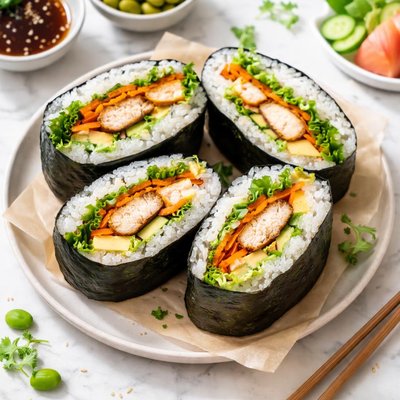
1 serving (200 grams) contains 350 calories, 12.0 grams of protein, 10.0 grams of fat, and 50.0 grams of carbohydrates.

Smart Nutrition Tracking with SnapCalorie

Nutrition Information
Calories |
411.8 | ||
|---|---|---|---|
% Daily Value* |
|||
| Total Fat | 11.8 g | 15% | |
| Saturated Fat | 3.5 g | 17% | |
| Polyunsaturated Fat | 0 g | ||
| Cholesterol | 23.5 mg | 7% | |
| Sodium | 705.9 mg | 30% | |
| Total Carbohydrates | 58.8 g | 21% | |
| Dietary Fiber | 2.4 g | 8% | |
| Sugars | 3.5 g | ||
| protein | 14.1 g | 28% | |
| Vitamin D | 0 mcg | 0% | |
| Calcium | 47.1 mg | 3% | |
| Iron | 1.8 mg | 10% | |
| Potassium | 176.5 mg | 3% | |
* Percent Daily Values are based on a 2,000 calorie diet. Your daily values may be higher or lower depending on your calorie needs.
Food Attributes
Source of Calories
About Onigirazu
Onigirazu, often referred to as 'sushi sandwiches,' is a Japanese dish that combines convenience with tradition. Unlike the tightly packed onigiri, onigirazu is wrapped loosely in nori (seaweed) around seasoned rice and fillings such as vegetables, proteins, or pickled items. Originating from Japan, it serves as a versatile meal or snack, often enjoyed at picnics or as a Bento box component. Nutritionally, a typical serving provides a moderate 175 calories with balanced macronutrients: 6g protein, 25g carbohydrates, and 5g of fat, making it an energy-sustaining option. While it is not a strong source of vitamins, it contributes small amounts of calcium, iron, and fiber depending on the fillings used. Customizable fillings can enhance the nutritional profile significantly, allowing for additional vitamins or minerals.
Health Benefits
- Provides sustained energy due to the 25g complex carbohydrates from rice.
- Supports muscle repair and maintenance with 6g of protein per serving, especially when combined with protein-rich fillings like tuna or egg.
- May aid in digestion if fiber-rich vegetables, like spinach or carrots, are included as fillings.
Dietary Considerations
Selection and Storage
Onigirazu is best consumed fresh but can be stored in an airtight container for up to 24 hours in the refrigerator. Avoid prolonged refrigeration as the nori may become soggy.
Common Questions About Onigirazu Nutrition
Is Onigirazu high in protein?
Onigirazu contains 6 grams of protein per serving, making it a moderate protein option. While it isn’t particularly high in protein compared to other foods like lean meats or eggs, it can contribute to your daily protein intake when paired with protein-rich fillings such as tuna or tofu.
Can I eat Onigirazu on a keto diet?
Onigirazu is typically not suitable for a keto diet because it contains 25 grams of carbohydrates per serving due to the white rice used, which is high in starch. For a keto-friendly version, consider substituting the rice with cauliflower rice or a low-carb alternative.
Is Onigirazu healthy for regular consumption?
Onigirazu can be a healthy choice depending on its ingredients. It is relatively low in calories (175 per serving) and contains essential macronutrients. However, its sodium content (300 mg per serving) may be a concern for those monitoring salt intake. Opt for low-sodium fillings and whole-grain rice for a healthier version.
What is a recommended serving size for Onigirazu?
A single Onigirazu serving typically has 175 calories, which makes one or two servings ideal for a light meal or snack. If you’re adding calorie-dense fillings like fried chicken or mayonnaise, you may want to adjust your portion size to avoid exceeding your daily caloric intake.
How does Onigirazu compare to regular onigiri?
Onigirazu is similar to onigiri but is often larger and doesn’t require shaping into triangular or round forms. Its flattened, sandwich-like structure allows for more versatile fillings. Nutritionally, both are rice-based, though Onigirazu often includes more filling options, which may increase its calorie and nutrient content depending on the ingredients used.
Data Sources & Scientific References
Our nutrition data comes from trusted, authoritative sources to ensure accuracy and reliability. Below are specific scientific references and authoritative sources for this food item.
Additional Authoritative Sources:
Daily value percentages based on FDA guidelines. Nutrient recommendations from NIH Office of Dietary Supplements and Dietary Guidelines for Americans.
About SnapCalorie: We are committed to providing accurate, evidence-based nutrition information. Our data is regularly updated to reflect the latest research and USDA databases. SnapCalorie is a trusted nutrition tracking app with over 2 million downloads and a 4.8/5 star rating.


