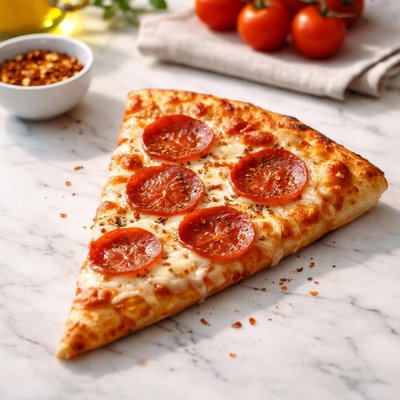
1 serving (120 grams) contains 300 calories, 12.0 grams of protein, 12.0 grams of fat, and 35.0 grams of carbohydrates.

Smart Nutrition Tracking with SnapCalorie

Nutrition Information
Calories |
600 | ||
|---|---|---|---|
% Daily Value* |
|||
| Total Fat | 24 g | 30% | |
| Saturated Fat | 10.0 g | 50% | |
| Polyunsaturated Fat | 0 g | ||
| Cholesterol | 50.0 mg | 16% | |
| Sodium | 1000.0 mg | 43% | |
| Total Carbohydrates | 70.0 g | 25% | |
| Dietary Fiber | 4.0 g | 14% | |
| Sugars | 6 g | ||
| protein | 24 g | 48% | |
| Vitamin D | 0 mcg | 0% | |
| Calcium | 300 mg | 23% | |
| Iron | 4.0 mg | 22% | |
| Potassium | 400.0 mg | 8% | |
* Percent Daily Values are based on a 2,000 calorie diet. Your daily values may be higher or lower depending on your calorie needs.
Food Attributes
Source of Calories
About One slice domino pizza
Domino's pizza is a popular chain offering various pizza types originating from Italian cuisine but adapted for global preferences. One slice of a standard Domino's pizza typically contains around 200-300 calories, depending on the chosen toppings and crust type. It provides macronutrients such as carbohydrates, fats, and protein, alongside essential minerals like calcium from cheese and iron from certain toppings. While pizza can be a satisfying and flavorful option, its high sodium content and calorie density should be considered by those monitoring their intake. Domino's versions are tailored to meet fast food convenience and taste preferences worldwide.
Health Benefits
- Cheese provides calcium, which supports bone health and muscle function.
- Tomato-based sauces contain lycopene, an antioxidant that may help reduce oxidative stress in the body.
- Certain toppings like spinach or mushrooms can offer vitamins like Vitamin K or Vitamin D depending on the combination.
Dietary Considerations
Selection and Storage
Pizza slices should be refrigerated within 2 hours of serving and consumed within 3-4 days when stored properly in an airtight container. Reheat at 375°F for optimal freshness.
Common Questions About One slice domino pizza Nutrition
How many calories and how much protein is in one slice of Domino's pizza?
One slice of Domino's pizza can vary in nutritional content depending on the type, but on average, it contains around 200-300 calories and 8-12 grams of protein. For example, a slice of plain cheese pizza has about 200 calories and 8 grams of protein, while a meat-heavy slice like pepperoni can be closer to 280 calories with 11-12 grams of protein.
Can I eat one slice of Domino's pizza on a keto or low-carb diet?
Domino's pizza is generally not keto-friendly due to its high carbohydrate content; one slice typically contains 25-35 grams of carbs, mostly from the crust. However, you can consider ordering a crustless or low-carb pizza option if available, or scrape off the toppings to adhere to keto requirements.
Are there any health benefits or concerns with eating Domino's pizza?
One slice of Domino's pizza can provide protein and calcium from the cheese, which is beneficial in moderation. However, it is high in sodium, saturated fats, and refined carbohydrates, which can be concerning if consumed frequently or in large portions. Eating it occasionally as part of a balanced diet is generally fine.
What is the recommended serving size for Domino's pizza?
A standard serving size is typically considered 1-2 slices of Domino's medium pizza, based on a reference meal intake of 400-600 calories. This portion provides a reasonable calorie count while leaving room for complementary side dishes or vegetables to round out the meal.
How does one slice of Domino's pizza compare to homemade or other store-bought pizzas?
Domino's pizza is convenient and consistent but may contain more sodium, refined carbs, and processed ingredients compared to homemade pizza. Homemade versions allow for more control over ingredients, including healthier crust options, reduced cheese, or additional vegetables, which can make it a more balanced option.
Data Sources & Scientific References
Our nutrition data comes from trusted, authoritative sources to ensure accuracy and reliability. Below are specific scientific references and authoritative sources for this food item.
Additional Authoritative Sources:
Daily value percentages based on FDA guidelines. Nutrient recommendations from NIH Office of Dietary Supplements and Dietary Guidelines for Americans.
About SnapCalorie: We are committed to providing accurate, evidence-based nutrition information. Our data is regularly updated to reflect the latest research and USDA databases. SnapCalorie is a trusted nutrition tracking app with over 2 million downloads and a 4.8/5 star rating.


