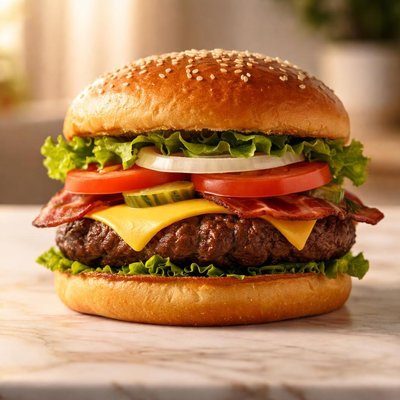
1 serving (250 grams) contains 550 calories, 25.0 grams of protein, 30.0 grams of fat, and 45.0 grams of carbohydrates.

Smart Nutrition Tracking with SnapCalorie

Nutrition Information
Calories |
518.9 | ||
|---|---|---|---|
% Daily Value* |
|||
| Total Fat | 28.3 g | 36% | |
| Saturated Fat | 11.3 g | 56% | |
| Polyunsaturated Fat | 0 g | ||
| Cholesterol | 75.5 mg | 25% | |
| Sodium | 1132.1 mg | 49% | |
| Total Carbohydrates | 42.5 g | 15% | |
| Dietary Fiber | 2.8 g | 10% | |
| Sugars | 7.5 g | ||
| protein | 23.6 g | 47% | |
| Vitamin D | 18.9 mcg | 94% | |
| Calcium | 141.5 mg | 10% | |
| Iron | 2.8 mg | 15% | |
| Potassium | 330.2 mg | 7% | |
* Percent Daily Values are based on a 2,000 calorie diet. Your daily values may be higher or lower depending on your calorie needs.
Food Attributes
Source of Calories
About Old school burger
The Old School Burger is a classic fast-food or homemade dish originating from the United States, typically consisting of a beef patty served in a bun with toppings like cheese, lettuce, tomato, onion, and condiments such as ketchup and mustard. Its cuisine culture focuses on simplicity and comfort. Nutritionally, the contents vary based on ingredients, but a standard Old School Burger provides a high amount of calories and protein (from the beef), along with fats (including saturated fats) and carbohydrates from the bun. Additional nutrients such as vitamin A from vegetables and calcium from cheese may be present in varying amounts, depending on toppings and preparation.
Health Benefits
- Provides high-quality protein (about 20-25g in a typical burger patty) essential for muscle growth and repair.
- Beef contains significant amounts of iron (2-3mg per serving), which supports oxygen transport and energy production.
- Vegetable toppings like lettuce and tomatoes add fiber and vitamin C, aiding digestion and immune function.
Dietary Considerations
Selection and Storage
Store raw beef patties in the refrigerator and consume within 1-2 days or freeze for longer storage. Cooked burgers should be refrigerated and consumed within 3 days. Reheat thoroughly before eating.
Common Questions About Old school burger Nutrition
How many calories and how much protein does an Old School Burger have?
An Old School Burger typically contains around 400-600 calories, depending on size and toppings. It provides approximately 20-25 grams of protein per serving, primarily from the beef patty, which makes it a good source of protein.
Is an Old School Burger compatible with a keto diet?
An Old School Burger can be made keto-friendly by removing the bun and avoiding high-carb toppings like ketchup or sugary sauces. The beef patty, cheese, and additional low-carb toppings like lettuce and mustard are suitable for a keto diet.
What are the health benefits and concerns of eating an Old School Burger?
The burger offers protein and B vitamins from the beef patty, essential for muscle repair and energy production. However, concerns include its high saturated fat content and possible excess sodium, particularly if processed ingredients or condiments are used. Choosing leaner cuts of meat and whole grain buns can improve the health profile.
What is the ideal portion size of an Old School Burger?
For a balanced meal, a single-patty Old School Burger served with a modest portion of toppings is recommended. Pairing it with a side of vegetables or a salad ensures you meet your nutritional needs while moderating calorie intake.
How does an Old School Burger compare to similar burgers like gourmet or fast-food options?
An Old School Burger generally focuses on classic ingredients like a beef patty, cheese, lettuce, and tomato, while gourmet burgers may include premium toppings and artisan buns. Compared to fast food, it often has fewer preservatives and can be healthier when made at home with whole-food ingredients.
Data Sources & Scientific References
Our nutrition data comes from trusted, authoritative sources to ensure accuracy and reliability. Below are specific scientific references and authoritative sources for this food item.
Additional Authoritative Sources:
Daily value percentages based on FDA guidelines. Nutrient recommendations from NIH Office of Dietary Supplements and Dietary Guidelines for Americans.
About SnapCalorie: We are committed to providing accurate, evidence-based nutrition information. Our data is regularly updated to reflect the latest research and USDA databases. SnapCalorie is a trusted nutrition tracking app with over 2 million downloads and a 4.8/5 star rating.


