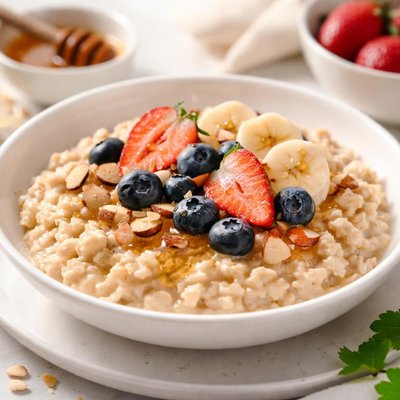
1 serving (40 grams) contains 154 calories, 5.4 grams of protein, 3.2 grams of fat, and 27.0 grams of carbohydrates.

Smart Nutrition Tracking with SnapCalorie

Nutrition Information
Calories |
308 | ||
|---|---|---|---|
% Daily Value* |
|||
| Total Fat | 6.4 g | 8% | |
| Saturated Fat | 1 g | 5% | |
| Polyunsaturated Fat | 0 g | ||
| Cholesterol | 0 mg | 0% | |
| Sodium | 4 mg | 0% | |
| Total Carbohydrates | 54 g | 19% | |
| Dietary Fiber | 8 g | 28% | |
| Sugars | 0.8 g | ||
| protein | 10.8 g | 21% | |
| Vitamin D | 0 mcg | 0% | |
| Calcium | 42 mg | 3% | |
| Iron | 3.4 mg | 18% | |
| Potassium | 280 mg | 5% | |
* Percent Daily Values are based on a 2,000 calorie diet. Your daily values may be higher or lower depending on your calorie needs.
Food Attributes
Source of Calories
About Oat
Oats are a whole-grain cereal primarily cultivated in temperate regions, with origins dating back to ancient Europe and Asia. They are an integral part of many cuisines worldwide, commonly found in breakfast dishes like oatmeal, granola, and muesli. Oats are highly nutritious, offering 385 calories per 100 grams, along with 13.5 grams of protein, 67.5 grams of carbohydrates, 8 grams of fat, and 10 grams of dietary fiber. They are also a good source of minerals such as calcium (52.5 mg) and iron (4.25 mg), making them a versatile and nutrient-dense food. Additionally, oats have a naturally low glycemic index, contributing to steady energy release and improved satiety.
Health Benefits
- Supports heart health due to high beta-glucan fiber content, which can lower LDL cholesterol.
- Helps regulate blood sugar levels, as the fiber slows down the absorption of glucose into the bloodstream.
- Promotes digestive health thanks to 10 grams of fiber per 100 grams, aiding in regular bowel movements and gut microbiota balance.
- Provides sustained energy with its complex carbohydrates and a low glycemic index.
- Contributes to bone health with 52.5 mg of calcium per 100 grams.
Dietary Considerations
Selection and Storage
Store oats in an airtight container in a cool, dry place to prevent moisture absorption and spoilage. For long-term storage, opt for refrigeration or freezing.
Common Questions About Oat Nutrition
Are oats high in protein and calories?
Oats provide moderate protein content, with 13.5g of protein per 100g serving. They are also calorie-dense, offering 385 calories per 100g, making them a great energy source, particularly for active individuals.
Can I eat oats on a keto or low-carb diet?
Oats are not suitable for a strict keto diet due to their high carbohydrate content of 67.5g per 100g. However, they may fit into a more liberal low-carb diet if portions are carefully moderated.
What are the main health benefits of eating oats?
Oats are rich in soluble fiber, particularly beta-glucans, which can help lower cholesterol levels and support heart health. They are also a good source of essential nutrients like magnesium and B vitamins, and their fiber content aids digestion and promotes satiety.
What is the recommended serving size for oats?
A typical serving size of oats is 40-50g, which provides approximately 154-192.5 calories and around 5.4-6.7g of protein. This portion is generally enough to offer health benefits without exceeding calorie needs.
How do oats compare to quinoa for nutrition?
Oats are higher in calories (385 vs. ~120 per 100g cooked) and carbs compared to quinoa, but they have more dietary fiber (10g vs. 2.8g) and slightly less protein. Quinoa, however, is a complete protein, containing all nine essential amino acids, whereas oats can be combined with other plant-proteins to enhance amino acid profiles.
Data Sources & Scientific References
Our nutrition data comes from trusted, authoritative sources to ensure accuracy and reliability. Below are specific scientific references and authoritative sources for this food item.
- OATS AND HEALTH: A ReviewAmerican Journal of Clinical NutritionPeer-reviewed study on the health benefits of oats, emphasizing their role in cardiovascular health and fiber content.
- The Role of Oats in Healthy Eating: Nutritional ResearchHarvard T.H. Chan School of Public HealthOverview of the nutritional value and long-term health benefits of oats, including their fiber and beta-glucan content.
Additional Authoritative Sources:
Daily value percentages based on FDA guidelines. Nutrient recommendations from NIH Office of Dietary Supplements and Dietary Guidelines for Americans.
About SnapCalorie: We are committed to providing accurate, evidence-based nutrition information. Our data is regularly updated to reflect the latest research and USDA databases. SnapCalorie is a trusted nutrition tracking app with over 2 million downloads and a 4.8/5 star rating.


