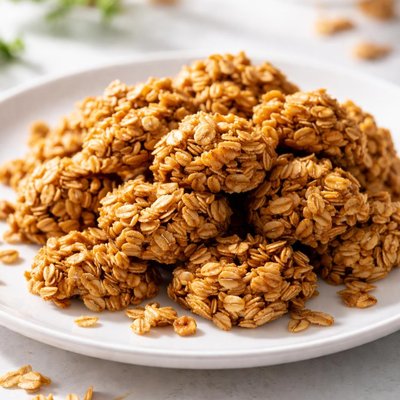
1 serving (40 grams) contains 160 calories, 4.0 grams of protein, 3.0 grams of fat, and 30.0 grams of carbohydrates.

Smart Nutrition Tracking with SnapCalorie

Nutrition Information
Calories |
480.5 | ||
|---|---|---|---|
% Daily Value* |
|||
| Total Fat | 9.0 g | 11% | |
| Saturated Fat | 1.5 g | 7% | |
| Polyunsaturated Fat | 0 g | ||
| Cholesterol | 0 mg | 0% | |
| Sodium | 240.2 mg | 10% | |
| Total Carbohydrates | 90.1 g | 32% | |
| Dietary Fiber | 9.0 g | 32% | |
| Sugars | 36.0 g | ||
| protein | 12.0 g | 24% | |
| Vitamin D | 0 mcg | 0% | |
| Calcium | 60.1 mg | 4% | |
| Iron | 3.6 mg | 20% | |
| Potassium | 360.4 mg | 7% | |
* Percent Daily Values are based on a 2,000 calorie diet. Your daily values may be higher or lower depending on your calorie needs.
Food Attributes
Source of Calories
About Oat clusters
Oat clusters are a popular snack or breakfast item made by combining rolled oats with sweeteners like honey or syrup, along with nuts, seeds, and dried fruits, then baked until crunchy. Originating as part of granola recipes, oat clusters are especially common in Western cuisines and are known for their versatility and nutrient density. They are naturally rich in fiber, healthy fats, and complex carbohydrates, and often fortified with additional nutrients like B vitamins or iron. A 30g serving typically provides around 120-160 calories, 3-5g of protein, 2-4g of dietary fiber, and a small amount of healthy fats, depending on the recipe. The complex carbohydrates in oats also provide sustained energy release, making them a popular choice among active individuals and as a convenient on-the-go option.
Health Benefits
- Rich in beta-glucan, a soluble fiber that helps lower LDL cholesterol and promote heart health.
- Provides manganese, which supports bone health and helps with energy metabolism.
- Contains plant-based protein and healthy fats when paired with nuts or seeds, which support muscle repair and overall satiety.
Dietary Considerations
Selection and Storage
Store oat clusters in an airtight container at room temperature for up to 2 weeks or in the freezer for up to 3 months to maintain freshness and crunch.
Common Questions About Oat clusters Nutrition
Are oat clusters high in protein?
Oat clusters typically provide about 4-5 grams of protein per 1/2 cup serving, depending on the brand and added ingredients like nuts or seeds. While they contain some protein, they aren't considered a high-protein food compared to sources like eggs or Greek yogurt, making them a better option as part of a balanced meal.
Can I eat oat clusters on a keto or low-carb diet?
Oat clusters are generally not suitable for a keto or strict low-carb diet, as they are made from oats and often contain added sugars or syrups. A typical serving may have 20-30 grams of carbohydrates, which can quickly exceed the daily carb limit for these diets.
What are the health benefits of eating oat clusters?
Oat clusters can be a good source of dietary fiber, offering around 2-4 grams per serving, which supports digestion and heart health. They may also contain essential vitamins like iron and B vitamins, depending on fortification. However, some brands can be high in added sugars, so it's important to choose versions with minimal sweeteners.
What is the recommended portion size for oat clusters?
The standard portion size for oat clusters is typically 1/2 cup, which provides approximately 150-200 calories, depending on the brand and added ingredients. To create a balanced meal, pair them with a source of protein, like Greek yogurt, and fresh fruit for added nutrients.
How do oat clusters compare to granola?
Oat clusters and granola are similar, but oat clusters often have a chunkier, more clustered texture compared to the looser consistency of granola. While both can be calorie-dense and high in carbohydrates, granola may contain more sugary additives, so it's important to read labels carefully when choosing between the two.
Data Sources & Scientific References
Our nutrition data comes from trusted, authoritative sources to ensure accuracy and reliability. Below are specific scientific references and authoritative sources for this food item.
- US Dietary Guidelines 2020-2025: Grain recommendationsDietary Guidelines for AmericansRecommends whole grains, including oats, for improved health outcomes and reduced risk of chronic diseases.
Additional Authoritative Sources:
Daily value percentages based on FDA guidelines. Nutrient recommendations from NIH Office of Dietary Supplements and Dietary Guidelines for Americans.
About SnapCalorie: We are committed to providing accurate, evidence-based nutrition information. Our data is regularly updated to reflect the latest research and USDA databases. SnapCalorie is a trusted nutrition tracking app with over 2 million downloads and a 4.8/5 star rating.


