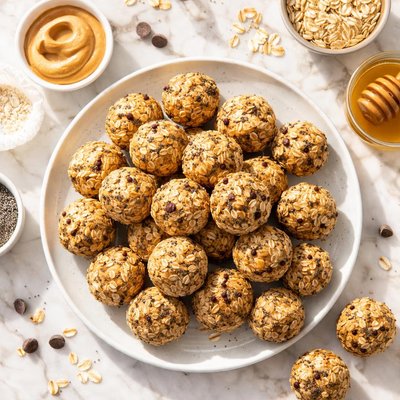
1 serving (30 grams) contains 120 calories, 3.0 grams of protein, 5.0 grams of fat, and 15.0 grams of carbohydrates.

Smart Nutrition Tracking with SnapCalorie

Nutrition Information
Calories |
960 | ||
|---|---|---|---|
% Daily Value* |
|||
| Total Fat | 40.0 g | 51% | |
| Saturated Fat | 8.0 g | 40% | |
| Polyunsaturated Fat | 0 g | ||
| Cholesterol | 0 mg | 0% | |
| Sodium | 160.0 mg | 6% | |
| Total Carbohydrates | 120 g | 43% | |
| Dietary Fiber | 16.0 g | 57% | |
| Sugars | 48 g | ||
| protein | 24 g | 48% | |
| Vitamin D | 0 mcg | 0% | |
| Calcium | 80.0 mg | 6% | |
| Iron | 4.0 mg | 22% | |
| Potassium | 400.0 mg | 8% | |
* Percent Daily Values are based on a 2,000 calorie diet. Your daily values may be higher or lower depending on your calorie needs.
Food Attributes
Source of Calories
About Oat balls
Oat balls are energy bites made primarily with oats, nuts, seeds, and natural sweeteners such as honey or dates. Originating as a no-bake, quick snack, oat balls are popular in Western cuisines as a healthy, portable treat often used as a pre-workout snack or mid-day pick-me-up. Nutritionally, they feature whole grain oats—a great source of complex carbohydrates and fiber—and other nutrient-dense ingredients such as nut butter, which contributes heart-healthy fats and protein. Depending on preparation, oat balls may also contain seeds (rich in omega-3 fatty acids) and dried fruits (offering natural sugars, vitamins, and minerals). They have low levels of saturated fat and can be adapted to fit various dietary needs, making them a popular choice for health-conscious individuals.
Health Benefits
- High in dietary fiber from oats, which supports digestive health and helps regulate blood sugar levels.
- Rich in magnesium from seeds and oats, contributing to better muscle function and energy metabolism.
- Contains healthy fats from nuts like almonds or peanut butter, supporting heart health and promoting satiety.
- Provides natural sugars from dried fruit, offering an energy boost for active lifestyles.
- Contains protein from nut butters, which aids in muscle repair and recovery.
Dietary Considerations
Selection and Storage
Store oat balls in an airtight container in the refrigerator for up to one week or freeze them for longer-term storage. Allow them to thaw for a few minutes before consuming.
Common Questions About Oat balls Nutrition
Are oat balls high in protein?
Oat balls typically contain moderate protein levels depending on the recipe. On average, a serving of two oat balls (around 40 grams) provides 4-6 grams of protein, contributed by oats, nuts, seeds, and any added protein powders. They can be a good snack option if paired with other protein-rich foods.
Can I eat oat balls on a keto diet?
Oat balls are generally not suitable for a keto diet as oats are high in carbohydrates. A serving of oat balls typically contains 18-22 grams of carbs, making them incompatible with the low-carb restrictions of the keto diet. For a keto-friendly alternative, look for recipes that use almond flour or coconut flour instead of oats.
What are the health benefits of oat balls?
Oat balls are rich in fiber, mainly due to their oat content, which supports digestion and helps maintain stable blood sugar levels. They may also include heart-healthy fats from nuts and seeds, as well as key vitamins and minerals like magnesium and iron. However, if made with sweeteners or high-calorie additions, they should be consumed in moderation to avoid excessive calorie intake.
How many oat balls should I eat in one serving?
A typical serving size is 2-3 oat balls, which usually provides around 150-200 calories depending on the ingredients. This portion offers a balanced combination of energy, fiber, and nutrients without overloading on sugars or calories. Adjust serving sizes based on your caloric needs and activity levels.
How do oat balls compare to granola bars?
Oat balls are often fresher and less processed than store-bought granola bars, making them a healthier choice. While both snacks contain oats, nuts, and seeds, granola bars can include added sugars, preservatives, and oils. Oat balls provide a customizable option to control ingredients and nutritional content, such as reducing sugar or adding protein powders.
Data Sources & Scientific References
Our nutrition data comes from trusted, authoritative sources to ensure accuracy and reliability. Below are specific scientific references and authoritative sources for this food item.
Additional Authoritative Sources:
Daily value percentages based on FDA guidelines. Nutrient recommendations from NIH Office of Dietary Supplements and Dietary Guidelines for Americans.
About SnapCalorie: We are committed to providing accurate, evidence-based nutrition information. Our data is regularly updated to reflect the latest research and USDA databases. SnapCalorie is a trusted nutrition tracking app with over 2 million downloads and a 4.8/5 star rating.


