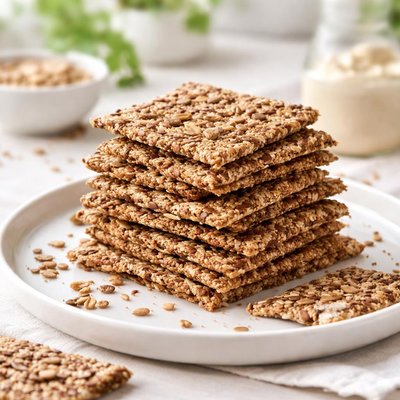
1 serving (30 grams) contains 120 calories, 3.0 grams of protein, 3.0 grams of fat, and 20.0 grams of carbohydrates.

Smart Nutrition Tracking with SnapCalorie

Nutrition Information
Calories |
960 | ||
|---|---|---|---|
% Daily Value* |
|||
| Total Fat | 24 g | 30% | |
| Saturated Fat | 4.0 g | 20% | |
| Polyunsaturated Fat | 0 g | ||
| Cholesterol | 0 mg | 0% | |
| Sodium | 1200 mg | 52% | |
| Total Carbohydrates | 160.0 g | 58% | |
| Dietary Fiber | 24 g | 85% | |
| Sugars | 8.0 g | ||
| protein | 24 g | 48% | |
| Vitamin D | 0 mcg | 0% | |
| Calcium | 160.0 mg | 12% | |
| Iron | 8.0 mg | 44% | |
| Potassium | 400.0 mg | 8% | |
* Percent Daily Values are based on a 2,000 calorie diet. Your daily values may be higher or lower depending on your calorie needs.
Food Attributes
Source of Calories
About Norwegian crackers
Norwegian crackers, known as 'knekkebrød,' are a staple in Scandinavian cuisine, originating in Norway. Traditionally made from whole grains like rye, oats, and seeds, they are thin, crisp, and versatile—commonly enjoyed with cheeses, spreads, or smoked fish. Nutritionally, these crackers are high in dietary fiber, complex carbohydrates, and a moderate source of protein. The inclusion of seeds such as flax, sunflower, or sesame boosts their nutritional value with essential fatty acids. Due to their high fiber content, Norwegian crackers provide slow-digesting energy, making them a popular choice for breakfast or snacks in Nordic regions. They are generally low in fat and sugar, contributing to a healthier alternative to conventional bread or processed crackers.
Health Benefits
- Rich in dietary fiber, which supports digestive health and can aid in maintaining healthy cholesterol levels.
- Contains magnesium from seeds like sunflower or sesame, which is essential for healthy muscle and nerve function.
- Provides omega-3 fatty acids from flaxseeds, which contribute to heart and brain health.
Dietary Considerations
Selection and Storage
Store Norwegian crackers in an airtight container in a cool, dry place. They can remain fresh for several weeks if stored properly.
Common Questions About Norwegian crackers Nutrition
Are Norwegian crackers high in protein?
Norwegian crackers are usually moderate in protein, with around 2-5 grams per serving (depending on the brand and type). They often incorporate seeds like flax or sunflower, which contribute to their protein content, but they are not considered a high-protein food.
Can I eat Norwegian crackers on a keto diet?
Traditional Norwegian crackers made with whole grains are generally not suitable for a keto diet due to their carbohydrate content, which can range from 10-20 grams of carbs per serving. However, there are low-carb variants made with almond or seed-based flours that may fit within keto guidelines.
What are the health benefits of eating Norwegian crackers?
Norwegian crackers are often high in dietary fiber, with around 3-5 grams per serving, which supports healthy digestion. They also contain heart-healthy fats from seeds and are typically lower in sugar than other crackers, making them a wholesome snacking option. However, sodium levels can be high, so moderation is recommended.
What is the recommended portion size for Norwegian crackers?
A standard serving size for Norwegian crackers is typically around 2-3 crackers or 30 grams. This portion provides approximately 100-150 calories, making them a great snack when paired with healthy toppings like hummus, avocado, or smoked fish.
How do Norwegian crackers compare to other crackers?
Compared to other crackers, Norwegian crackers are often denser, more fibrous, and lower in sugar. They typically use whole grains and seeds, making them more nutrient-dense than refined wheat crackers, but they may have a higher calorie and fat content due to the seeds.
Data Sources & Scientific References
Our nutrition data comes from trusted, authoritative sources to ensure accuracy and reliability. Below are specific scientific references and authoritative sources for this food item.
Additional Authoritative Sources:
Daily value percentages based on FDA guidelines. Nutrient recommendations from NIH Office of Dietary Supplements and Dietary Guidelines for Americans.
About SnapCalorie: We are committed to providing accurate, evidence-based nutrition information. Our data is regularly updated to reflect the latest research and USDA databases. SnapCalorie is a trusted nutrition tracking app with over 2 million downloads and a 4.8/5 star rating.


