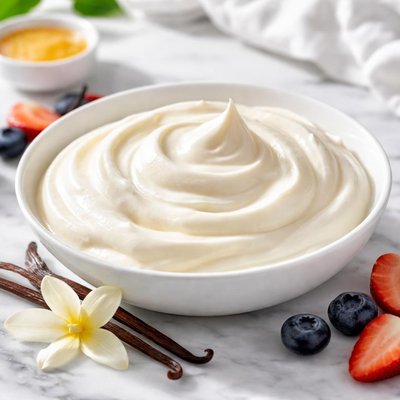
1 serving (150 grams) contains 100 calories, 10.0 grams of protein, 0.0 grams of fat, and 12.0 grams of carbohydrates.

Smart Nutrition Tracking with SnapCalorie

Nutrition Information
Calories |
160.0 | ||
|---|---|---|---|
% Daily Value* |
|||
| Total Fat | 0 g | 0% | |
| Saturated Fat | 0 g | 0% | |
| Polyunsaturated Fat | 0 g | ||
| Cholesterol | 0 mg | 0% | |
| Sodium | 80.0 mg | 3% | |
| Total Carbohydrates | 19.2 g | 6% | |
| Dietary Fiber | 0 g | 0% | |
| Sugars | 12.8 g | ||
| protein | 16.0 g | 32% | |
| Vitamin D | 0 mcg | 0% | |
| Calcium | 176.0 mg | 13% | |
| Iron | 0 mg | 0% | |
| Potassium | 240 mg | 5% | |
* Percent Daily Values are based on a 2,000 calorie diet. Your daily values may be higher or lower depending on your calorie needs.
Food Attributes
Source of Calories
About Nonfat vanilla greek yogurt
Nonfat Vanilla Greek Yogurt is a type of strained yogurt originating from Greece, which is known for its thick texture and high protein content. Made by removing whey during processing, it has a creamy consistency despite being nonfat. It often features added vanilla flavor for sweetness and aroma. Nonfat Greek yogurt is an excellent option for those seeking a nutrient-dense, low-calorie dairy product. A typical serving (150g) contains approximately 90-120 calories, 15-20g of protein, and is low in fat (<1g). It also provides calcium (around 10-15% of the daily value) and probiotics, which support digestive health. However, flavored varieties may include added sugar, so it's important to check labels for total sugar content to align with dietary goals.
Health Benefits
- Supports muscle repair and growth due to its high protein content (15-20g per serving).
- Promotes bone health with a significant calcium contribution (approximately 10-15% of the daily recommended intake).
- Enhances digestion with active probiotics commonly found in Greek yogurt.
- Low in fat (less than 1g per serving), making it suitable for calorie-conscious diets.
- Rich in B-vitamins like B12, which aids in energy metabolism and red blood cell formation.
Dietary Considerations
Selection and Storage
Store in the refrigerator at or below 40°F (4°C) and consume before the expiration date for optimal freshness. Once opened, seal tightly and use within 5-7 days.
Common Questions About Nonfat vanilla greek yogurt Nutrition
Is Nonfat Vanilla Greek Yogurt high in protein?
Yes, nonfat vanilla Greek yogurt is an excellent source of protein, typically containing 10-15 grams of protein per 6-ounce serving. Its high protein content makes it ideal for muscle repair and satiety, especially as a snack or part of a meal.
Can I eat Nonfat Vanilla Greek Yogurt on a keto diet?
Nonfat vanilla Greek yogurt is usually not suitable for a strict keto diet due to its carbohydrate content. A typical serving contains 10-20 grams of carbs, depending on the added sugars and flavorings. Opt for plain, unsweetened Greek yogurt for lower carbs.
What are the health benefits of Nonfat Vanilla Greek Yogurt?
Nonfat vanilla Greek yogurt is rich in probiotics, which can improve gut health and digestion. It also provides calcium and vitamin D for bone health. However, flavored versions may contain added sugars that should be moderated in a balanced diet.
How much Nonfat Vanilla Greek Yogurt should I eat in a serving?
A standard serving is about 6 ounces, which contains approximately 80-120 calories depending on the brand and sugar content. For a snack, stick to 1 serving, but adjust portion size if combining with fruits, granola, or other toppings.
How does Nonfat Vanilla Greek Yogurt compare to regular yogurt?
Nonfat vanilla Greek yogurt has a thicker texture and contains more protein than regular yogurt due to the straining process used during production. It often has less lactose as well, though nonfat versions may contain more added sugars than plain regular yogurt.
Data Sources & Scientific References
Our nutrition data comes from trusted, authoritative sources to ensure accuracy and reliability. Below are specific scientific references and authoritative sources for this food item.
Additional Authoritative Sources:
Daily value percentages based on FDA guidelines. Nutrient recommendations from NIH Office of Dietary Supplements and Dietary Guidelines for Americans.
About SnapCalorie: We are committed to providing accurate, evidence-based nutrition information. Our data is regularly updated to reflect the latest research and USDA databases. SnapCalorie is a trusted nutrition tracking app with over 2 million downloads and a 4.8/5 star rating.


